
If you are looking for an experienced Ureteral Cancer Surgeon in Bangalore, Dr Suraj Manjunath provides comprehensive evaluation and surgical care at Apollo Hospitals. He offers personalized Ureteral Cancer Treatment in Bangalore based on the tumor’s location, stage, kidney function and the patient’s overall health.


The ureters are two narrow tubes—one on each side of the body—that carry urine from the kidneys to the bladder. Cancer arising in one of these tubes is called ureteral cancer.
It is important not to confuse the ureter with the urethra. The ureter carries urine from the kidney to the bladder, while the urethra carries urine from the bladder out of the body.
Most ureteral cancers begin in the urothelium, the thin layer of cells lining the urinary tract. This is the same type of lining found inside the kidney’s collecting system and the urinary bladder. For this reason, ureteral cancer is usually classified as an upper urinary tract urothelial carcinoma, or UTUC.
The two characteristics that strongly influence treatment are:
Low-grade, superficial tumors may sometimes be treated while preserving the kidney. High-grade or invasive cancers generally require more extensive treatment.
Because urothelial cancer can affect different areas of the urinary tract, the bladder and the collecting system of the kidney must also be examined. Specialist evaluation is important before deciding whether organ-preserving treatment is safe.

I understand how worrying it can be to hear that a scan or biopsy may indicate cancer in the ureter. Patients and families often have many immediate questions:
Has the cancer spread?, Will the kidney need to be removed?, Is robotic surgery possible?, Can the ureter alone be treated?, Will chemotherapy be necessary?, How soon should treatment begin?
I am Dr. Suraj Manjunath, a Surgical Oncologist in Bangalore, associated with Apollo Hospitals, Bannerghatta Road and Apollo Hospitals, Sarjapur Road. I provide evaluation, surgical planning and multidisciplinary care for patients diagnosed with ureteral cancer.
When you consult me as a Ureteral Cancer Surgeon in Bangalore, my first priority is to review the diagnosis properly. I study the scans, biopsy findings, kidney function and overall health before discussing treatment.
My approach is to explain the diagnosis clearly, review every available treatment option and recommend surgery only after understanding the complete clinical picture. My role is to help you and your family move forward with clarity.
This page will help you understand ureteral cancer treatment in Bangalore, when surgery is needed, the surgical options available, what recovery is usually like, and what factors influence the cost of ureteral cancer surgery in Bangalore.

+

+

+

+

Ureteral cancer may be discovered during an investigation for urinary symptoms or incidentally on a scan performed for another reason.
Possible symptoms include:
These symptoms do not always mean that a person has cancer. Kidney stones, infections, prostate conditions and several other urinary problems can cause similar symptoms.
However, blood in the urine should not be ignored, even when it appears only once or disappears without treatment. Ureteral cancer can occasionally be present without obvious symptoms, particularly during its earlier stages.
If a scan has already shown a ureteric growth, narrowing or unexplained obstruction, further evaluation is necessary even if you feel otherwise well.

Before recommending Ureteral Cancer Treatment in Bangalore, I review the investigations already completed and determine whether any additional tests are necessary.
Blood and urine tests: Blood tests help assess kidney function, haemoglobin levels and general health. A urine examination may detect blood, infection or abnormal cells. Urine cytology is a test in which urine is examined for suspicious cancer cells.
CT urography: A CT urogram is a specialized scan of the kidneys, ureters and bladder. It can show the location and size of the tumor, obstruction of urine flow, enlarged lymph nodes and possible spread outside the ureter.
MRI may be considered when CT contrast cannot be used or when additional information is required.
Cystoscopy: A cystoscopy uses a thin camera to examine the inside of the bladder. This is important because urothelial cancer may occur in the bladder as well as the upper urinary tract.
Ureteroscopy and biopsy: During ureteroscopy, a small camera is passed through the urinary passage and bladder into the ureter. This allows the tumor to be seen directly. A tissue sample may be taken when required.
The biopsy helps identify the type and grade of the cancer. However, ureteroscopic samples are often small, so the biopsy result must be interpreted together with imaging and other findings.
Staging investigations: Depending on the tumor’s risk features, imaging of the chest, abdomen and pelvis may be required to check for spread to lymph nodes or distant organs.
Fitness assessment: Before major surgery, I assess heart and lung health, kidney function, diabetes, blood pressure, nutrition, current medicines and anesthesia-related risks.
CT urography and ureteroscopy are central to diagnosing and staging upper urinary tract urothelial cancer, while cystoscopy helps rule out a simultaneous bladder tumor.


Kidney function is especially important when planning platinum-based chemotherapy. In some cases, giving chemotherapy before removing a kidney may be considered because renal function could reduce after surgery.


The main surgical options include:
Radical nephroureterectomy with bladder cuff removal:
This operation removes:
This is the standard operation for many high-risk, high-grade or invasive upper urinary tract urothelial cancers.
Removing the bladder cuff is an important part of the procedure because leaving the lower end of the ureter behind may increase the risk of recurrence.
Segmental ureterectomy:
In this procedure, only the affected section of the ureter is removed. The healthy ends may be joined, or the remaining ureter may be reconnected to the bladder.
Segmental surgery may be considered when the tumor is localized to a suitable part of the ureter and can be removed with clear margins. It may also be considered when preserving kidney function is especially important.
Distal ureterectomy and reimplantation:
When a suitable tumor is located close to the bladder, the lower portion of the ureter may be removed and the healthy ureter reimplanted into the bladder.
Endoscopic tumor removal or ablation:
Selected low-risk tumors may be treated through ureteroscopy using specialized instruments or laser energy. No kidney or ureter is removed, but careful surveillance and repeat procedures may be needed.
Lymph node dissection:
For cancers suspected to be invasive or high-risk, nearby lymph nodes may be removed during surgery. This provides more accurate staging and may contribute to cancer control in appropriate cases.
Kidney-preserving treatment is not suitable for everyone. It is most appropriate when the tumor’s size, grade, appearance and location suggest that preservation will not compromise cancer control.

Ureteral cancer operations may be performed using robotic, laparoscopic or open techniques. These approaches describe how the surgeon reaches the tumour; they do not change the fundamental cancer operation that needs to be completed.
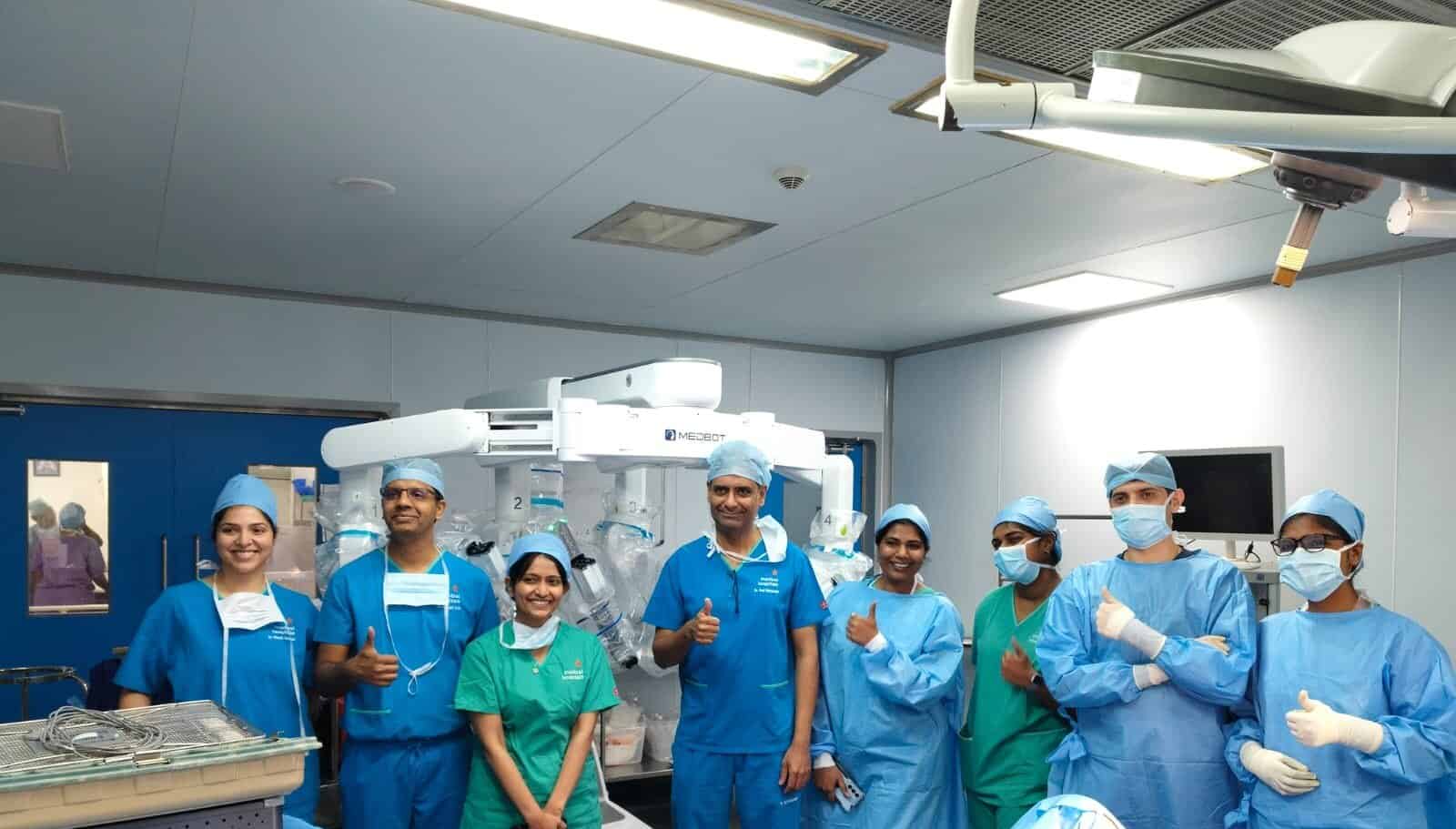
Robotic cancer surgery: In suitable patients, robotic assistance can provide a magnified view and precise instrument movement. It may be useful for nephroureterectomy, segmental ureter removal, reconstruction and ureteric reimplantation.
Potential advantages may include smaller incisions, less postoperative discomfort and earlier mobilisation. However, robotic surgery is recommended only when the tumour can be removed safely and completely through this approach.
Laparoscopic cancer surgery: Laparoscopic surgery also uses small incisions and a camera. It may be suitable for selected nephroureterectomy procedures, depending on the location and extent of the cancer.
Open cancer surgery: Open surgery remains an important and appropriate option. It may be necessary when the tumour is large, involves nearby structures, requires complex reconstruction or has other features that make minimally invasive removal unsafe.
My priority is not to promise a particular technique before reviewing the case. The primary objective is complete and safe cancer removal. When robotic or laparoscopic surgery can achieve that objective appropriately, a Minimally Invasive Cancer Surgery approach may be considered.

Before surgery:
I will review your scans, biopsy, kidney function and fitness for anesthesia. Additional consultations may be arranged if you have heart, lung, kidney or other medical concerns.
You will receive instructions about:
If chemotherapy before surgery is being considered, this will be discussed with a medical oncologist before fixing the operation date.
During the hospital stay:
After surgery, the clinical team will monitor pain, urine output, kidney function, bowel recovery and mobility. You may temporarily have a urinary catheter, abdominal drain or ureteric stent, depending on the operation.
The length of hospital stay varies. It depends on the type of surgery, surgical approach, reconstruction performed and the patient’s recovery. I avoid giving a fixed discharge promise before surgery because each patient’s needs are different.
Recovery at home:
Recovery is gradual. Walking usually begins early, but heavier work and strenuous exercise must wait until healing is adequate. The team will guide you regarding wound care, diet, medicines, activity and warning symptoms.
Patients who undergo kidney-preserving treatment may need more frequent endoscopic checks. Patients who have one kidney removed are monitored for kidney function and advised on long-term health measures.
Final pathology discussion:
The complete surgical specimen provides more information than a small preoperative biopsy. The final report confirms the cancer type, grade, depth of invasion, surgical margins and lymph-node findings where applicable.
I discuss this report with the patient and family. It helps determine whether surveillance alone is appropriate or whether chemotherapy, immunotherapy or another treatment should be considered.
Follow-up:
Follow-up may include cystoscopy, urine tests and periodic scans because urothelial cancer can recur in the bladder or elsewhere in the urinary tract. The schedule is personalized according to the original cancer and treatment.
You may also find the information on Recovery After Cancer Surgery helpful while preparing for treatment.

I understand that treatment cost is an important concern for families. However, there is no single fixed Cost of Ureteral Cancer Surgery in Bangalore because two patients with the same diagnosis may require very different procedures.
The overall cost may depend on:
A minimally invasive procedure should not automatically be assumed to be either cheaper or more expensive. The total depends on the complete episode of care, not only the surgical technique.
After reviewing your reports and deciding the appropriate operation, the hospital team can provide a case-specific estimate. If you have insurance, it is helpful to bring your policy details and identification documents so that coverage can be checked early.

I currently consult at:
These centers provide access to comprehensive cancer care within a well-equipped hospital environment, supporting multidisciplinary treatment, investigations, and post-operative care when required.
Consultation timings and appointment details can be arranged through phone or WhatsApp for convenience.

This page has been written and medically reviewed under the guidance of Dr. Suraj Manjunath, Senior Surgical Oncologist at Apollo Hospitals, Bannerghatta Road, Bangalore.
The information has been reviewed for medical accuracy, patient clarity, and relevance to cancer surgery decision-making. Cancer treatment is always personalized and depends on factors such as the type of cancer, stage or spread of disease, overall health, co-morbidities, test results, and treatment goals.
The information is meant for patient education and should not replace an in-person consultation, diagnosis or personalized treatment plan.
Consultation Locations: Apollo Hospitals, Bannerghatta Road & Sarjapur Road, Bangalore.
Last reviewed: September 2026
