
If you require a proficient mediastinal tumors surgeon in Bangalore, Dr Suraj Manjunath offers targeted care for chest growths at Apollo Hospitals. He provides safe, comprehensive mediastinal tumors treatment in Bangalore focused on protecting vital surrounding thoracic structures and breathing function.


The mediastinum is the space in the middle of the chest. It contains important structures such as:
A mediastinal tumor can arise from any of these tissues. Some tumors are benign. Some are malignant, meaning cancerous. The term “Mediastinal Cancer” usually refers to cancerous tumors in this area or tumors that have the potential to behave aggressively.
Common types of mediastinal tumors include thymoma, thymic carcinoma, germ cell tumors, lymphoma, neurogenic tumors, cysts, and metastatic lymph nodes. The type of tumor often depends on which part of the mediastinum is involved — anterior, middle, or posterior.
Why does specialist evaluation matter?
Because the mediastinum is a crowded area, a tumor here may be close to the heart, lungs, major blood vessels, trachea, or esophagus. Surgery, if needed, must be planned carefully. The aim is complete and safe removal without causing unnecessary damage to nearby structures.
Early and expert evaluation is important because many mediastinal tumors can be treated very effectively when detected at the right time.

If you or your loved one has been diagnosed with a mediastinal tumor, I understand how worrying this can feel. The mediastinum is the central part of the chest, located between the lungs, close to important structures such as the heart, major blood vessels, windpipe, food pipe, and thymus gland.
Because of this location, mediastinal tumors need careful evaluation by an experienced surgical oncologist and a multidisciplinary cancer team.
I am Dr. Suraj Manjunath, a Surgical Oncologist in Bangalore, associated with Apollo Hospitals, Bannerghatta Road and Apollo Hospitals, Sarjapur Road.
As a Mediastinal Tumor/Cancer Surgeon in Bangalore, I help patients with mediastinal tumors understand their diagnosis, treatment options, surgery choices, recovery, and expected next steps.
My focus is to offer clear, safe, and individualized care. In some patients, mediastinal tumors can be treated with surgery. In others, treatment may involve chemotherapy, radiation therapy, immunotherapy, or a combination of treatments. The right plan depends on the exact type of tumor, its size, location, spread, and your overall fitness.
This page explains mediastinal tumors, symptoms, diagnosis, treatment options, surgery, including robotic, thoracoscopic (VATS) or open approaches, recovery, and the Cost of Mediastinal Tumor/Cancer Surgery in Bangalore.

+

+

+

+

Many mediastinal tumors are detected when a CT scan or chest X-ray is done for another reason. In other patients, the tumor may cause symptoms because it presses on nearby structures.
Common symptoms may include:
Some thymus-related tumors may be associated with muscle weakness or a condition called myasthenia gravis. In simple terms, myasthenia gravis can cause weakness of muscles, drooping eyelids, difficulty chewing, or tiredness that worsens with activity.
Symptoms can vary widely. A small tumor may cause no symptoms. A larger tumor may cause pressure symptoms. A lymphoma or aggressive tumor may cause fever, weight loss, or night sweats.
Please remember that these symptoms do not always mean cancer. But if a scan has already shown a mediastinal mass, or if symptoms are persistent, it is important to get evaluated.

Treatment for mediastinal tumors should not be decided only by looking at one scan. A proper diagnosis helps us decide whether biopsy is required first, whether surgery is needed, and whether chemotherapy or radiation should be given before or after surgery.
The diagnosis usually involves:
Clinical evaluation: I first understand your symptoms, medical history, previous reports, and general health. I also check for breathing issues, swallowing difficulty, muscle weakness, or signs of pressure on major blood vessels.
Imaging tests: A CT scan of the chest is usually one of the most important tests. It shows the size of the tumor, its location, and whether it is touching or involving nearby organs.
A PET-CT scan may be advised in selected cases to understand tumor characteristics and whether there is spread elsewhere in the body.
MRI may be useful in some patients, especially when the tumor is close to nerves, spine, heart, or major blood vessels.
Biopsy: A biopsy means taking a small tissue sample to identify the tumor type. In some mediastinal tumors, biopsy is necessary before treatment. In some suspected thymic tumors, biopsy may not always be required before surgery if the tumor appears removable and the diagnosis is reasonably clear on imaging. This decision must be taken carefully.
Pathology report: The pathology report tells us the exact type of tumor. This is important because treatment differs for thymoma, thymic carcinoma, lymphoma, germ cell tumor, and other tumors.
Staging: Staging means understanding how far the disease has spread. It helps decide whether surgery alone is enough or whether combined treatment is needed.
Fitness assessment before surgery: Before Mediastinal Tumor/Cancer Surgery in Bangalore, we assess your fitness for anesthesia and surgery. This may include blood tests, heart evaluation, lung function tests, and physician or cardiology clearance if needed.


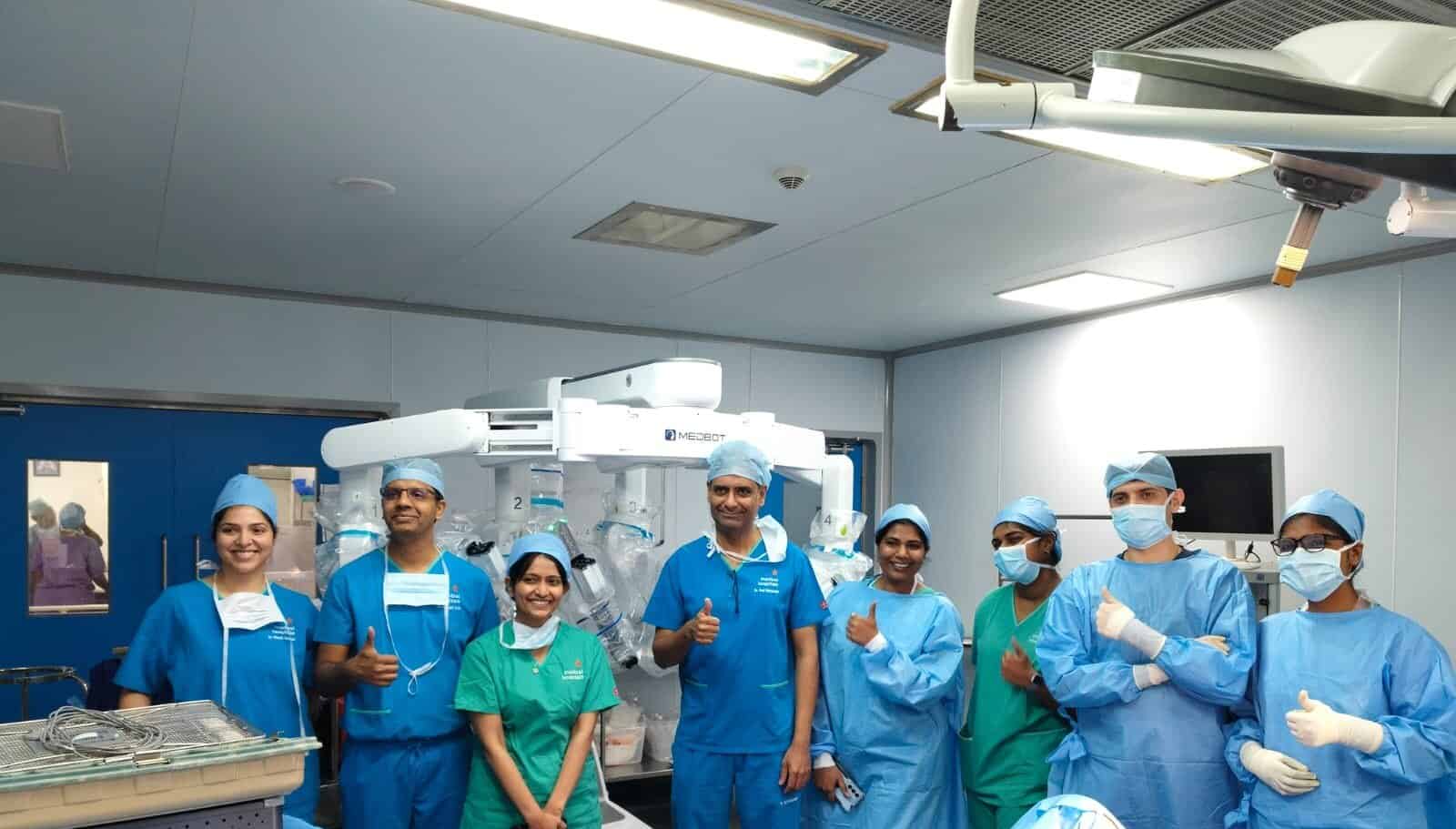
Mediastinal tumor surgery can range from a relatively limited procedure to a complex chest operation. The exact surgery depends on where the tumor is located and what it is attached to.
Common surgical options may include:
Thymectomy : This is removal of the thymus gland. It is commonly done for thymoma and selected thymic tumors. The tumor and thymus are removed together, along with surrounding fatty tissue when needed.
Extended thymectomy: In some cases, a wider clearance is needed to remove surrounding fatty tissue or tissue close to the tumor. This helps reduce the risk of leaving behind microscopic disease.
Excision of mediastinal mass: For some benign or localized tumors, the operation involves removing the mass completely while protecting nearby organs.
Resection of involved structures: If the tumor has grown into nearby tissue, surgery may sometimes involve removing a small part of the lung lining, lung tissue, pericardium, or other involved structures. This is decided only when required and when it can be done safely.
Lymph node sampling or clearance: In selected cancerous tumors, lymph nodes may be sampled or removed to check spread and guide further treatment.
Biopsy procedure: If the tumor is not suitable for immediate removal, a biopsy may be done first to establish the diagnosis. This may be done through image guidance, bronchoscopy, mediastinoscopy, thoracoscopy, or another approach depending on location.
Organ preservation is always considered where possible. However, in case of a cancer, oncologic safety comes first. The priority is complete and safe treatment, not simply choosing the smallest operation.

Many patients ask whether robotic surgery or minimally invasive surgery is possible for mediastinal tumors.
In selected patients, robotic surgery or thoracoscopic (VATS) surgery may be possible. These approaches use smaller cuts and specialized instruments to operate inside the chest. They may help reduce pain, improve visualization, and support faster recovery in suitable cases.
Robotic cancer surgery may be useful for selected mediastinal tumors because it gives the surgeon a magnified three-dimensional view and precise instrument movement. However, it is not suitable for every tumor.
Thoracoscopic(VATS) or laparoscopic-style minimally invasive chest surgery may also be considered in carefully selected patients, depending on tumor size, location, and relation to nearby structures.
Open surgery may still be the safest and best option in many situations, especially when the tumor is large, close to major blood vessels, invading surrounding organs, or when complete removal requires wider access.
As a surgical oncologist, I do not choose the approach based only on technology. I choose it based on safety, cancer clearance, and long-term outcome.
You may read more about Robotic Cancer Surgery, Laparoscopic Cancer Surgery, Minimally Invasive Cancer Surgery, and Open Cancer Surgery on the website to understand these approaches better.

Before surgery, we will review your scans, diagnosis, fitness, and treatment plan. You may need blood tests, heart evaluation, lung assessment, anesthesia review, and sometimes additional imaging.
I will explain:
On the day of surgery, the anesthesia and surgical teams will guide you. After surgery, you may be monitored in the recovery area or ICU depending on the complexity of the operation.
Hospital stay depends on the type of surgery and your recovery. Some minimally invasive surgeries may allow earlier discharge, while complex open surgeries may require a longer stay.
After surgery, the removed tumor is sent for final pathology. This report is very important. It confirms the exact tumor type, stage, margins, and whether additional treatment such as radiation or chemotherapy is needed.
Recovery at home may involve breathing exercises, wound care, gradual walking, pain medicines, nutrition support, and follow-up visits.
You may also find the Recovery After Cancer Surgery section useful for understanding general recovery principles.

It is natural for patients and families to ask about cost. Cancer treatment can create financial stress, and I believe patients deserve a clear explanation.
The Cost of Mediastinal Tumor or Cancer Surgery in Bangalore can vary from patient to patient. It is not correct to give one fixed number without reviewing the case because mediastinal tumor surgery can be simple in some patients and complex in others.
The cost may depend on:
For example, a small benign mediastinal cyst removed through a minimally invasive approach will have a different cost compared to a large cancerous tumor close to major blood vessels requiring complex open surgery.
During consultation, once we review your reports, we can give a more realistic estimate. The hospital billing team can also help you understand insurance, package components, and expected expenses.
My advice is not to choose treatment based only on the lowest cost. In mediastinal tumors, safety, completeness of treatment, surgical expertise, and hospital support are very important.

I currently consult at:
These centers provide access to comprehensive cancer care within a well-equipped hospital environment, supporting multidisciplinary treatment, investigations, and post-operative care when required.
Consultation timings and appointment details can be arranged through phone or WhatsApp for convenience.

This page has been written and medically reviewed under the guidance of Dr. Suraj Manjunath, Senior Surgical Oncologist at Apollo Hospitals, Bannerghatta Road, Bangalore.
The information has been reviewed for medical accuracy, patient clarity, and relevance to cancer surgery decision-making. Cancer treatment is always personalized and depends on factors such as the type of cancer, stage or spread of disease, overall health, co-morbidities, test results, and treatment goals.
The information is meant for patient education and should not replace an in-person consultation, diagnosis or personalized treatment plan.
Consultation Locations: Apollo Hospitals, Bannerghatta Road & Sarjapur Road, Bangalore.
Last reviewed: September 2026
