
Finding an experienced lung cancer surgeon in Bangalore is critical, and Dr Suraj Manjunath provides top-tier thoracic care at Apollo Hospitals. He delivers personalized lung cancer treatment in Bangalore tailored to your pulmonary health, helping you navigate your recovery with clear clinical guidance.


A diagnosis of lung cancer can feel frightening for both the patient and the family. I understand that many questions come up immediately — Is surgery needed? Is the cancer operable? What treatment should be done first? How safe is lung cancer surgery?
I am Dr. Suraj Manjunath, a Surgical Oncologist in Bangalore, associated with Apollo Hospitals, Bannerghatta Road and Apollo Hospitals, Sarjapur Road.
My first step is always to explain the disease in simple words. We look at the reports together. I explain where the tumor is, whether it has spread, whether surgery is possible, and whether other treatments such as chemotherapy, radiation, targeted therapy, or immunotherapy are needed.
As a Lung Cancer Surgeon in Bangalore, my role is not only to operate. My role is also to guide you through the decision-making process with honesty and clarity.
Lung cancer surgery in Bangalore may involve robotic, minimally invasive, thoracoscopic, or open surgical techniques depending on the stage of cancer, location of the tumor, lung function, and overall fitness of the patient.
My goal is simple — to help you and your family understand the situation clearly and make the right treatment decision with confidence.
This page will help you understand everything you wanted to know about Lung cancer treatment in Bangalore.

+

+

+

+

Lung cancer does not always cause clear symptoms in the early stage. Some patients are diagnosed during scans done for another reason. Others may have symptoms for weeks or months before diagnosis.
Common symptoms may include:
These symptoms do not always mean cancer. Infections, tuberculosis, asthma, or other lung conditions can also cause similar complaints. But if symptoms are persistent, worsening, or associated with blood in sputum or weight loss, proper evaluation is necessary.

Before planning lung cancer treatment in Bangalore, we need to understand the disease properly. This usually involves a few important tests.
A CT scan helps identify the size and location of the lung tumor. It also shows whether nearby lymph nodes appear enlarged.
A PET-CT scan may be advised to check whether the cancer is limited to the lung or has spread to other parts of the body.
A biopsy is done to confirm the diagnosis. In a biopsy, a small sample of tissue is taken from the tumor or lymph node and studied under a microscope.
The pathology report tells us the type of lung cancer. In some cases, additional molecular tests are done to check whether targeted therapy or immunotherapy may be useful.
Staging means finding out how far the cancer has spread. This is one of the most important steps before treatment planning.
If surgery is being considered, we also assess the patient’s fitness. This may include blood tests, heart evaluation, lung function tests, anesthesia assessment, and review of other medical conditions such as diabetes, hypertension, heart disease, or COPD.
This complete evaluation helps us decide whether surgery is safe and whether it should be done before or after other treatments.


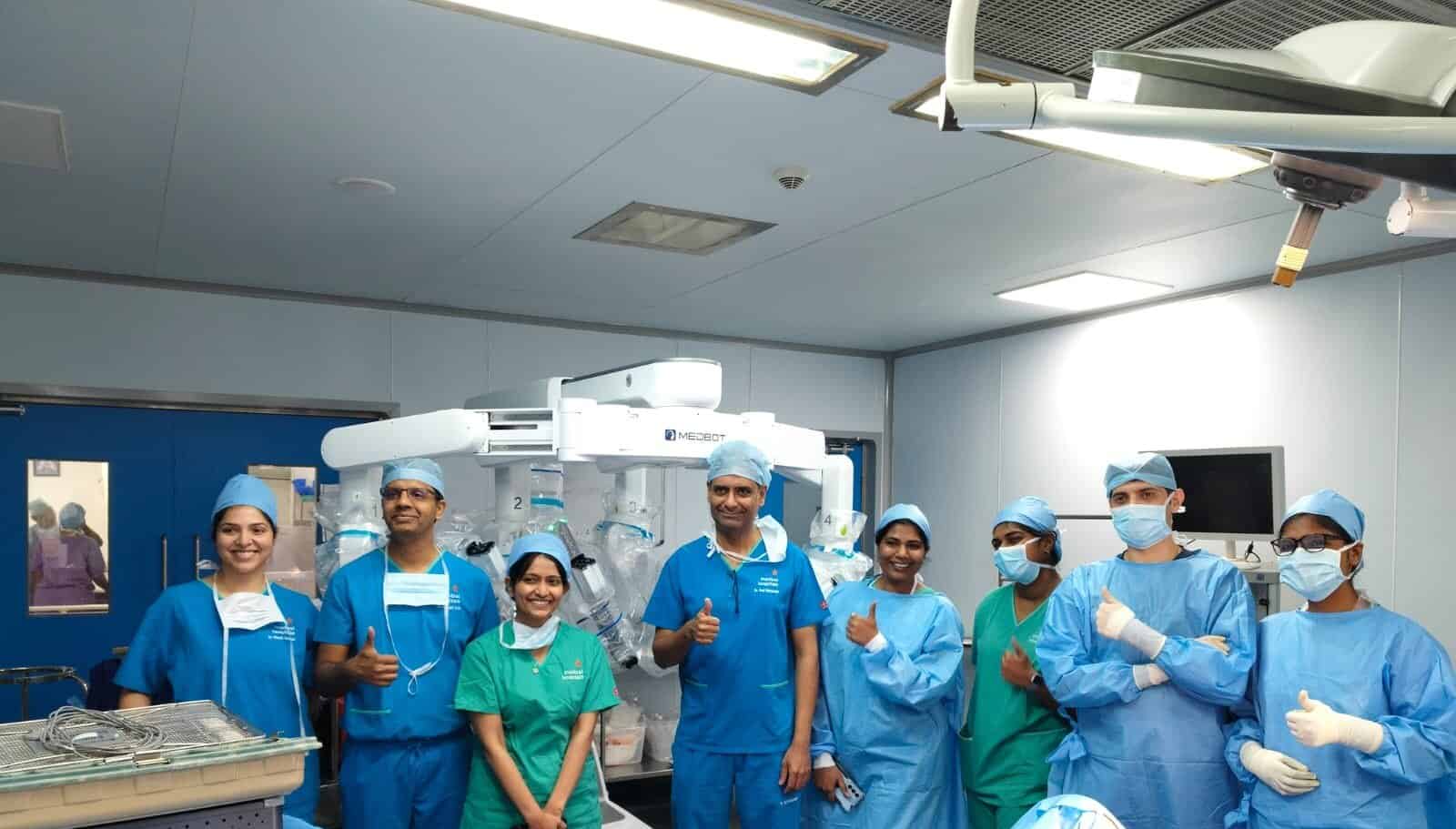
Lung cancer surgery is planned with two goals in mind — complete cancer removal and safe preservation of lung function.
Common surgical options include:
Wedge Resection
In selected early or small tumors, only a small wedge-shaped portion of the lung may be removed. This is usually considered when the tumor is very small or when lung function is limited.
Segmentectomy
The lung is divided into smaller sections called segments. In a segmentectomy, one or more affected segments are removed while preserving the remaining healthy lung.
Lobectomy
Each lung has lobes. A lobectomy means removal of one lobe of the lung. This is one of the most common surgeries for operable lung cancer.
Pneumonectomy
In rare situations, when the cancer is large or centrally located, removal of an entire lung may be required. This is a major surgery and is advised only after careful evaluation.
Lymph Node Dissection
During lung cancer surgery, nearby lymph nodes are usually removed and tested. This helps confirm the stage and guides further treatment after surgery.
In some patients, organ preservation is possible by removing only the affected part of the lung. In others, more extensive surgery may be necessary for complete cancer clearance.
The final decision is made after studying the scans, biopsy, staging, and fitness of the patient.

Many patients ask whether lung cancer surgery can be done through robotic or minimally invasive techniques.
In selected patients, lung cancer surgery may be done using robotic surgery or thoracoscopic surgery.
Thoracoscopic surgery is a minimally invasive approach where the surgery is performed through small cuts using a camera and specialized instruments.
Robotic surgery may offer better precision and visualization in selected cases. It can be useful for carefully removing the tumor and lymph nodes in suitable patients.
Minimally invasive cancer surgery may help reduce pain, shorten hospital stay, and support faster recovery in appropriate cases. However, it is not suitable for every patient.
Sometimes, open cancer surgery is still the safest and most appropriate option. This may be needed when the tumor is large, close to major blood vessels, involves central structures, or when complete cancer removal cannot be safely achieved through a smaller approach.
I always explain the reason behind the chosen method. The goal is not to choose the most modern-looking technique. The goal is to choose the safest and most effective technique for cancer clearance.
You may read more about Robotic Cancer Surgery, Laparoscopic Cancer Surgery, Minimally Invasive Cancer Surgery, and Open Cancer Surgery to understand how different approaches are selected.

Before surgery, we review all reports in detail. This includes CT scan, PET-CT, biopsy, pathology, blood tests, lung function tests, heart evaluation, and anesthesia fitness.
I explain the planned surgery, the expected hospital stay, possible risks, and the recovery process. Families are encouraged to ask questions. It is important that the patient enters surgery with clarity, not confusion.
On the day of surgery, the operation is performed under general anesthesia. The type of surgery and approach depend on the treatment plan.
After surgery, the patient is monitored closely. Some patients may need ICU observation for a short period, especially after major lung surgery or if they have other medical conditions.
Hospital stay varies depending on the type of surgery, recovery speed, pain control, breathing comfort, and drain removal.
Breathing exercises and early mobilization are important after lung surgery. The care team guides the patient through these steps.
Once the final pathology report is available, we discuss it in detail. This report confirms the exact stage, margins, lymph node status, and whether additional treatment is required.
Follow-up visits are planned to monitor recovery and guide the next steps. You may also refer to Recovery After Cancer Surgery for more general guidance on healing after major cancer operations.

Many patients and families understandably want to know the cost of lung cancer surgery in Bangalore before making treatment decisions.
It is important to understand that the cost cannot be the same for every patient. Lung cancer surgery varies from case to case.
The cost may depend on:
Some patients may need only surgery. Others may need chemotherapy, radiation, immunotherapy, or targeted therapy as part of the complete treatment plan. This can also affect the overall treatment cost.
During consultation, once I review your reports and understand the planned surgery, the hospital team can provide a more realistic cost estimate.
I always advise patients not to choose treatment based only on the lowest cost. In cancer surgery, safety, completeness of cancer removal, hospital support, and proper planning are equally important.

I currently consult at:
These centers provide access to comprehensive cancer care within a well-equipped hospital environment, supporting multidisciplinary treatment, investigations, and post-operative care when required.
Consultation timings and appointment details can be arranged through phone or WhatsApp for convenience.

This page has been written and medically reviewed under the guidance of Dr. Suraj Manjunath, Senior Surgical Oncologist at Apollo Hospitals, Bannerghatta Road, Bangalore.
The information has been reviewed for medical accuracy, patient clarity, and relevance to cancer surgery decision-making. Cancer treatment is always personalized and depends on factors such as the type of cancer, stage or spread of disease, overall health, co-morbidities, test results, and treatment goals.
The information is meant for patient education and should not replace an in-person consultation, diagnosis or personalized treatment plan.
Consultation Locations: Apollo Hospitals, Bannerghatta Road & Sarjapur Road, Bangalore.
Last reviewed: September 2026
