
If you are looking for an expert stomach cancer surgeon in Bangalore, Dr Suraj Manjunath provides comprehensive clinical care at Apollo Hospitals. He delivers personalized, supportive stomach cancer treatment in Bangalore tailored to your specific diagnosis, focusing entirely on thorough tumor management and your smooth physical recovery.


A diagnosis of stomach cancer can feel frightening and confusing. Many patients and families are left wondering what the diagnosis means, whether surgery is needed, how treatment is planned, and what recovery will look like.
I am Dr. Suraj Manjunath, a Surgical Oncologist in Bangalore, associated with Apollo Hospitals, Bannerghatta Road and Apollo Hospitals, Sarjapur Road.
I treat stomach and other gastrointestinal cancers using a thoughtful, evidence-based approach that may involve robotic, laparoscopic, minimally invasive, or open cancer surgery, depending on what is safest and most appropriate for the patient.
When I evaluate a patient with stomach cancer, I do not look at the scan or biopsy in isolation. I look at the whole picture — the exact location of the tumor, the stage of the disease, the patient’s fitness, nutritional status, symptoms, and the treatment sequence that offers the best chance of control or cure.
As a Stomach Cancer Surgeon in Bangalore, my goal is not just to operate, but to guide you toward the treatment plan that is safest and most appropriate for you.
This page is meant to help you understand stomach cancer treatment in Bangalore, the role of surgery, what recovery may involve, and what questions you should ask during consultation.

+

+

+

+

The symptoms of stomach cancer can vary from one person to another.
Common symptoms can include:
These symptoms do not always mean cancer. Many common stomach problems can cause similar complaints.
But when symptoms are persistent, worsening, or associated with weight loss, vomiting, bleeding, or a diagnosed ulcer that is not healing properly, proper evaluation becomes important.

The diagnosis usually begins with an endoscopy, where a camera is used to look inside the stomach. If a suspicious area is seen, a biopsy is taken.
A biopsy means a small tissue sample is removed and sent to the lab. This is what confirms whether the growth is cancer.
Once the diagnosis is confirmed, we usually need imaging tests to understand the stage of the disease. These may include CT scans and, in selected cases, other scans depending on the findings.
Staging helps us understand how deep the tumor has gone, whether lymph nodes are involved, and whether the disease has spread elsewhere.
Before any major stomach cancer surgery in Bangalore, I also assess the patient’s overall fitness. This may include blood tests, heart and lung evaluation, nutritional review, and anesthesia fitness.
Only after putting all of this together do we decide the safest and most effective treatment plan.


In some patients, only a part of the stomach needs to be removed. This is called a partial gastrectomy or subtotal gastrectomy. This may be possible when the cancer is located in one part of the stomach and enough healthy stomach can be safely preserved.
In other patients, the entire stomach may need to be removed. This is called a total gastrectomy. When this is required, the food passage is reconstructed by connecting the food pipe to the small intestine so that eating remains possible after recovery.
Along with removing the tumor, surgery for stomach cancer also usually involves removal of nearby lymph nodes & tissues.
The goal is always to remove the disease safely while preserving function as much as is reasonably possible.
Patients often ask whether organ preservation is possible. The answer depends on the tumor. When safe, we preserve what we can. But in cancer surgery, the first priority is complete and safe removal of the disease.

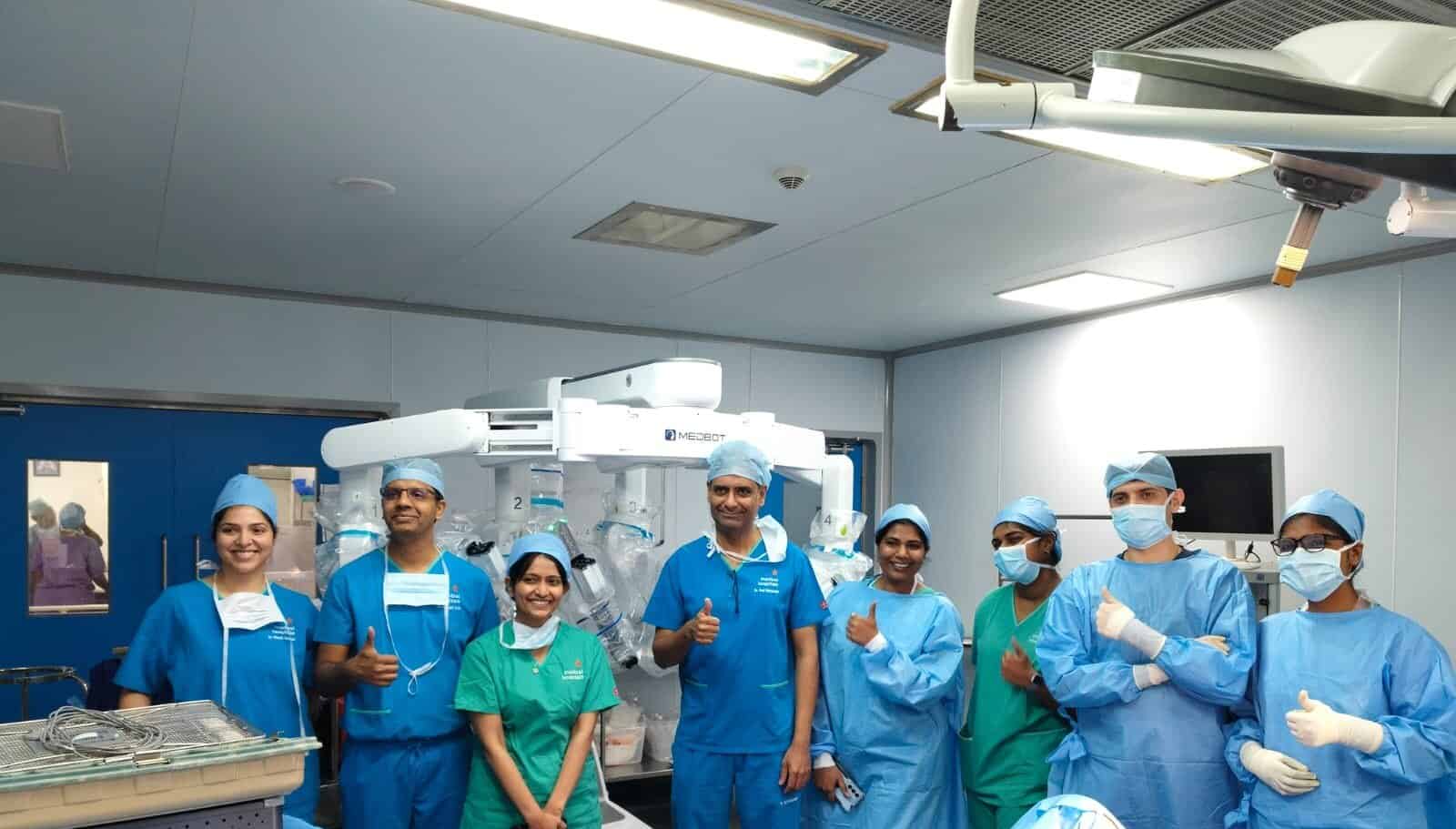
In selected patients, robotic cancer surgery may be possible. Robotic surgery can offer improved precision and fine control in carefully chosen cases.
In selected patients, laparoscopic cancer surgery may also be possible. This is another minimally invasive approach done through small incisions using a camera and specialised instruments.
Both robotic and laparoscopic approaches aim to reduce unnecessary surgical trauma while still maintaining cancer safety.
However, these methods are not suitable for every patient. Large tumors, difficult anatomy, prior surgery, advanced local disease, or other clinical factors may make an open cancer surgery approach safer and more appropriate.
The best surgical approach is the one that is safest for the patient and most appropriate for the cancer.
If you are exploring minimally invasive cancer surgery, I can help you understand whether robotic or laparoscopic surgery is realistically suitable in your case, and when open surgery may actually offer better safety and control.

Before surgery, I review your reports and explain the plan clearly. We discuss the type of surgery, likely hospital stay, possible recovery timeline, and the support you may need.
Patients usually undergo pre-surgery tests, anesthesia review, and nutritional assessment.
After surgery, the hospital stay depends on the extent of the operation, the surgical approach, and the patient’s recovery progress.
In the first few days, we focus on pain control, breathing exercises, gradual movement, monitoring, and safely restarting intake as appropriate. Patients and families are guided step by step.
Once the final pathology report is available, I discuss the findings with you and explain whether additional treatment such as chemotherapy is advised after surgery.
Recovery does not end at discharge. Follow-up matters. Nutritional adaptation, wound healing, bowel function, strength, and long-term monitoring all need attention.
Patients can also explore guidance around Recovery After Cancer Surgery as part of their broader healing process.

Many patients understandably want to know the cost of stomach cancer surgery in Bangalore. This is an important question, and it deserves a clear and honest answer.
The overall cost depends on multiple factors, including:
My advice is this: do not judge the treatment plan based on price alone. First understand what operation is actually needed, whether surgery is the right step now, and what level of care your case requires. Once the plan is clear, a realistic estimate can be discussed with the hospital team.

I currently consult at:
These centers provide access to comprehensive cancer care within a well-equipped hospital environment, supporting multidisciplinary treatment, investigations, and post-operative care when required.
Consultation timings and appointment details can be arranged through phone or WhatsApp for convenience.

This page has been written and medically reviewed under the guidance of Dr. Suraj Manjunath, Senior Surgical Oncologist at Apollo Hospitals, Bannerghatta Road, Bangalore.
The information has been reviewed for medical accuracy, patient clarity, and relevance to cancer surgery decision-making. Cancer treatment is always personalized and depends on factors such as the type of cancer, stage or spread of disease, overall health, co-morbidities, test results, and treatment goals.
The information is meant for patient education and should not replace an in-person consultation, diagnosis or personalized treatment plan.
Consultation Locations: Apollo Hospitals, Bannerghatta Road & Sarjapur Road, Bangalore.
Last reviewed: September 2026
