
Dr Suraj Manjunath is a leading expert in head and neck cancer surgery in Bangalore, providing advanced oncology care at Apollo Hospitals. He specializes in comprehensive head and neck cancer treatment, focusing heavily on precise tumor clearance while preserving vital functional anatomy. Select your specific diagnosis below to access detailed medical guidance.


Head and neck cancers are not just one disease. This is a broad group that includes cancers affecting the oral cavity, tongue, cheek, jaw region, throat, voice box, thyroid, salivary glands, and nearby tissues.
Many patients come in feeling overwhelmed because they are hearing too many unfamiliar terms at once. You may have been told about a biopsy, staging scan, lymph nodes, reconstruction, radiation, or robotic surgery. It is natural to feel anxious.
I am Dr. Suraj Manjunath, a Surgical Oncologist in Bangalore, associated with Apollo Hospitals, Bannerghatta Road and Apollo Hospitals, Sarjapur Road.
My goal is to help you understand what kind of cancer you are dealing with, what treatment options are available, and whether surgery is needed. As a head and neck cancer surgeon in Bangalore, I work with patients who need thoughtful planning, safe cancer surgery, and clear guidance at every stage.
This page will help you understand what head and neck cancers include, how treatment is planned, and when surgery may be part of the treatment journey.

+

+

+

+

Many patients first notice a non-healing ulcer, a growth inside the mouth, pain while chewing, bleeding, or difficulty swallowing.
Early evaluation is important because treatment depends on the exact location, size of the tumor, and whether lymph nodes in the neck are involved.
In many cases, surgery plays a central role in treatment, often along with careful staging and further therapy when needed.
For a more detailed understanding of symptoms, diagnosis, treatment options, and surgery, please visit the individual Oral Cancer page.

Patients may first notice a persistent or enlarging neck lump, sometimes without any other obvious symptoms. Careful evaluation is important and may include imaging, biopsy, endoscopic examination, and targeted assessment of likely primary sites. Treatment depends on the biopsy findings, the lymph nodes involved, and whether the original cancer can eventually be located.
For a more detailed understanding, please click the button below to visit the individual Cervical Lymph Node Metastases of Unknown Origin (MUO) page.

Patients may notice persistent throat pain, difficulty swallowing, a sensation of something stuck in the throat, voice changes, ear pain, or a lump in the neck.
Treatment depends on the exact site, stage of the cancer, and whether nearby lymph nodes are involved.
In some cases, surgery may be part of treatment, while in others radiation, chemotherapy, or a combination approach may be more appropriate.
For a more detailed understanding of symptoms, diagnosis, treatment options, and treatment planning, please visit the individual Throat Cancer page.

One of the most common early symptoms is persistent hoarseness or a change in voice that does not improve.
Some patients may also experience throat discomfort, difficulty swallowing, breathing difficulty, or a lump in the neck if the disease has spread to nearby lymph nodes.
Treatment depends on the exact location and stage of the cancer, and may involve surgery, radiation therapy, or a combined treatment approach.

Many patients first notice a thyroid swelling or nodule, while others are diagnosed after a scan or biopsy done for a neck lump.
In many cases, thyroid cancer is treatable, especially when identified and managed appropriately.
Treatment depends on the type of thyroid cancer, the size of the tumor, and whether it has spread to nearby lymph nodes or surrounding structures. Surgery is often a key part of treatment planning.

Patients may notice a swelling near the cheek, jaw, or upper neck, and while some of these tumors are benign, others may be cancerous and need timely treatment.
The treatment plan depends on which gland is involved, the size and nature of the tumor, and whether nearby nerves or lymph nodes are affected.
Surgery is often an important part of treatment, with careful planning needed to remove the tumor safely while preserving function as much as possible.

Head and Neck Cancer Treatment in Bangalore should never be one-size-fits-all. Before deciding on treatment, I usually review several important factors:
Biopsy or tissue diagnosis
A biopsy confirms what kind of tumor or cancer is present. This is one of the most important steps because different cancers are treated differently.
Imaging and scans
Scans such as ultrasound, CT, MRI, or PET-CT help us understand the size of the tumor, involvement of nearby structures, and whether lymph nodes are affected.
Staging
Staging means understanding how advanced the cancer is. This includes the size of the primary tumor, involvement of lymph nodes, and whether the disease has spread elsewhere.
Site of disease
Treatment planning differs for oral cancer, thyroid cancer, laryngeal cancer, salivary gland tumors, and other head and neck cancers. Even within the same category, the treatment approach may vary significantly.
Functional considerations
In head and neck surgery, we also think about swallowing, speech, breathing, cosmetic appearance, and recovery. These are not small issues. They are a central part of planning.
Multidisciplinary discussion
Many patients benefit from a team-based approach that may involve surgical oncology, ENT, medical oncology, radiation oncology, pathology, radiology, anesthesia, nutrition, speech and swallow support, and reconstructive planning when needed.
In some patients, surgery is the main treatment. In others, surgery is followed by radiation or chemotherapy. In some situations, surgery may not be the first step at all. My role is to guide you toward the safest and most effective path for your specific diagnosis.
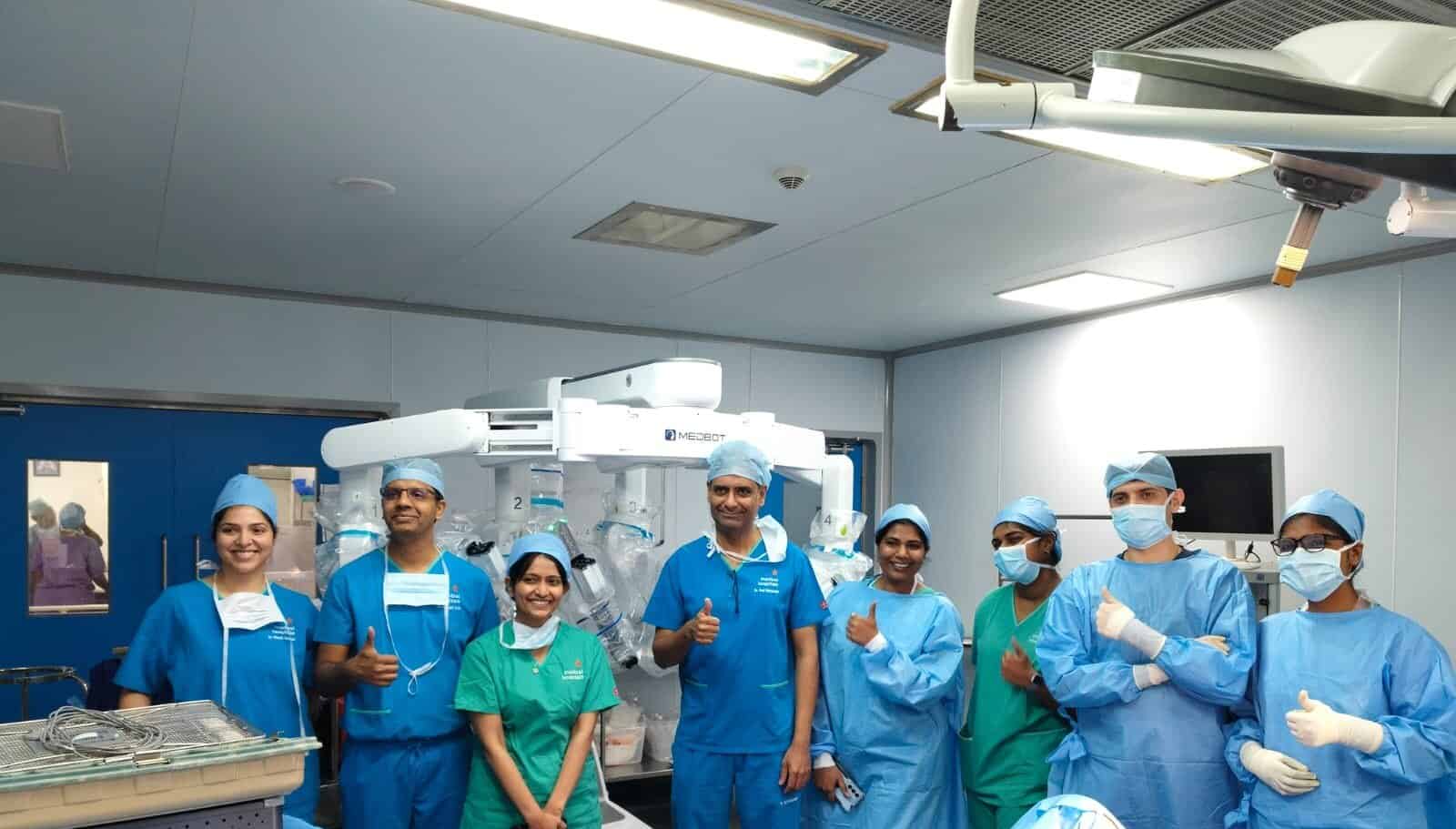
When surgery is needed, the approach is selected based on the tumor site, size, stage, nearby structures involved, and the overall treatment objective.
Open Surgery
Many head and neck cancers still require open surgery. This may be the safest way to remove the tumor fully and reconstruct the area when needed. Cancer clearance always comes first.
Robotic Surgery
Robotic techniques may be useful in carefully selected tumors in difficult-to-reach locations. The benefit is better access and precision in some situations. But robotic surgery is not suitable for every patient, and it should never be chosen just for marketing value.
Neck Dissection
This is a surgery to remove lymph nodes from the neck when cancer has spread there or when there is a meaningful risk of spread. It is a very important part of treatment in many oral and head and neck cancers.
Reconstructive Planning
After cancer removal, some patients may need reconstruction to help restore swallowing, speech, coverage, or appearance. Planning this properly can make a major difference to recovery and quality of life.
My philosophy is simple: the best operation is the one that gives safe cancer control while preserving function as much as possible. The right treatment is not about choosing the newest technique. It is about choosing the correct technique for your disease.

I currently consult at:
These centers provide access to comprehensive cancer care within a well-equipped hospital environment, supporting multidisciplinary treatment, investigations, and post-operative care when required.
Consultation timings and appointment details can be arranged through phone or WhatsApp for convenience.

This page has been written and medically reviewed under the guidance of Dr. Suraj Manjunath, Senior Surgical Oncologist at Apollo Hospitals, Bannerghatta Road, Bangalore.
The information has been reviewed for medical accuracy, patient clarity, and relevance to cancer surgery decision-making. Cancer treatment is always personalized and depends on factors such as the type of cancer, stage or spread of disease, overall health, co-morbidities, test results, and treatment goals.
The information is meant for patient education and should not replace an in-person consultation, diagnosis or personalized treatment plan.
Consultation Locations: Apollo Hospitals, Bannerghatta Road & Sarjapur Road, Bangalore.
Last reviewed: September 2026
