
Dr Suraj Manjunath is a highly qualified vulvar cancer surgeon in Bangalore, treating rare gynecological conditions with utmost sensitivity at Apollo Hospitals. He provides specialized, tissue-sparing vulvar cancer treatment in Bangalore aimed at thorough tumor removal while prioritizing your comfort and preservation.


I understand how difficult it can be to hear the words “vulvar cancer.” Many patients and families feel anxious, confused, and unsure about what should happen next.
I am Dr. Suraj Manjunath, a Surgical Oncologist in Bangalore, associated with Apollo Hospitals, Bannerghatta Road and Apollo Hospitals, Sarjapur Road.
As a Vulvar Cancer Surgeon in Bangalore, my role is to help you understand your diagnosis clearly, evaluate the stage of the cancer, and guide you toward the most appropriate treatment plan. Vulvar cancer surgery requires careful judgment because the treatment must remove the cancer safely while also protecting function, healing, comfort, and long-term quality of life.
If you or your loved one has been advised vulvar cancer surgery in Bangalore, or if you are looking for a second opinion before deciding, my goal is to help you make the next step with clarity and confidence.
This page will help you understand all about Vulvar cancer treatment in Bangalore.

+

+

+

+

Vulvar cancer symptoms can be different from patient to patient. Some women notice symptoms early, while others may delay consultation because the symptoms feel embarrassing or are mistaken for infection, allergy, or age-related skin changes.
Common symptoms may include:
Not every symptom means cancer. Many non-cancerous conditions can also cause itching, pain, or skin changes. However, if symptoms are persistent, worsening, or if a biopsy has already suggested cancer, it is important to consult a specialist.
Please do not feel hesitant or embarrassed. These are medical concerns, and they deserve respectful, careful evaluation.

Before planning vulvar cancer treatment in Bangalore, it is important to understand the exact nature and stage of the disease.
The first step is usually a clinical examination. This helps assess the size, location, and extent of the lesion. The groin areas are also examined because vulvar cancer can sometimes spread to lymph nodes in the groin.
A biopsy is the most important test for confirming the diagnosis. In a biopsy, a small piece of tissue is removed and examined under a microscope. This tells us whether it is cancer, what type of cancer it is, and how aggressive it appears.
Pathology reports help us understand the cancer better. They may describe the type of cancer, grade, depth of invasion, and other features that influence treatment planning.
Imaging tests may be advised depending on the case. These may include MRI, CT scan, PET-CT, or ultrasound of the groin. Scans help us check whether the cancer is limited to the vulva or has spread to nearby tissues, lymph nodes, or other areas.
Staging means understanding how far the cancer has spread. This is very important because early-stage and advanced-stage vulvar cancers may require different treatment approaches.
Before surgery, we also assess your general fitness. This may include blood tests, heart evaluation, anesthesia review, diabetes or blood pressure control, and nutrition assessment if needed.


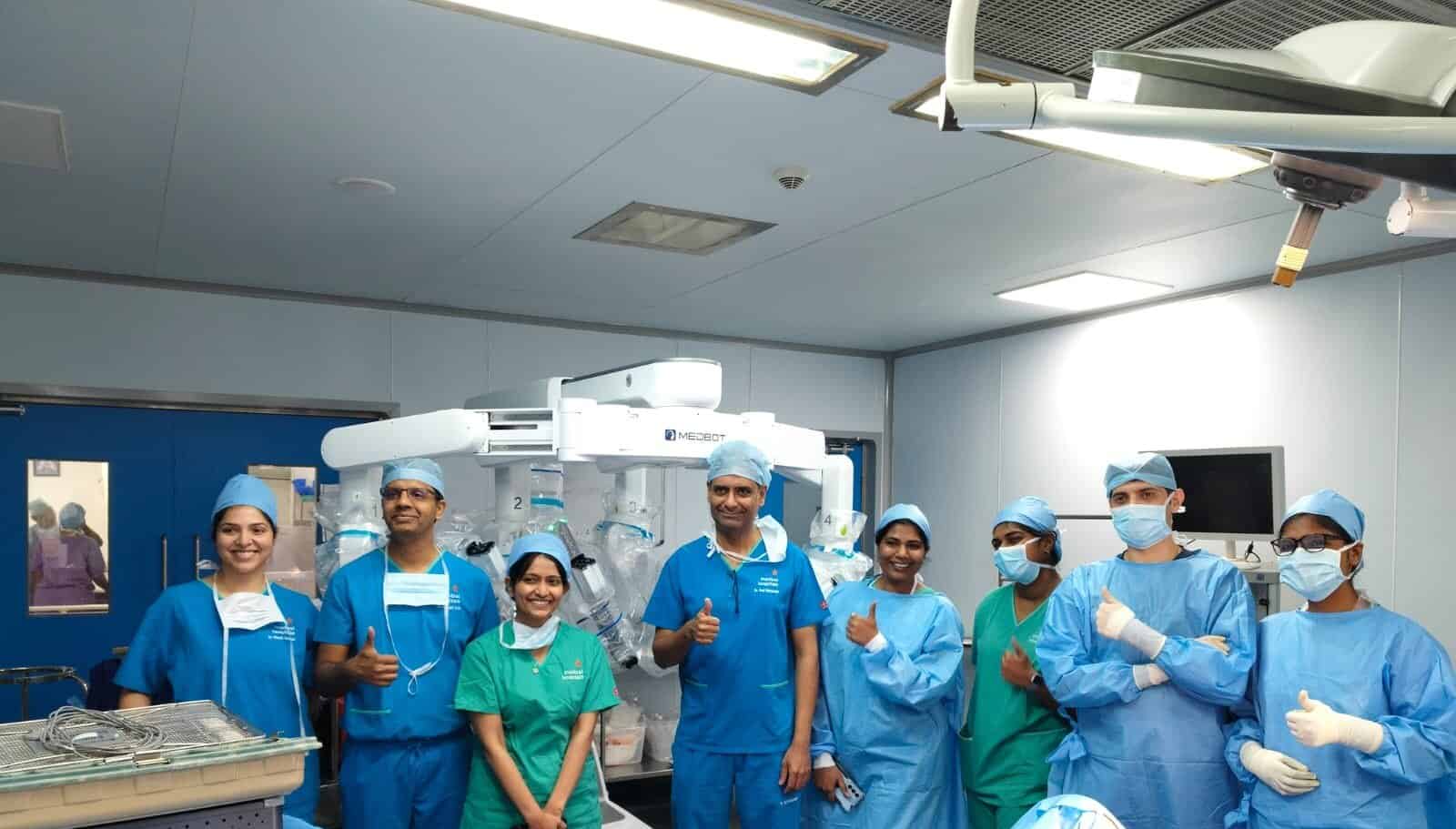
Vulvar cancer surgery is not one single operation. The type of surgery is chosen based on the cancer and the patient’s condition.
Wide Local Excision
This is used for selected smaller cancers. The cancer is removed along with a rim of healthy tissue around it. The aim is to remove the tumor completely while preserving as much normal tissue as possible.
Partial Vulvectomy
In this procedure, part of the vulva is removed. It may be needed when the cancer involves a larger area but does not require removal of the entire vulva. The goal is complete cancer clearance with thoughtful preservation of function and appearance where safely possible.
Radical Local Excision
This is a deeper and wider removal of the cancer-bearing area. It may be needed when the cancer has invaded deeper tissues. The exact extent is planned carefully after examination and imaging.
Radical Vulvectomy
In more extensive cancers, a larger part or sometimes the entire vulva may need to be removed. This is usually reserved for selected cases where limited surgery will not provide safe cancer clearance.
Sentinel Lymph Node Biopsy
In selected early-stage cancers, sentinel lymph node biopsy may be used to check whether cancer has spread to the first draining lymph node. This can help reduce the need for more extensive groin node removal in properly selected patients.
Groin Lymph Node Dissection
If lymph nodes are suspicious, enlarged, or confirmed to be involved, lymph node surgery in the groin may be required. This helps with staging and treatment planning, but it also needs careful discussion because it may affect wound healing and leg swelling risk.
Reconstructive Surgery
Some patients may need reconstruction after tumor removal, especially when a larger area is removed. Reconstruction helps cover the defect, support healing, and improve comfort. In such cases, planning may involve a reconstructive or plastic surgery team.
The aim of surgery is not only to remove cancer. It is also to help you heal well and return to life with dignity and confidence.

Many patients ask whether robotic or laparoscopic surgery is possible for vulvar cancer. The answer depends on what part of the treatment we are discussing.
The primary vulvar tumor is usually treated through a direct surgical approach because it is located on the outer genital area. For the vulvar tumor itself, open local surgery is commonly required to remove the cancer with proper margins.
Robotic Cancer Surgery may be useful in selected pelvic cancer operations where precision, depth, and access matter. It is not automatically needed for every vulvar cancer case.
Laparoscopic Cancer Surgery may be considered in selected situations where minimally invasive access is safe and appropriate.
Open Cancer Surgery remains very important in vulvar cancer, especially when direct tumor removal, margin control, reconstruction, or groin node surgery is required.
My approach is simple: I do not choose a method because it sounds advanced. I choose the method that gives the best chance of safe cancer clearance, good healing, and appropriate recovery for your specific case.
You can also read more about Robotic Cancer Surgery, Laparoscopic Cancer Surgery, Open Cancer Surgery, and Minimally Invasive Cancer Surgery on this website.

Before surgery, we review your biopsy, scans, blood tests, medical history, and fitness for anesthesia. If you have diabetes, hypertension, heart disease, or other medical conditions, these are optimized before surgery.
You may meet the anesthesia team before the operation. In some cases, other specialists may also be involved, especially if reconstruction, radiation planning, or medical oncology input is needed.
Before surgery, I will explain:
After surgery, the focus is on pain control, wound care, mobility, prevention of infection, and emotional support. The hospital stay depends on the extent of surgery and whether lymph nodes or reconstruction are involved.
Some patients may need only a shorter stay, while more extensive surgery may require longer monitoring.
The final pathology report after surgery is very important. It tells us whether the cancer has been completely removed, whether margins are clear, whether lymph nodes are involved, and whether radiation or chemotherapy is needed.
Follow-up visits are planned to monitor healing, discuss pathology, guide further treatment, and watch for recurrence. You may also be guided on wound care, sitting posture, hygiene, walking, and gradual return to daily activities.
You can read more about Recovery After Cancer Surgery on this website.

The cost of vulvar cancer surgery in Bangalore cannot be accurately stated without reviewing the patient’s reports and treatment plan. It is not safe or ethical to give a fixed estimate without knowing the stage and complexity of the case.
The cost may depend on:
During consultation, once I review your reports, I can guide you on the likely treatment pathway. The hospital team can then help you understand the estimated cost more clearly.

I currently consult at:
These centers provide access to comprehensive cancer care within a well-equipped hospital environment, supporting multidisciplinary treatment, investigations, and post-operative care when required.
Consultation timings and appointment details can be arranged through phone or WhatsApp for convenience.

This page has been written and medically reviewed under the guidance of Dr. Suraj Manjunath, Senior Surgical Oncologist at Apollo Hospitals, Bannerghatta Road, Bangalore.
The information has been reviewed for medical accuracy, patient clarity, and relevance to cancer surgery decision-making. Cancer treatment is always personalized and depends on factors such as the type of cancer, stage or spread of disease, overall health, co-morbidities, test results, and treatment goals.
The information is meant for patient education and should not replace an in-person consultation, diagnosis or personalized treatment plan.
Consultation Locations: Apollo Hospitals, Bannerghatta Road & Sarjapur Road, Bangalore.
Last reviewed: September 2026
