
Dr Suraj Manjunath is a senior Surgical Oncologist providing soft tissue sarcomas of extremity cancer treatment in Bangalore at Apollo Hospitals, Bannerghatta Road and Sarjapur Road. Treatment is personalized according to the tumor’s type, size, grade, location and stage. It may include limb-sparing surgery, radiation therapy or chemotherapy, with the aim of removing the cancer safely while preserving limb function whenever possible.


Soft tissues include muscles, fat, tendons, fibrous tissue, nerves, blood vessels and tissues around joints. A soft tissue sarcoma develops when abnormal cells begin growing uncontrollably in one of these tissues.
When the tumor develops in an arm or leg, it is called an extremity soft tissue sarcoma. These tumors can arise in the thigh, lower leg, upper arm, forearm, hand, foot, shoulder region or around a joint.
There are many subtypes, including liposarcoma, leiomyosarcoma, synovial sarcoma, undifferentiated pleomorphic sarcoma, myxofibrosarcoma and malignant peripheral nerve sheath tumor. The subtype can influence the treatment plan, but patients do not need to understand every medical name at the beginning. I will explain what your pathology report means in simple language.
The grade is particularly important. It tells us how active or aggressive the cancer cells appear under the microscope. Lower-grade sarcomas usually grow more slowly, while higher-grade tumors have a greater possibility of recurring or spreading.
Soft tissue sarcomas may spread through the bloodstream, most commonly to the lungs. Spread to lymph nodes is less common in most sarcoma subtypes. This is why staging usually includes imaging of the chest as well as assessment of the affected limb.
Specialist evaluation matters because sarcoma surgery requires more than removing a visible lump. The surgeon must remove the tumor with an adequate rim of uninvolved tissue, called a clear surgical margin, while protecting limb function as far as safely possible.

I understand how worrying it can be to hear the word “sarcoma,” especially when the tumor is located in an arm or leg. Patients and families often have immediate questions: Will surgery be required? Can the limb be saved? Will the tumor return? How long will recovery take?
I am Dr. Suraj Manjunath, a Surgical Oncologist in Bangalore, associated with Apollo Hospitals, Bannerghatta Road and Apollo Hospitals, Sarjapur Road.
My role is to give you a clear, realistic explanation of your condition and help your family make informed decisions without unnecessary fear or confusion.
Soft tissue sarcoma is not one single disease. There are many different subtypes, and each may behave differently. The treatment plan depends on the tumor’s location, size, depth, grade, relationship to nerves and blood vessels, and whether it has spread.
As an extremity soft tissue sarcoma surgeon in Bangalore, I review the scans, biopsy findings and pathology carefully before recommending treatment. In suitable cases, treatment may involve surgery alone. Other patients may benefit from radiation therapy or chemotherapy before or after surgery.
When treating a sarcoma in the arm or leg, my aim is not only to remove the cancer safely, but also to preserve the limb and its function whenever medically possible.
This page will help you understand extremity soft tissue sarcoma, symptoms, diagnosis, treatment options, surgery types, recovery, and the factors that affect the cost of extremity soft tissue sarcoma surgery in Bangalore.

+

+

+

+

The most common symptom is a lump or swelling in the arm or leg. In the early stages, the lump may not cause pain. This can lead people to postpone evaluation because they assume that a painless swelling is harmless.
Possible warning signs include:
Not every lump is a sarcoma. Lipomas, cysts and other non-cancerous swellings are much more common. However, a growing, deep or unexplained lump should be evaluated rather than repeatedly observed without a clear diagnosis.

A diagnosis usually begins with a clinical examination. I assess where the lump is located, whether it is superficial or deep, its approximate size, its mobility and whether it is affecting nearby nerves, blood vessels or joints.
The investigations may include:
Ultrasound: An ultrasound may help distinguish a solid swelling from a fluid-filled cyst. It can be useful as an initial test, although further imaging is usually needed if a sarcoma is suspected.
MRI of the affected limb: MRI is usually the most useful scan for an extremity tumor. It shows the size and depth of the tumor and its relationship to muscles, bones, joints, nerves and blood vessels. MRI is generally better than CT for examining sarcomas in an arm or leg.
Core needle biopsy: A biopsy provides small tissue samples for examination by a pathologist. A core needle biopsy is commonly preferred because it usually obtains enough tissue to determine the type and grade of the tumor without a large incision.
The biopsy should be planned carefully by a team familiar with sarcoma treatment. The pathologist may also perform special tests, including molecular or genetic testing, to confirm certain sarcoma subtypes.
Staging scans: A CT scan of the chest is commonly performed because the lungs are an important site to assess for possible spread. Additional CT or PET-CT imaging may be advised in selected cases, but every patient does not need every scan.
Assessment before surgery: Blood tests, heart and lung evaluation, medication review and anesthesia assessment help us determine whether you are fit for the proposed operation. We also evaluate nutrition, mobility and other medical conditions that may affect recovery.
Once these results are available, the case may be discussed by a multidisciplinary team involving surgical oncology, radiology, pathology, medical oncology, radiation oncology and reconstructive or other specialists when required.


The decision depends on the tumor’s size, grade, depth, surgical margins and location. Radiation is not automatically required for every small or low-grade sarcoma.


The operation is planned according to the tumor’s location, size, depth and relationship to important structures.
Wide local excision
This is the most common operation. The tumor is removed in one piece with a planned margin of surrounding tissue. The margin reduces the possibility of cancer cells being left behind.
The operation should not simply “shell out” the visible lump. Sarcoma cells may extend microscopically beyond what can be seen during surgery.
Limb-sparing surgery
Most patients with extremity sarcoma can be considered for limb-sparing surgery. The tumor and affected surrounding tissue are removed while retaining the arm or leg.
When muscle, skin, bone or other tissue must be removed, reconstruction may be needed. This could involve a skin graft, tissue flap, bone reconstruction or another reconstructive procedure. Physiotherapy is then planned to help restore movement and strength.
Surgery involving nerves or blood vessels
If the tumor lies close to a major nerve or blood vessel, MRI and surgical assessment help determine whether the structure can be separated safely or must be removed and reconstructed. Preserving a limb is valuable only when the remaining limb is safe and likely to have meaningful function.
Re-excision after an unplanned operation
Sometimes a lump is removed before sarcoma is suspected. If the pathology later shows sarcoma, another operation may be recommended to remove the previous surgical area and any potentially affected tissue.
Amputation
Amputation is now uncommon in soft tissue sarcoma treatment. It may still be considered if the tumor extensively involves critical nerves, blood vessels or other structures and a safe, useful limb cannot be preserved. The National Cancer Institute identifies limb-sparing surgery as a principal approach and notes that amputation is rarely used.
Lymph node surgery
Routine lymph node removal is not required for most soft tissue sarcomas. It may be considered if scans or examination show suspicious nodes or if the particular sarcoma subtype has a greater tendency to spread through the lymphatic system.

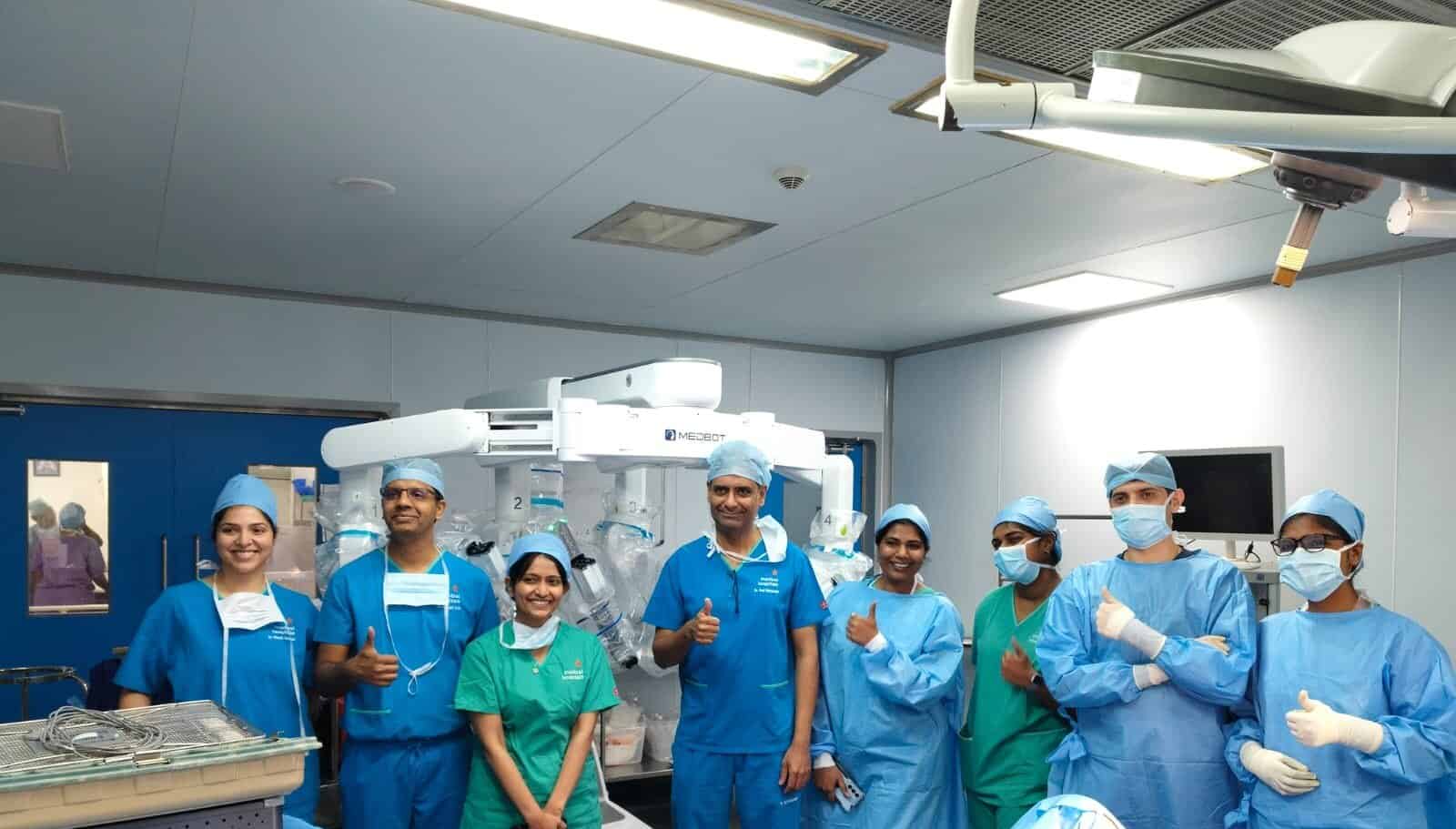
Patients sometimes ask whether robotic or laparoscopic surgery can be used for an extremity soft tissue sarcoma.
For most sarcomas located in an arm or leg, conventional open surgery is the standard and most appropriate approach. It allows the surgeon to remove the tumor in one piece, obtain the required margins and carefully manage nearby muscles, nerves and blood vessels.
Robotic and laparoscopic techniques are mainly designed for tumors located inside body cavities, such as the abdomen, pelvis or chest. They generally do not provide an advantage for a soft tissue tumor that is directly accessible within a limb.
In highly selected tumors near the shoulder, pelvis or another anatomically difficult region, a minimally invasive or combined approach may occasionally be considered. However, this is unusual and should never be chosen simply to reduce the size of the scar.
My experience in Robotic Cancer Surgery, Laparoscopic Cancer Surgery, Minimally Invasive Cancer Surgery and Open Cancer Surgery allows me to assess the available approaches objectively. For extremity sarcoma, I will recommend open surgery when it provides the best cancer clearance and protection of limb function.
The operation should be chosen for oncological safety—not because one technique sounds more advanced.

Before surgery, I will explain the planned operation, the structures that may need to be removed, the possibility of reconstruction and the expected effect on limb function.
Preparation may include blood tests, anaesthesia evaluation, nutritional assessment and treatment of conditions such as diabetes, anaemia or high blood pressure. If you smoke, stopping before surgery can improve wound healing.
In some patients, physiotherapy begins even before surgery. This is sometimes called prehabilitation. It helps prepare the muscles and allows the rehabilitation team to record your movement and strength before treatment.
The duration of surgery and hospital stay depends on the tumor and the extent of reconstruction. A smaller superficial tumor may require a shorter stay, while a deep tumor involving important structures may require more extensive surgery and monitoring.
After surgery, care may include:
The removed tumor is examined by the pathologist. The final report confirms the sarcoma subtype, grade, size, treatment response if therapy was given before surgery, and whether the surgical margins are clear.
I will discuss this report with you and explain whether further radiation, chemotherapy or observation is advised.
Recovery is different for every patient. Some people regain daily function within a few weeks, while patients undergoing major muscle, nerve, bone or tissue reconstruction may need rehabilitation over several months.
Follow-up usually includes examination of the operated area and periodic chest and local imaging. The schedule depends on the subtype, grade, stage and treatment received.

It is understandable that patients and families want to know the cost of treatment before making arrangements. However, there is no single fixed cost for every sarcoma operation.
The cost of extremity soft tissue sarcoma surgery in Bangalore depends on:
After reviewing your MRI, biopsy, stage and proposed reconstruction, the hospital team can prepare a case-specific estimate. This is more useful than quoting a broad figure that may not match the treatment you actually need.
If you have health insurance, the hospital insurance desk can help check authorization requirements and whether specific implants, reconstructive procedures or therapies are covered.

I currently consult at:
This center provide access to comprehensive cancer care within a well-equipped hospital environment, supporting multidisciplinary treatment, investigations, and post-operative care when required.
Consultation timings and appointment details can be arranged through phone or WhatsApp for convenience.

This page has been written and medically reviewed under the guidance of Dr. Suraj Manjunath, Senior Surgical Oncologist at Apollo Hospitals, Bannerghatta Road, Bangalore.
The information has been reviewed for medical accuracy, patient clarity, and relevance to cancer surgery decision-making. Cancer treatment is always personalized and depends on factors such as the type of cancer, stage or spread of disease, overall health, co-morbidities, test results, and treatment goals.
The information is meant for patient education and should not replace an in-person consultation, diagnosis or personalized treatment plan.
Consultation Locations: Apollo Hospitals, Bannerghatta Road & Sarjapur Road, Bangalore.
Last reviewed: June 2026
