
Dr Suraj Manjunath is an experienced specialist in urologic cancer surgery in Bangalore, offering comprehensive care at Apollo Hospitals. He provides advanced urologic cancer treatment paths for conditions affecting the kidneys, bladder, prostate, and testicular tract. Explore the links below to find detailed, patient-focused information on specific urological diagnoses.


Urologic cancers are cancers that develop in the urinary tract and related organs. These include:
These cancers are not all the same. A kidney tumor behaves differently from a bladder tumor. A prostate cancer may need a very different treatment plan compared to a testicular or adrenal tumor. Even within the same organ, some cancers are slow-growing while others are more aggressive. That is why specialist care matters.
As part of the broader Cancers We Treat pathway on my website, this hub page helps patients understand the main urologic cancer group and move toward the most relevant individual page or consultation.

A diagnosis related to the urinary system can feel confusing and overwhelming. I understand how difficult this news can be for patients and their families. My goal is to help you understand the condition clearly, explain where surgery fits in, and guide you toward the right next step.
I am Dr. Suraj Manjunath, a Surgical Oncologist in Bangalore, associated with Apollo Hospitals, Bannerghatta Road and Apollo Hospitals, Sarjapur Road.
As a Urologic Cancer Surgeon in Bangalore, I work with patients who need careful evaluation, cancer staging, treatment planning, and when appropriate, surgery that is focused on both cancer control and quality of life. Depending on the condition, treatment may involve surgery alone or a combination of surgery, medicines, and other therapies.
Not every patient needs the same treatment. Not every tumor needs the same type of surgery. We will look at your diagnosis carefully and walk through the options together.
This page will help you understand what falls under urologic cancers, what symptoms matter, how treatment is planned, and when surgery may be needed.

+

+

+

+

Some patients may have pain, blood in urine, or a lump, but many have no symptoms in the early stage. Treatment depends on tumor size, location, and spread.
In many patients, surgery is a key part of treatment. You can explore the dedicated kidney cancer page for more details.

Treatment can range from endoscopic procedures to larger surgery, depending on how deep the tumor has grown and whether it has spread.
Management needs careful staging and close follow-up.

Some men have no symptoms at all, while others may have urinary difficulty or bone pain in advanced stages.
Not every prostate cancer needs immediate surgery. Some need active surveillance, some need radiation or medicines, and some benefit from surgery as part of the treatment plan.

Some adrenal tumors are non-cancerous, while others can be malignant or hormonally active.
These tumors need very careful evaluation because treatment depends not only on size, but also on hormone production and suspicion of cancer.

Many patients notice a change in size or feel of the testis rather than pain.
Early diagnosis is very important because this cancer is often highly treatable when identified in time.
Treatment may involve surgery and, depending on the stage, additional therapy such as chemotherapy. Any persistent testicular swelling should be evaluated without delay.

Some patients may ignore the symptoms initially because of embarrassment, which can delay diagnosis. Early evaluation is important because treatment is more effective and may be less extensive when the disease is detected sooner.
Surgery is often a key part of treatment, though the exact approach depends on the stage and extent of the disease. Any persistent ulcer, lump, or abnormal change should be assessed by a specialist promptly.

Diagnosis usually involves scans, urine tests, and sometimes an endoscopic examination or biopsy.
Treatment depends on the tumor’s location, stage, and whether the kidney and ureter can be safely preserved.
Surgery is often an important part of treatment and requires careful planning to achieve effective cancer control.

Good treatment begins with good understanding. Before recommending surgery or any other treatment, I first try to answer a few essential questions:
Planning often involves ultrasound, CT scan, MRI, PET scan, blood tests, urine tests, and in selected cases, biopsy. For some conditions, staging is straightforward. For others, the team may need more detailed imaging or endoscopic assessment before deciding.
Staging simply means understanding how advanced the cancer is. This is one of the most important steps because early-stage disease and advanced disease are not treated the same way.
Many patients benefit from a multidisciplinary approach, where surgical oncology, urology, medical oncology, radiation oncology, radiology, pathology, and anesthesia work together. This helps ensure that the treatment plan is not rushed and that surgery is done only when it is truly the right step.
This careful process is central to Urologic Cancer Treatment in Bangalore, especially in patients who need complex surgery, organ preservation decisions, or combined treatment.
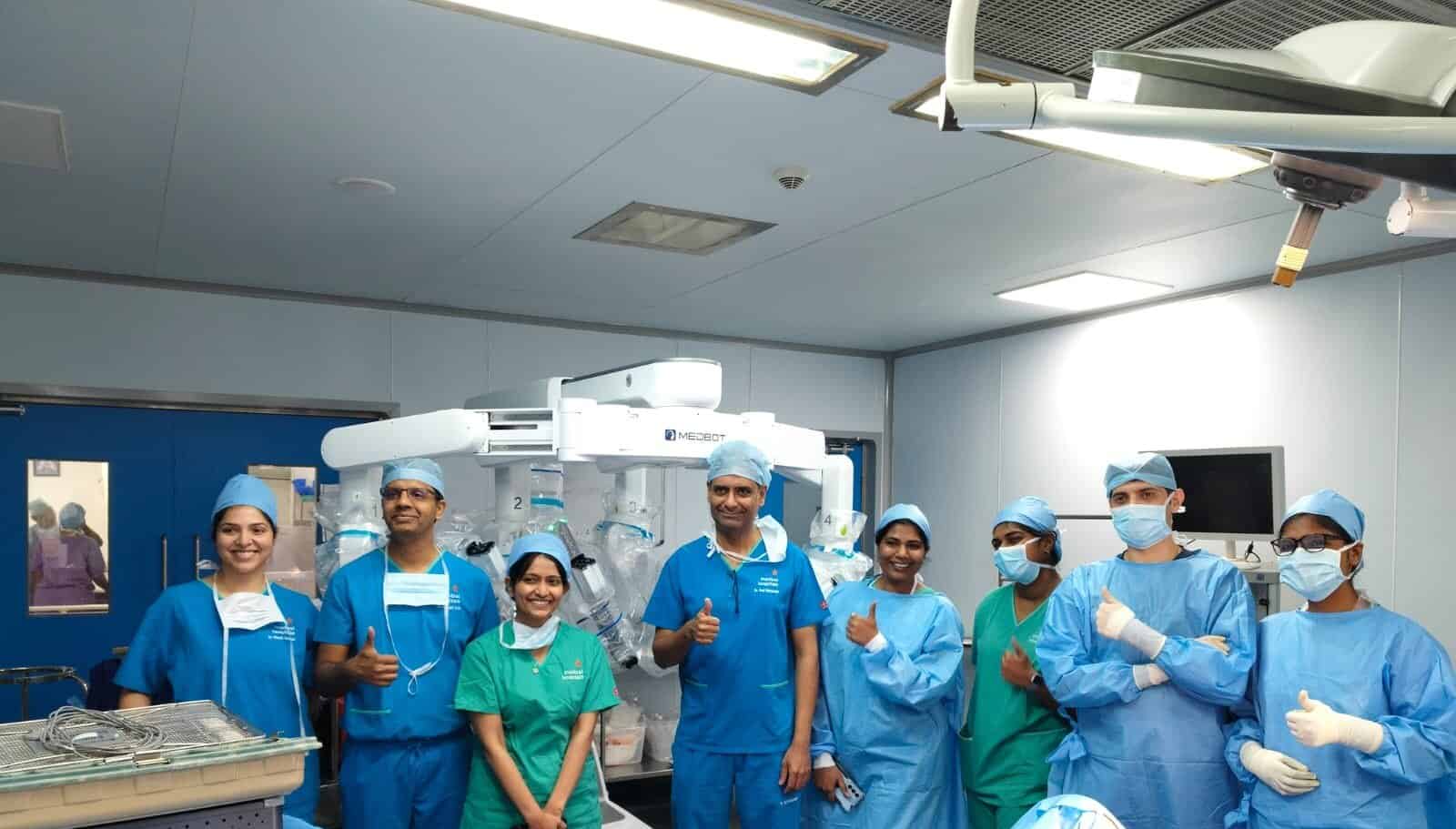
Robotic Surgery: Robotic surgery may be useful in selected urologic cancer cases because it allows fine movements and careful dissection in confined spaces. In appropriate patients, it may help reduce blood loss, pain, and recovery time. But robotic surgery is not chosen just for technology. It is chosen only when it supports good cancer surgery.
Laparoscopic Surgery: Some kidney, adrenal, and related urologic procedures may be performed using minimally invasive techniques. These approaches use small cuts and specialized instruments. In the right case, this may help patients recover faster and return to normal activity earlier.
Open Surgery: Open surgery still remains the safest and best option in many complex cases. Large tumors, locally advanced cancers, difficult anatomy, prior surgery, or the need for major reconstruction may make open surgery the better choice. When cancer control is the priority, open surgery should never be seen as a compromise.
The key principle is simple: safety and complete cancer treatment come first. The technique matters, but choosing the correct operation matters more.

I currently consult at:
These centers provide access to comprehensive cancer care within a well-equipped hospital environment, supporting multidisciplinary treatment, investigations, and post-operative care when required.
Consultation timings and appointment details can be arranged through phone or WhatsApp for convenience.

This page has been written and medically reviewed under the guidance of Dr. Suraj Manjunath, Senior Surgical Oncologist at Apollo Hospitals, Bannerghatta Road, Bangalore.
The information has been reviewed for medical accuracy, patient clarity, and relevance to cancer surgery decision-making. Cancer treatment is always personalized and depends on factors such as the type of cancer, stage or spread of disease, overall health, co-morbidities, test results, and treatment goals.
The information is meant for patient education and should not replace an in-person consultation, diagnosis or personalized treatment plan.
Consultation Locations: Apollo Hospitals, Bannerghatta Road & Sarjapur Road, Bangalore.
Last reviewed: September 2026
