
If you need an experienced rectal cancer surgeon in Bangalore, Dr Suraj Manjunath offers specialized, empathetic care at Apollo Hospitals. He provides world-class rectal cancer treatment in Bangalore designed to ensure thorough tumor clearance while deeply protecting your everyday quality of life and comfort.


A diagnosis of rectal cancer can feel frightening and overwhelming. Many patients and families come in with questions like: Do I need surgery? Do I need Radiation or Chemotherapy, Can this be treated safely? Is robotic surgery possible? What happens after the operation?
My goal is to help you understand all of this in a calm and practical way.
I am Dr. Suraj Manjunath, a Surgical Oncologist in Bangalore, associated with Apollo Hospitals, Bannerghatta Road and Apollo Hospitals, Sarjapur Road.
As a Rectal Cancer Surgeon in Bangalore, I evaluate each patient carefully and plan treatment based on the exact location of the cancer, its stage, your general health, and what will give you the safest and best long-term outcome.
Depending on the case, treatment may involve surgery alone or a combination of radiation, chemotherapy, immunotherapy, and surgery.
My approach is always to combine sound cancer judgment with clear communication, so that you and your family can move forward with confidence.

+

+

+

+

Rectal cancer does not always cause dramatic symptoms early on. In some patients, it is found during evaluation for bleeding, bowel habit changes, or anemia. In others, it may be detected during colonoscopy done for screening or persistent digestive complaints.
Common symptoms may include:
Not every patient has all these symptoms. Also, these symptoms do not automatically mean cancer. Piles, fissures, infections, and other bowel conditions can sometimes cause similar complaints. But if symptoms are persistent, recurrent, or worsening, they should not be ignored.

In most patients, rectal cancer is first identified during a colonoscopy, where the doctor sees the growth inside the rectum and takes a biopsy. A biopsy means a small tissue sample is removed and examined under a microscope. This confirms whether the growth is cancer.
The next step is staging. Staging tells us how deep the cancer has grown into the rectal wall and if it has spread else where in the body. To understand this, we often use:
Before rectal cancer surgery in Bangalore, I also assess whether you are medically fit for the procedure. This may include heart evaluation, lung assessment, anesthesia review, and nutritional assessment if needed.


In simple terms, the main goal of surgery is to remove the part of the rectum containing the cancer with enough surrounding tissue to achieve good cancer clearance. Nearby lymph nodes are also usually removed as part of cancer surgery because they help us stage the disease and reduce the risk of recurrence.
Common surgical approaches may include:
In selected early cases, limited surgery may also be considered.
Wherever possible, I aim for cancer clearance, preservation of function, and the safest long-term result. Organ preservation is considered only when it does not compromise cancer treatment.

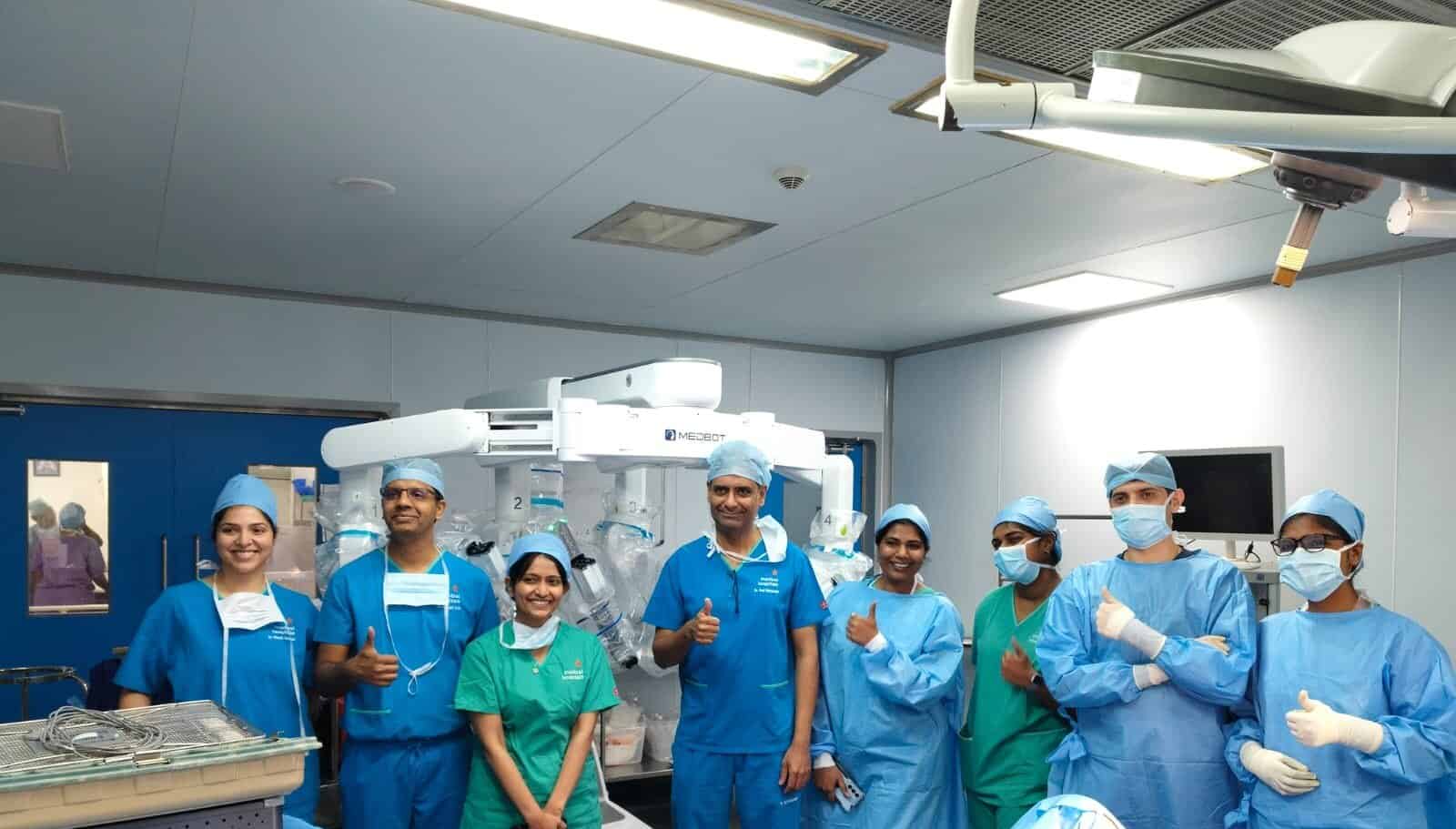
Because rectal cancer surgery is performed deep in the pelvis, robotic cancer surgery can be useful in selected patients where precise movement is important.
Laparoscopic cancer surgery may also be suitable in some cases as a minimally invasive option.
However, open cancer surgery may still be the safest choice in advanced or complex cases. The method is selected based on the cancer, prior treatment, anatomy, and overall surgical safety.
You can also explore related pages on Robotic Cancer Surgery, Laparoscopic Cancer Surgery, Open Cancer Surgery, and Minimally Invasive Cancer Surgery.

Before surgery, I review your reports, fitness, scans, and treatment history carefully. I also explain the operation, possible need for a stoma, hospital stay, risks, and recovery process.
After surgery, the removed specimen is tested in detail. The final pathology report helps decide if further treatment is needed.
Recovery includes wound healing, bowel function, nutrition, follow-up visits, and long-term surveillance.
Patients can also explore the page on Recovery After Cancer Surgery for broader guidance.

There is no single fixed cost for all patients because rectal cancer surgery can vary significantly.
The cost may depend on:
If chemotherapy, radiation, or immunotherapy are also needed, the overall treatment cost will be different.
During consultation, once I have reviewed your reports and examined you, I can give you a more realistic idea of the expected treatment pathway. My goal is that you and your family understand both the medical and practical side of treatment before making a decision.

I currently consult at:
This center provide access to comprehensive cancer care within a well-equipped hospital environment, supporting multidisciplinary treatment, investigations, and post-operative care when required.
Consultation timings and appointment details can be arranged through phone or WhatsApp for convenience.

This page has been written and medically reviewed under the guidance of Dr. Suraj Manjunath, Senior Surgical Oncologist at Apollo Hospitals, Bannerghatta Road, Bangalore.
The information has been reviewed for medical accuracy, patient clarity, and relevance to cancer surgery decision-making. Cancer treatment is always personalized and depends on factors such as the type of cancer, stage or spread of disease, overall health, co-morbidities, test results, and treatment goals.
The information is meant for patient education and should not replace an in-person consultation, diagnosis or personalized treatment plan.
Consultation Locations: Apollo Hospitals, Bannerghatta Road & Sarjapur Road, Bangalore.
Last reviewed: May 2026
