Dr Suraj Manjunath Website Logo

Kidney Cancer Surgeon in Bangalore

When searching for an expert kidney cancer surgeon in Bangalore, Dr Suraj Manjunath offers definitive oncological care at Apollo Hospitals. Our clinic delivers specialized, patient-centric kidney cancer treatment in Bangalore designed to remove tumors thoroughly while safeguarding your remaining renal function.

Dr Suraj Manjunath 5 650 X

What Is Kidney Cancer?

Kidney cancer begins when abnormal cells grow inside the kidney and form a tumour.
What is Kidney Cancer
The kidneys are two bean-shaped organs located at the back of the abdomen. Their main job is to filter blood, remove waste from the body through urine, and help maintain fluid and salt balance.

Kidney cancer happens when some cells inside the kidney start growing in an uncontrolled way. The most common type is called renal cell carcinoma. In many patients, kidney cancer is detected when an ultrasound, CT scan or MRI is done for another reason.

The seriousness of kidney cancer depends on several factors: the size of the tumour, whether it is inside the kidney or extending outside, whether nearby veins or lymph nodes are involved, and whether it has spread to other organs.

Early specialist evaluation is important because treatment planning can differ from patient to patient.
Understand Your Diagnosis with a Specialist Consultation.

Meet Your Trusted Kidney Cancer Surgeon in Bangalore

Dr Suraj Manjunath Surgical Oncologist in Bangalore

Dr Suraj Manjunath

Senior Consultant - Surgical Oncologist

MBBS, MS (Gen Surgery), MCh (surgical oncology), Detroit Fellowship in Surgical Oncology and Minimally Invasive Surgery, SSO (Society of Surgical Oncology, USA) - Visiting Fellowship
Personal Note from Dr Suraj Manjunath

A diagnosis of kidney cancer can feel overwhelming for both the patient and the family. You may be wondering whether surgery is needed, whether the kidney can be saved, how soon treatment should begin, and what the recovery may look like.

I am Dr. Suraj Manjunath, a Surgical Oncologist in Bangalore, associated with Apollo Hospitals, Bannerghatta Road and Apollo Hospitals, Sarjapur Road.

As a Kidney Cancer Surgeon in Bangalore, my approach is to review your scans, understand the exact stage of disease, assess your fitness for surgery, and then explain your options in simple language.

Kidney cancer surgery may involve removing only the cancer-affected part of the kidney or, in some cases, removing the entire kidney. The right decision depends on the size, location and stage of the cancer, your kidney function, your overall health, and whether the cancer has spread.

My role is to help you understand your condition clearly and guide you towards the safest and most appropriate treatment plan.

This page will help you understand kidney cancer, how it is diagnosed, when surgery is needed, the types of kidney cancer surgery, the role of robotic, laparoscopic and open surgery, recovery, and the cost of kidney cancer surgery in Bangalore.

Dr Suraj Manjunath

+

Happy Patients

+

Cancer Surgeries

+

Yrs Experience

+

5* Google Reviews

Common Symptoms of Kidney Cancer

Some patients have symptoms, while others are diagnosed incidentally during a scan.
Kidney Cancer Symptoms

Kidney cancer does not always cause symptoms in the early stage. Many patients are diagnosed when they undergo an ultrasound or CT scan for abdominal pain, urinary symptoms, a general health check-up, or another unrelated problem.

When symptoms are present, they may include:

  • Pain or heaviness in the side or back. Some patients feel a dull ache on one side of the abdomen or lower back.
  • Blood in the urine. This may be visible as red or brown urine, or it may be detected only during a urine test.
  • A lump or fullness in the abdomen. This is less common today because many kidney cancers are detected earlier on scans.
  • Unexplained weight loss, tiredness or loss of appetite. These symptoms are not specific to kidney cancer but should be evaluated if persistent.
  • Fever without a clear reason. Rarely, kidney cancer may cause repeated fever or general weakness.
  • Swelling in the legs or varicocele in men. In some cases, if the tumor extends into major blood vessels, it may affect blood flow.

Please remember, these symptoms can occur due to many non-cancer conditions also. But if a kidney mass has already been seen on a scan, or if blood in urine is present, it is important to consult a specialist without unnecessary delay.

If you have symptoms or a lump, schedule a consultation for proper Kidney Cancer evaluation.

Diagnosis & Staging of Kidney Cancer

A proper diagnosis helps us plan the safest and most effective treatment.
Diagnosis & Staging of Kidney Cancer

Before recommending kidney cancer surgery, I carefully review the diagnosis and stage of the disease. This helps us decide whether surgery is needed, what type of surgery is best, and whether any additional treatment is required.

The common steps include:

Ultrasound: Many kidney tumors are first detected on ultrasound. It may show a mass in the kidney, but usually more detailed imaging is needed before planning treatment.

CT scan or MRI: A contrast CT scan or MRI helps us understand the size of the tumor, its location, whether it is close to important blood vessels, whether it involves the renal vein or inferior vena cava, and whether nearby organs or lymph nodes are affected.

Chest imaging and staging tests: Staging means checking whether the cancer is limited to the kidney or has spread elsewhere. Depending on the case, chest CT, bone scan, PET-CT or other tests may be advised.

Biopsy: A biopsy means taking a small sample from the tumor for testing. In kidney cancer, biopsy is not always required before surgery, especially when scans strongly suggest cancer and surgery is clearly indicated. However, biopsy may be useful in selected cases, such as when the diagnosis is uncertain or when non-surgical treatment is being considered.

Blood and urine tests: These help assess kidney function, hemoglobin levels, liver function and general fitness.

Fitness assessment before surgery: Before surgery, we also evaluate heart, lung, diabetes, blood pressure, blood-thinner use and overall fitness. This is especially important for older patients or those with other medical conditions.

Treatment planning should be based on the full picture, not just one scan finding.

Schedule a Comprehensive Kidney Cancer Consultation with Dr Suraj.

Need a Second Opinion for Kideny Cancer Surgery?

Get clarity on your diagnosis, treatment plan, and whether surgery is the right next step.

Kidney Cancer Treatment in Bangalore

Treatment may include surgery, immunotherapy, targeted therapy, radiation or supportive care depending on the stage.
Kidney cancer treatment is not the same for every patient. Some patients need only surgery. Some need surgery followed by monitoring. Some may need medicines after surgery. Others with advanced disease may need drug treatment first.

The main treatment options include:
Surgery icon

Surgery

Surgery is the main treatment for many kidney cancers, especially when the disease is localized. It may involve partial nephrectomy, simple nephrectomy or radical nephrectomy. The aim is to remove the cancer completely while preserving kidney function whenever safely possible.
targeted therapy

Targeted Therapy

Targeted medicines act on specific growth pathways that kidney cancer cells use. These are mainly used in advanced kidney cancer and may be combined with immunotherapy in selected patients.
Noun immunotherapy 7248233 1F509A

Immunotherapy

Immunotherapy helps the body’s own immune system recognize and fight cancer cells. It is commonly used in advanced kidney cancer and may also be considered after surgery in selected high-risk patients.
chemotherapy

Chemotherapy

Traditional chemotherapy has a limited role in most renal cell cancers. However, some rare kidney cancer types may be treated differently, and the final decision depends on pathology.
radiation therapy

Radiation Therapy

Radiation is not usually the main curative treatment for kidney cancer, but it may be used in selected situations, such as pain control, bone disease, brain spread or symptom relief.
medical team icon

Multidisciplinary Care

In some cases, treatment decisions are best made with inputs from surgical oncology, urology, medical oncology, radiation oncology, radiology, nephrology and anaesthesia. This is especially important for complex tumours, patients with one kidney, reduced kidney function, or advanced disease.
My focus as a surgical oncologist is to explain the surgical role clearly while making sure you are guided toward the complete treatment plan your condition requires.
Discuss the full range of Kidney cancer treatment options with Dr. Suraj and his multidisciplinary approach.

What Does Kidney Cancer Surgery Involve?

The surgical plan depends on tumour size, position, kidney function and overall safety.

There are different types of kidney cancer surgery. The aim is always to remove the cancer safely while protecting the patient’s long-term health.

Partial Nephrectomy
Partial nephrectomy means removing only the tumor and a small rim of surrounding normal kidney tissue. The rest of the kidney is preserved. This is also called kidney-sparing or nephron-sparing surgery.

This option is commonly considered for smaller tumors, tumors in suitable locations, patients with reduced kidney function, patients with a single kidney, or patients at risk of future kidney problems. The benefit is that it can preserve more kidney function. 

Radical Nephrectomy
Radical nephrectomy means removing the entire kidney along with the surrounding fatty tissue. In selected cases, the adrenal gland or nearby lymph nodes may also be removed if involved or suspicious.

This may be needed for larger tumors, central tumors, tumors close to major blood vessels, or tumors where saving part of the kidney is not safe. Most people can live with one functioning kidney, but kidney function needs monitoring after surgery.

Simple Nephrectomy
Simple nephrectomy usually means removing the kidney without wider removal of surrounding structures. In cancer care, the exact extent depends on the tumor and surgical judgement.

Lymph Node Removal
Lymph nodes are small filtering glands. If lymph nodes near the kidney look enlarged or suspicious on scan or during surgery, they may be removed for staging and treatment planning.

Surgery for Tumor Thrombus
In some kidney cancers, the tumor can extend into the renal vein or the large vein in the abdomen called the inferior vena cava. These cases are more complex and may require open surgery and a carefully coordinated surgical plan.

Metastasectomy in Selected Cases
If kidney cancer has spread to a limited number of areas, surgery to remove those deposits may be considered in carefully selected patients as part of a larger treatment plan.

Discuss the Right Surgical Option for Your Kidney Cancer with Dr. Suraj Manjunath.

Which Surgical Approach Is Best for Kidney Cancer?

The best surgical approach is the one that removes the cancer safely.

Today, kidney cancer surgery may be performed through robotic, laparoscopic or open approaches depending on the case.

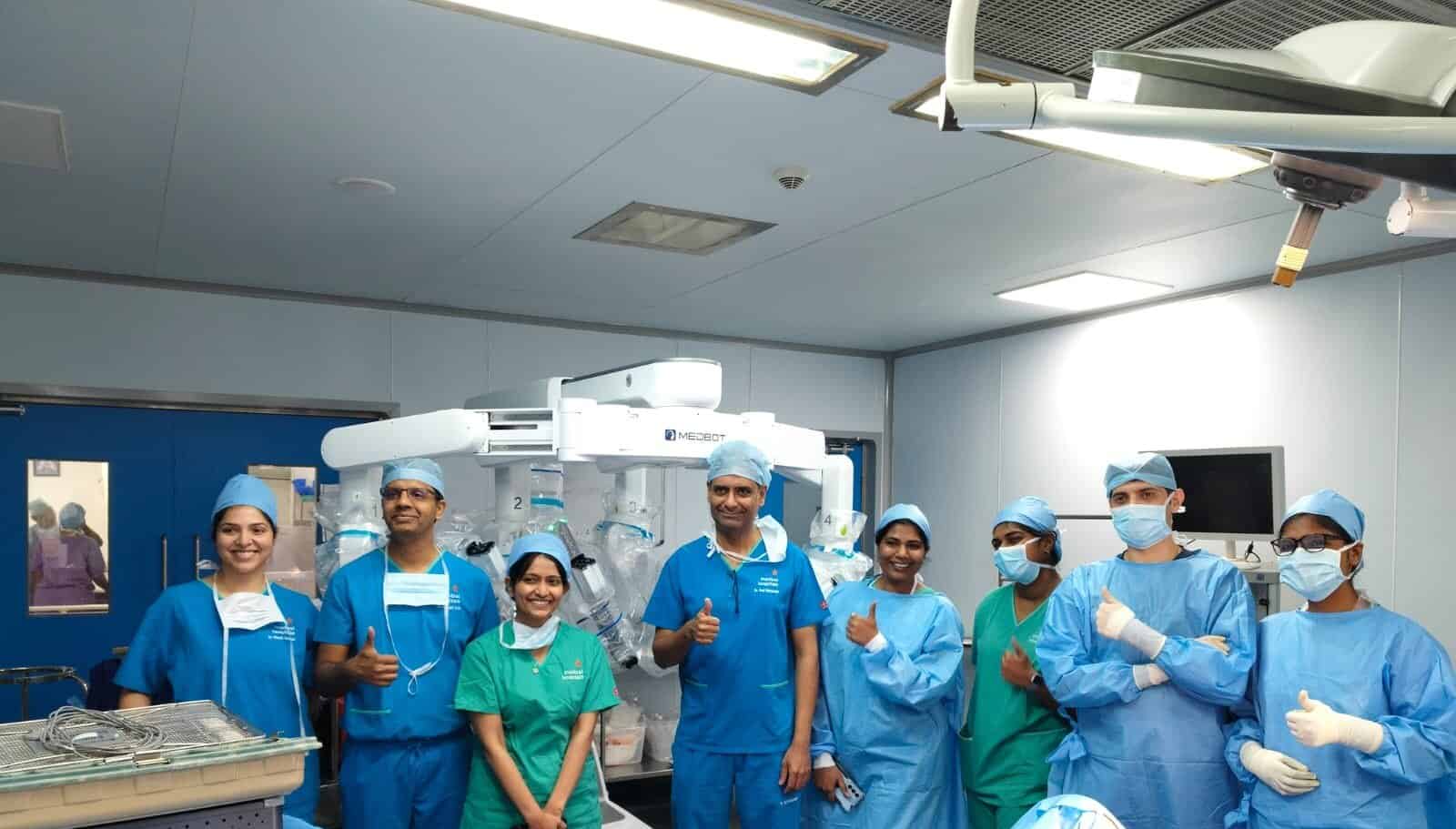
Robotic Kidney Cancer Surgery: Robotic surgery may be useful in selected kidney cancer cases, especially for partial nephrectomy. It allows the surgeon to operate with high precision through small cuts. This can help in carefully removing the tumor and reconstructing the kidney when kidney preservation is planned.

Laparoscopic Kidney Cancer Surgery: Laparoscopic surgery is a minimally invasive approach where surgery is performed through small cuts using a camera and long instruments. It may be suitable for selected radical nephrectomy cases and some other kidney cancer operations.

Open Kidney Cancer Surgery: Open surgery is still very important in cancer care. It may be required for very large tumors, tumors involving major blood vessels, complex anatomy, previous surgeries, or cases where open access gives better safety and cancer control.

The decision is not about choosing the most modern method. It is about choosing the safest method for your cancer.

In my practice, I explain the pros and limitations of each approach clearly.

Meet Dr. Suraj to understand whether robotic, laparoscopic, or open surgery is best for you.

What to Expect Before and After Surgery

Knowing what to expect can reduce fear and help your family prepare.

One of the biggest sources of anxiety before cancer surgery is uncertainty. I make it a point to explain the steps clearly so that you and your family know what to expect.

Before Surgery
Before surgery, I review your scans, blood tests, urine tests, kidney function, heart and lung fitness, medications, diabetes or blood pressure status, and anesthesia evaluation.

If you are taking blood thinners, they may need to be stopped or adjusted under medical supervision. If you have reduced kidney function, a nephrologist may be involved. If the tumor is complex, further imaging may be advised.

You will be told about the planned surgery, possible risks, expected hospital stay, recovery time and follow-up schedule.

During Hospital Stay
The length of hospital stay depends on the type of surgery and your recovery. Patients undergoing minimally invasive surgery may recover faster than those needing major open surgery, but every case is different.

Pain control, early movement, breathing exercises, fluid intake, diet and wound care are all managed carefully. The team monitors urine output, kidney function, bleeding risk and overall recovery.

After Surgery
After surgery, the removed tissue is sent for pathology. This final pathology report is very important. It tells us the exact cancer type, grade, stage, margins and whether any lymph nodes are involved.

Once the report is available, I explain what it means and whether further treatment or close follow-up is needed.

Recovery at Home
At home, you may need to avoid heavy lifting for some time. Walking is usually encouraged. Diet, hydration, wound care and follow-up instructions are explained before discharge.

You may also read more on Recovery After Cancer Surgery for general guidance.

Speak with Dr. Suraj to understand the likely recovery path in your specific case.

Cost of Kidney Cancer Surgery in Bangalore

The cost depends on the type of surgery, complexity, hospital stay and overall treatment plan.
Indian Male - Cancer Survivor

The cost of kidney cancer surgery in Bangalore cannot be given as one fixed amount without reviewing the patient’s reports. It depends on factors such as:

  • Type of surgery planned: Partial nephrectomy, radical nephrectomy, lymph node removal, or complex tumor thrombus surgery may have different costs.
  • Surgical approach used: Robotic, laparoscopic, and open kidney cancer surgery have different hospital and equipment-related costs.
  • Size and complexity of the tumor: A small tumor in a favorable location is usually different from a large tumor close to major blood vessels.
  • Hospital stay and ICU requirement: Longer hospital stay, ICU monitoring, or additional post-operative care can affect the total cost.
  • Pre-surgery investigations: CT scan, MRI, blood tests, cardiac evaluation, anesthesia assessment, and other tests may add to the overall expense.
  • Patient’s overall health condition: Diabetes, blood pressure, heart disease, kidney function issues, or blood-thinner use may require extra precautions.
  • Need for additional treatment: Some patients may need immunotherapy, targeted therapy, radiation, or further oncology care after surgery.

After reviewing your reports, the hospital team can provide a more accurate cost estimate based on the treatment plan recommended for you.

Meet Us for a Clear Treatment and Cost Discussion.

Book A Consultation With Dr Suraj in Bangalore

Convenient access to specialist cancer surgery care at established hospital centres.
Dr Suraj Manjunath Website Consulting in his cabin

I currently consult at:

  • Apollo Hospitals, Bannerghatta Road, Bangalore
    (Monday to Friday: 9 am to 1 pm)
    Address: Apollo Hospitals, Opposite IIM, 154/11, Bannerghatta Rd, Krishnaraju Layout, Amalodbhavi Nagar, Panduranga Nagar, Bengaluru, Karnataka 560076

  • Apollo Hospitals, Sarjapur Road, Bangalore 
    (Every Tuesday & Friday (To be available from Sept 2026))
    Address: Apollo Hospitals, Sarjapur - Marathahalli Rd, Opp. Decathlon, Carmelaram, Ambedkar Nagar, Chikkabellandur, Mullur, Karnataka 560035)

This center provide access to comprehensive cancer care within a well-equipped hospital environment, supporting multidisciplinary treatment, investigations, and post-operative care when required.

Consultation timings and appointment details can be arranged through phone or WhatsApp for convenience.

You can click the below buttons to call or WhatsApp the appointment desk to book your visit.
Click the below button to Call.
Click the below button to Whatsapp

Written & Reviewed by Dr. Suraj Manjunath

This page is reviewed for medical accuracy and patient education.
Dr Suraj Manjunath Surgical Oncologist in Bangalore

Dr. Suraj Manjunath

This page has been written and medically reviewed under the guidance of Dr. Suraj Manjunath, Senior Surgical Oncologist at Apollo Hospitals, Bannerghatta Road, Bangalore.

The information has been reviewed for medical accuracy, patient clarity, and relevance to cancer surgery decision-making. Cancer treatment is always personalized and depends on factors such as the type of cancer, stage or spread of disease, overall health, co-morbidities, test results, and treatment goals.

The information is meant for patient education and should not replace an in-person consultation, diagnosis or personalized treatment plan.

Consultation Locations: Apollo Hospitals, Bannerghatta Road & Sarjapur Road, Bangalore.
Last reviewed: May 2026

FAQs About Kidney Cancer Treatment and Surgery

Common questions patients ask about Kidney cancer treatment in Bangalore.

Surgery is commonly advised when kidney cancer is localized or can be safely removed. The type of surgery depends on the size, location and stage of the tumour, along with your kidney function and overall health.

Yes, in selected cases. If the tumour is small and located in a suitable part of the kidney, partial nephrectomy may be possible. This removes the tumour while preserving the remaining kidney.

Robotic surgery may be possible in selected kidney cancer cases, especially some partial nephrectomy procedures. However, the final decision depends on tumour size, position, complexity and safety.

Partial nephrectomy removes only the tumour-bearing part of the kidney. Radical nephrectomy removes the entire kidney, usually with surrounding fatty tissue. The choice depends on whether kidney preservation is safe and appropriate.

Recovery varies based on the type of surgery and the patient’s health. Minimally invasive surgery may allow faster recovery in selected patients, while complex open surgery may require more time. Your recovery plan will be explained before discharge.

The cost depends on the type of surgery, robotic or laparoscopic or open approach, tumour complexity, hospital stay, ICU need if any, investigations and additional treatment requirements.

Not every patient needs immunotherapy after surgery. It may be considered in selected high-risk or advanced cases based on final pathology and staging. This decision is usually made after discussion with the oncology team.

Yes. A second opinion is often helpful when major surgery has been advised, when you are unsure about kidney preservation, or when you want clarity on robotic, laparoscopic or open surgery options. You can bring your scans, reports and previous consultation notes.

Take the Next Step with Clarity

If you or your loved one has been diagnosed with kidney cancer, I can help you understand the right way forward.
Kidney cancer treatment should be planned with care, clarity and calm judgement. You do not have to decide based on fear or confusion.

If you have been told that you need kidney cancer surgery, or if your scan shows a kidney mass, I will review your reports, explain the stage, discuss whether kidney-preserving surgery is possible, and guide you through the available treatment options.

Sometimes surgery is straightforward. Sometimes the decision is more complex. In either situation, my goal is to help you and your family understand the choices clearly.

We will walk through this together — step by step.
Book an appointment with Dr. Suraj Manjunath for Kidney cancer evaluation or a second opinion in Bangalore.
Disclaimer Statement : The information published on this website is generic in nature and the results vary from case to case basis. The contents of the website is not meant to replace an in-person consultation. Please follow the advise of your doctor via in-person consultation. This website will not assume any legal responsibility for the patient’s medical condition.
© 2026 Dr Suraj Manjunath. All Right Reserved.
Privacy Policy Terms Of Use

Book an Appointment with Dr. Suraj Manjunath

Dr. Suraj Manjunath provides consultations at Apollo Hospitals, Bannerghatta Road, Bangalore.
You can click the below buttons to call or WhatsApp the appointment desk to book your visit.
Click the below button to Call.
Click the below button to Whatsapp
Apollo Hospital
Bannerghatta Road
Address: IIM, 154/11, Bannerghatta Rd, opposite Krishnaraju Layout, Krishnaraju Layout, Amalodbhavi Naga, Panduranga Nagar, Bengaluru, Karnataka 560076
Call or WhatsApp the appointment desk. The team will help you choose the most suitable time based on availability and convenience.
Call Now Button