
For patients looking for a Urinary Bladder Cancer Surgeon in Bangalore, Dr Suraj Manjunath at Apollo Hospitals offers clear guidance on diagnosis, surgery options, recovery, and second opinion. Urinary Bladder Cancer Treatment in Bangalore is planned based on tumor stage, bladder involvement, patient fitness, and safe cancer removal.


The urinary bladder is a hollow organ in the lower abdomen. Its main job is to store urine before it passes out of the body.
Urinary bladder cancer usually starts from the inner lining of the bladder. This lining is called the urothelium. In many patients, the cancer begins as a growth or tumor on the inside surface of the bladder.
The important question is: how deep has the cancer grown?
If the cancer is only on the inner lining or has not entered the muscle layer, it is called non-muscle-invasive bladder cancer. These cancers may often be managed with a procedure done through the urinary passage, along with medicines placed inside the bladder in selected cases.
If the cancer has grown into the muscle layer of the bladder, it is called muscle-invasive bladder cancer. This is more serious and usually needs stronger treatment, which may include chemotherapy, major surgery, radiation, or a combination of treatments.
Early and specialist evaluation matters because bladder cancer can behave differently in different patients. A small-looking tumor may still need careful staging. A larger tumor may sometimes still be treatable with proper planning.

If you or a loved one has been diagnosed with urinary bladder cancer, I understand how worrying this moment can feel.
Many patients come to me with fear, confusion, and several questions: Is surgery needed? Can the bladder be preserved? Is robotic surgery possible? What will recovery be like? What will the cost be?
I am Dr. Suraj Manjunath, a Surgical Oncologist in Bangalore, associated with Apollo Hospitals, Bannerghatta Road and Apollo Hospitals, Sarjapur Road. My role is to help you understand your diagnosis clearly and guide you toward the safest treatment plan for your condition.
As a Urinary Bladder Cancer Surgeon in Bangalore, my first step is not to rush you into surgery. My first step is to understand the disease properly. I review your scans, biopsy report, cystoscopy findings, general fitness, kidney function, and overall health before advising the next step.
In many cases, treatment is planned with inputs from surgical oncology, medical oncology, radiation oncology, radiology, pathology, and anesthesia teams. This multidisciplinary planning helps us choose a treatment that is safe, complete, and suitable for you.
On this page, I will walk you through urinary bladder cancer, how it is diagnosed, when surgery is needed, what surgical options are available, recovery after surgery, and what affects the Cost of Urinary Bladder Cancer Surgery in Bangalore.

+

+

+

+

The symptoms of urinary bladder cancer can vary from person to person. Some patients have clear symptoms, while others are diagnosed during evaluation for another urinary problem.
Common symptoms may include:
Blood in urine is especially important. Even if it happens only once and then stops, it should be evaluated properly. Many patients delay consultation because they assume it is due to infection, stones, or age-related urinary issues. Sometimes that may be true, but it is always safer to check.
These symptoms do not always mean cancer. But if bladder cancer has already been diagnosed, symptoms help us understand how the disease is affecting the urinary system.

Before planning Urinary Bladder Cancer Treatment in Bangalore, we need to confirm the diagnosis and understand the stage clearly.
The evaluation may include urine tests, imaging, cystoscopy, biopsy, and general fitness assessment.
A cystoscopy is a procedure where a thin camera is passed through the urinary passage to look inside the bladder. If a tumor is seen, a procedure called TURBT may be done. TURBT means transurethral resection of bladder tumor. In simple terms, the tumor is removed through the urinary passage using a special instrument. There is usually no cut on the abdomen for this procedure.
The removed tissue is then sent for pathology. The pathology report tells us the type of cancer, grade, and whether the cancer has entered the muscle layer.
Scans such as CT scan, MRI, PET-CT, or ultrasound may be advised depending on the case. These scans help us understand whether the cancer is limited to the bladder, has affected nearby tissues, or has spread elsewhere.
Before major surgery, we also assess the patient’s fitness. This may include blood tests, kidney function tests, heart evaluation, lung evaluation, anesthesia assessment, and nutrition assessment. These steps are important because bladder cancer surgery can be a major operation in selected patients.


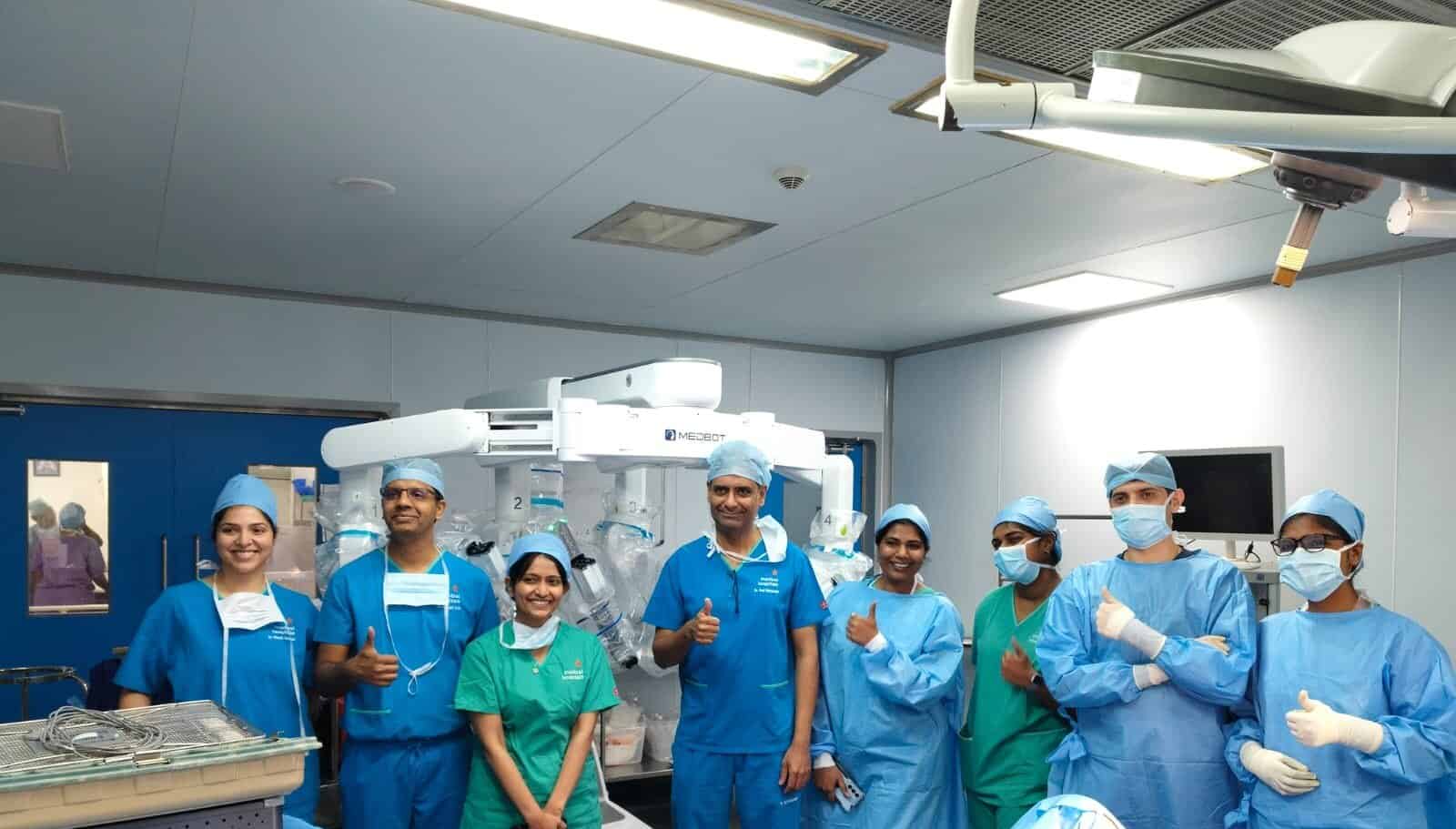
There are different surgical options for urinary bladder cancer. The right option depends on the stage and behavior of the cancer.
TURBT is commonly used for tumors that are inside the bladder. The surgeon removes the tumor through the urinary passage. This helps confirm the diagnosis and may treat early-stage disease. Sometimes a repeat TURBT is needed to ensure complete removal and accurate staging.
Partial cystectomy means removing only the affected part of the bladder. This is suitable only in very selected cases where the tumor is limited to one area and safe margins are possible. It is not the usual option for most bladder cancers.
Radical cystectomy means removal of the entire bladder. In men, this may also involve removal of the prostate and seminal vesicles. In women, depending on the case, nearby organs may need to be removed. Lymph nodes in the pelvis are also usually removed because bladder cancer can spread through lymph channels.
When the bladder is removed, urine needs a new pathway to leave the body. This is called urinary diversion. The common options include an ileal conduit, where urine passes into a bag through a small opening on the abdomen, or selected internal reconstruction options in carefully chosen patients.
Many patients are anxious about urinary diversion. This is understandable. During consultation, I explain the options clearly, including daily care, lifestyle impact, suitability, and long-term follow-up.
Organ preservation may be possible in selected patients, but it should not compromise cancer safety. The main aim is complete and safe cancer control.

Many patients ask me whether robotic surgery is possible for urinary bladder cancer. In suitable patients, robotic surgery may be considered for radical cystectomy or selected reconstructive steps. It can help with precision, smaller cuts, and faster recovery in appropriately selected cases.
Laparoscopic surgery may also be possible in selected situations. It uses small cuts and long instruments to perform the surgery.
Open surgery is still important in bladder cancer care. Sometimes, open surgery is the safest and most appropriate option, especially if the tumor is large, locally advanced, complex, or if previous surgeries or patient anatomy make minimally invasive surgery unsuitable.
I always tell patients that the goal is not just a smaller cut. The goal is safe and complete cancer surgery.
Robotic Cancer Surgery, Laparoscopic Cancer Surgery, Minimally Invasive Cancer Surgery, and Open Cancer Surgery are all approaches. They are not competing choices. The best approach is the one that allows safe tumor removal, proper lymph node clearance, and good recovery for that specific patient.
The decision is made after reviewing imaging, biopsy, staging, body structure, previous surgeries, medical fitness, and treatment goals.

Before surgery, we first complete staging and fitness assessment. This may include scans, blood tests, urine tests, heart evaluation, lung evaluation, kidney function assessment, and anesthesia review.
If chemotherapy is needed before surgery, the treatment sequence is planned with the medical oncology team. If surgery is the next step, we discuss the operation, possible risks, hospital stay, urinary diversion if needed, recovery time, and follow-up plan.
For smaller procedures like TURBT, hospital stay is usually shorter. A urinary catheter may be placed temporarily. Some patients may have burning, mild bleeding, or increased frequency for a few days.
For major surgery like radical cystectomy, hospital stay is longer. The patient may need close monitoring, pain control, early walking, breathing exercises, nutrition support, and careful wound care. Recovery happens step by step.
After surgery, the removed tissue is studied by the pathology team. This final pathology report is very important. It tells us the exact stage, lymph node status, margins, and whether any further treatment may be needed.
Follow-up is essential after urinary bladder cancer surgery. Bladder cancer can recur in some patients, so surveillance is important. Depending on the surgery and stage, follow-up may include scans, urine tests, blood tests, cystoscopy, or review with oncology teams.
Check out our patient education article: Enhanced Recovery After Surgery (ERAS) for a detailed before, during & after surgery care.

Many patients and families ask about the Cost of Urinary Bladder Cancer Surgery in Bangalore. This is a very practical and important question.
It is not possible to give one fixed cost without reviewing the case because bladder cancer surgery can range from a smaller endoscopic procedure to a major operation like radical cystectomy with urinary diversion.
The cost may depend on several factors:
For example, the cost of TURBT will be different from the cost of radical cystectomy. Robotic surgery may have different cost components compared to open surgery. A patient who needs longer hospital care or ICU monitoring may have a different estimate from a patient with a smoother recovery.
During consultation, once I review the reports and decide the likely treatment plan, the hospital team can help provide a more realistic cost estimate.
My advice is not to choose treatment only based on the lowest price. In cancer surgery, proper planning, surgical safety, hospital support, pathology, ICU availability, and follow-up care are very important.

I currently consult at:
These centers provide access to comprehensive cancer care within a well-equipped hospital environment, supporting multidisciplinary treatment, investigations, and post-operative care when required.
Consultation timings and appointment details can be arranged through phone or WhatsApp for convenience.

This page has been written and medically reviewed under the guidance of Dr. Suraj Manjunath, Senior Surgical Oncologist at Apollo Hospitals, Bannerghatta Road, Bangalore.
The information has been reviewed for medical accuracy, patient clarity, and relevance to cancer surgery decision-making. Cancer treatment is always personalized and depends on factors such as the type of cancer, stage or spread of disease, overall health, co-morbidities, test results, and treatment goals.
The information is meant for patient education and should not replace an in-person consultation, diagnosis or personalized treatment plan.
Consultation Locations: Apollo Hospitals, Bannerghatta Road & Sarjapur Road, Bangalore.
Last reviewed: September 2026
