
Dr Suraj Manjunath is a leading oral cancer surgeon in Bangalore, performing advanced head and neck procedures at Apollo Hospitals. He provides definitive oral cancer treatment in Bangalore focused on complete tumor removal while preserving vital everyday functions like speech and swallowing.


If you or a loved one has been diagnosed with oral cancer, I understand how difficult and overwhelming this time can feel. You may have many questions about the disease, the need for surgery, recovery, and what comes next.
I am Dr. Suraj Manjunath, a Surgical Oncologist in Bangalore, associated with Apollo Hospitals, Bannerghatta Road and Apollo Hospitals, Sarjapur Road.
As an Oral Cancer Surgeon in Bangalore, my role is to help you understand your condition clearly and guide you toward the safest and most appropriate treatment plan.
My approach is simple. First, I help you understand exactly what the diagnosis means. Then I review your reports carefully, assess the stage and extent of the disease, and explain whether surgery is needed, whether other treatments such as radiation or chemotherapy may also be required, and how we can plan treatment in a safe and structured way.
Every oral cancer case is different. The exact treatment depends on the location of the tumor, its size, whether nearby lymph nodes are involved, and your overall health. My goal is not just to remove the cancer safely, but also to preserve function as much as possible and help you move through treatment with clarity and confidence.
This page is designed to help you understand oral cancer treatment in Bangalore.

+

+

+

+

Oral cancer does not look the same in every patient. Symptoms can vary depending on the exact site, size, and stage of the disease. Some people have pain, while others notice only a visible ulcer or growth.
Common warning signs may include:
These symptoms do not always mean cancer, but they should not be ignored, especially if they persist.

Before planning treatment, I first need to understand exactly what we are dealing with. Oral cancer diagnosis usually involves a combination of clinical examination, biopsy, imaging, and staging work-up.
The first step is a careful examination of the mouth and neck. I look at the location of the lesion, its size, whether it seems fixed or mobile, and whether there are enlarged lymph nodes in the neck.
A biopsy is essential. This means taking a small tissue sample from the suspicious area and sending it to the laboratory. The pathology report confirms whether the lesion is cancer and tells us the type of cancer.
After that, scans are usually needed. These may include CT scan, MRI, PET-CT, or other imaging depending on the case. Scans help us understand how deep the tumour is, whether nearby structures are involved, and whether lymph nodes in the neck are affected.
I then assess the stage of the disease. Staging is simply the process of understanding how large the cancer is and how far it has spread. This helps decide whether surgery is the first treatment, whether radiation or chemotherapy will be needed, or whether a combined approach is better.


There is no single operation that suits every oral cancer. The surgery is tailored to the exact site and extent of disease.
In a smaller, early cancer, surgery may involve removing the tumor with a margin of normal tissue around it. This is done to reduce the chance of leaving behind microscopic cancer cells. If the lesion is on the tongue, cheek lining, or floor of the mouth, the operation is planned based on that exact site.
In more extensive cancers, a larger resection may be needed. This means removing the tumor along with part of the involved tissue in the mouth. If the cancer is close to or involving the jawbone, part of the bone may sometimes need to be addressed. If the disease is near important soft tissues, those may also need to be removed to achieve safe clearance.
In many oral cancers, treatment of the neck lymph nodes is also important. Cancer cells can spread from the mouth to lymph nodes in the neck even when those nodes are not always obvious externally. This is why a neck dissection may be recommended. A neck dissection means surgically removing selected lymph nodes in the neck that may be at risk or already involved.
In some patients, reconstruction is needed after tumor removal. Reconstruction means repairing the area so that healing, speech, swallowing, and appearance can be supported as much as possible. The exact reconstructive plan depends on how much tissue needs to be removed.
Where possible, function preservation is always an important goal. But the first priority is safe cancer clearance. My job is to balance disease control with speech, swallowing, appearance, and long-term quality of life.

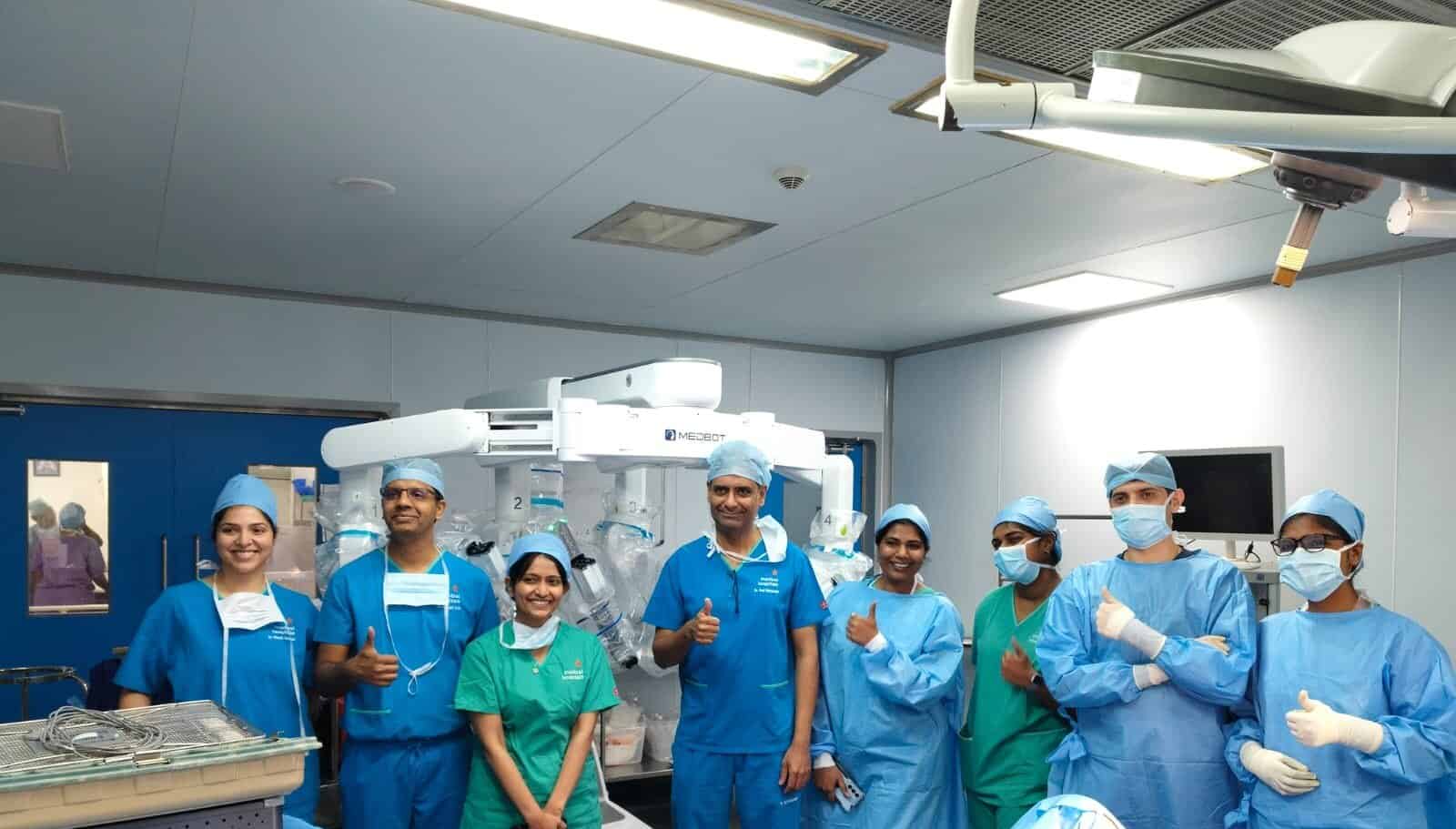
Patients often ask whether robotic surgery, endoscopic / minimally invasive surgery is possible for oral cancer. This is an important question, but the answer depends on the exact tumour location and the goals of surgery.
In some head and neck cancer settings, advanced technology and endoscopic / minimally invasive techniques may help improve access or reduce the extent of external incisions in selected cases. However, not every oral cancer is suitable for a minimally invasive approach.
For many oral cancers, open surgery remains the standard and safest method because it allows precise access, complete tumour removal, and proper handling of surrounding structures and neck nodes when needed. Open surgery is not a step backward. In many cases, it is the most appropriate oncologic approach.
The important point is this: the best approach is the one that removes the cancer properly while protecting function as much as possible. I never recommend a technique just because it sounds advanced. I recommend what is right for your specific cancer.

One of the biggest sources of anxiety is the unknown. Patients often feel more reassured once they understand the process.
Before surgery, I will review your biopsy, scans, blood tests, and general health. We discuss the exact operation planned, why it is needed, possible risks, whether neck surgery is required, and whether reconstruction may be needed. Anesthesia fitness and medical clearance are completed before the procedure. If needed, nutritional advice and other supportive measures are also planned.
Hospital stay depends on the complexity of the operation. Smaller procedures may involve a shorter stay, while larger surgeries, especially those involving reconstruction or close monitoring, may require a longer admission. Some patients may need ICU observation for a period depending on the extent of surgery and their overall health.
After surgery, the removed specimen goes to pathology. This is a very important part of treatment. The final pathology tells us the exact size of the tumor, whether margins are clear, whether lymph nodes were involved, and whether additional treatment such as radiation is recommended.
Recovery varies from person to person. Some patients recover relatively quickly, while others need more support with swallowing, nutrition, wound healing, speech, or gradual return to normal activity. My team and I guide patients and families through this process carefully.
Follow-up is essential. We monitor healing, discuss the pathology report in detail, decide whether further treatment is needed, and continue surveillance over time. Recovery is not just about discharge from hospital. It is about safe healing and confidence in the next step.

Many families understandably want to know the cost of oral cancer surgery in Bangalore. This is an important and practical question. However, it is not responsible to give a single fixed number without understanding the case properly.
The cost can vary based on several factors:
The surgical approach can also affect the overall cost in some cancer settings. While open surgery is commonly used for oral cavity cancers, certain advanced technologies or additional reconstructive steps may influence the treatment estimate.

I currently consult at:
These centers provide access to comprehensive cancer care within a well-equipped hospital environment, supporting multidisciplinary treatment, investigations, and post-operative care when required.
Consultation timings and appointment details can be arranged through phone or WhatsApp for convenience.

This page has been written and medically reviewed under the guidance of Dr. Suraj Manjunath, Senior Surgical Oncologist at Apollo Hospitals, Bannerghatta Road, Bangalore.
The information has been reviewed for medical accuracy, patient clarity, and relevance to cancer surgery decision-making. Cancer treatment is always personalized and depends on factors such as the type of cancer, stage or spread of disease, overall health, co-morbidities, test results, and treatment goals.
The information is meant for patient education and should not replace an in-person consultation, diagnosis or personalized treatment plan.
Consultation Locations: Apollo Hospitals, Bannerghatta Road & Sarjapur Road, Bangalore.
Last reviewed: September 2026
