
For patients seeking a highly precise approach, Dr Suraj Manjunath offers cutting-edge robotic cancer surgery in Bangalore at Apollo Hospitals. This state-of-the-art technology allows him to navigate complex anatomy with exceptional control and safety. Choosing advanced robotic cancer treatment ensures maximal tumor clearance while deeply prioritizing your long-term recovery and well-being.

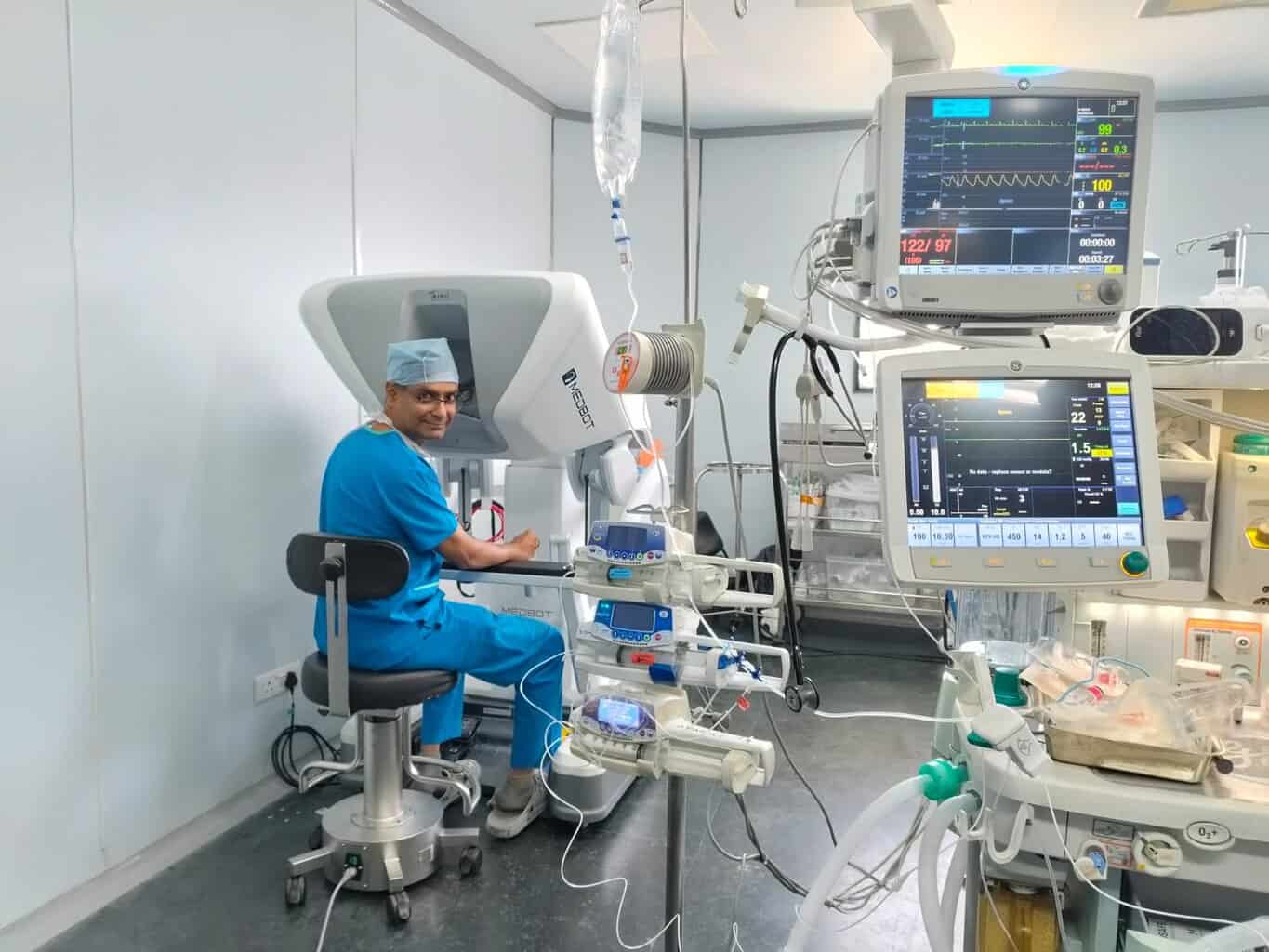

If you or your family have been advised surgery for cancer, it is natural to wonder whether robotic surgery is the right option.
You may have heard that robotic surgery means smaller cuts, less pain, and faster recovery. In some patients, that is true. In others, a different approach may be safer and better.
I am Dr. Suraj Manjunath, a Surgical Oncologist in Bangalore, associated with Apollo Hospitals, Bannerghatta Road and Apollo Hospitals, Sarjapur Road.
My role is not to push one method for every patient. My role is to choose the surgical approach that gives you the best balance of cancer clearance, safety, and recovery.
Robotic cancer surgery can be a very useful option in selected cancers. But the right approach always depends on your diagnosis, the stage of the disease, the location of the tumor, prior treatments, and your overall health.
This page will help you understand what robotic cancer surgery actually is, where it may be used, what its benefits and limitations are, and how decisions are made in real cancer care. My goal is to guide you with clarity, not confusion.

+

+

+

+

Robotic surgery for cancer may be considered when the tumor can be approached safely through a minimally invasive method and when the surgery is likely to benefit from better visualization and precise instrument movement.
This approach may be used in selected cancers involving areas such as the gastrointestinal tract, thoracic region, pelvic organs, and certain other complex cancer sites where minimally invasive surgery is appropriate. In surgical oncology, robotic techniques may be considered for some patients with cancers of the esophagus, stomach, colon, rectum, liver, pancreas, mediastinum, lung, and in other carefully selected situations.
However, suitability is never decided by organ alone. It depends on several factors:
The right approach depends on your specific condition. That is why every patient needs individualized assessment rather than a one-size-fits-all promise.





Robotic surgery may not be suitable when:

Robotic surgery is a tool. The outcome still depends on the surgeon using it.
In cancer surgery, the operation is not just about removing a visible mass. It often involves careful planning around margins, lymph nodes, nearby blood vessels, organ preservation where appropriate, reconstruction where needed, and preparation for the next stage of treatment. This requires oncology-specific judgment.
A skilled surgeon must know:
These decisions are not made by the machine. They are made by the surgeon.
This is why choosing a robotic surgical oncologist in Bangalore is different from choosing someone who simply performs robotic procedures. In cancer care, the surgeon must understand both the technical procedure and the biology of the disease.
The right surgeon chooses the right method, not just the newest one. That is the difference patients should look for.

Before surgery, I assess the cancer carefully using your scans, biopsy reports, blood tests, medical history, and overall fitness. In some patients, additional tests may be needed to plan the operation properly. If chemotherapy or radiation should be given first, that is discussed before fixing surgery.
During the preoperative phase, we talk about:
You will also receive guidance about fasting, medications, anesthesia review, and admission planning.
After robotic cancer surgery, most patients are encouraged to start moving early, begin guided recovery, and gradually return to oral intake depending on the type of surgery performed. The length of hospital stay varies based on the operation, the organ involved, and your recovery progress. Some surgeries involve a shorter stay than traditional open surgery, but this is not identical for every patient.
Families should understand that recovery has two parts:
You may feel tired even when the wounds appear small. That is normal after cancer surgery. Follow-up visits are important to review the pathology result, wound healing, diet progression where relevant, and the next step in treatment.

Many patients understandably ask about the cost of robotic cancer surgery in Bangalore early in the discussion. This is a reasonable and important question.
There is no single fixed price that applies to every robotic cancer operation. The cost can vary significantly depending on:
Sometimes, the difference in cost between robotic and non-robotic surgery may matter to a family’s decision-making. That conversation should happen openly. I believe treatment planning must be medically sound and financially realistic.
The right decision is not always the most expensive one. It is the one that is appropriate, safe, and sensible for the patient’s cancer and circumstances.

I currently consult at:
These centers provide access to comprehensive cancer care within a well-equipped hospital environment, supporting multidisciplinary treatment, investigations, and post-operative care when required.
Consultation timings and appointment details can be arranged through phone or WhatsApp for convenience.

This page has been written and medically reviewed under the guidance of Dr. Suraj Manjunath, Senior Surgical Oncologist at Apollo Hospitals, Bannerghatta Road, Bangalore.
The information has been reviewed for medical accuracy, patient clarity, and relevance to cancer surgery decision-making. Cancer treatment is always personalized and depends on factors such as the type of cancer, stage or spread of disease, overall health, co-morbidities, test results, and treatment goals.
The information is meant for patient education and should not replace an in-person consultation, diagnosis or personalized treatment plan.
Consultation Locations: Apollo Hospitals, Bannerghatta Road & Sarjapur Road, Bangalore.
Last reviewed: September 2026
