
Dr Suraj Manjunath is a trusted colon cancer surgeon in Bangalore, providing comprehensive oncology care at Apollo Hospitals. He delivers advanced colon cancer treatment in Bangalore that targets tumors meticulously while heavily prioritizing your long-term digestive wellness and a comfortable recovery pathway.


A diagnosis of colon cancer often brings fear, confusion, and many urgent questions. Patients and families commonly ask me: Is surgery necessary? Has the cancer spread? Will I need chemotherapy? Can this be treated with robotic surgery? How serious is it? What happens next?
These are important questions, and they deserve calm, honest answers.
I am Dr. Suraj Manjunath, a Surgical Oncologist in Bangalore, associated with Apollo Hospitals, Bannerghatta Road and Apollo Hospitals, Sarjapur Road.
As a Colon Cancer Surgeon in Bangalore, my approach is not to rush you into a decision without helping you understand the full picture. I first study the reports carefully, understand the location and stage of the tumor, assess your overall fitness, and then explain the treatment plan in simple language. My goal is to guide you, not overwhelm you.
In many cases, colon cancer surgery in Bangalore can play a central role in treatment. In some cases, surgery is the first and most important step. In others, treatment may involve chemotherapy before or after surgery. The right plan depends on your specific condition.
If you are already diagnosed, are planning treatment, or would like a second opinion, this page will help you understand the path ahead more clearly.

+

+

+

+

Colon cancer does not always cause dramatic symptoms in the beginning. Some patients come to me with very mild complaints. Others are diagnosed after tests done for anemia, weight loss, or bleeding.
Common warning signs may include:
These symptoms do not always mean colon cancer. They can also happen with piles, infections, inflammatory bowel problems, or other non-cancer conditions. But when such symptoms persist, they should not be ignored.

A proper treatment plan begins with a proper diagnosis. I usually explain this to families in a very simple way: before we decide what to do, we must know exactly what we are dealing with.
Diagnosis and pre-treatment evaluation for colon cancer may include:
This process is not just about collecting reports. It is about building the safest and most sensible treatment plan for you.
Diagnosis and pre-treatment evaluation for colon cancer may include:
This process is not just about collecting reports. It is about building the safest and most sensible treatment plan for you.


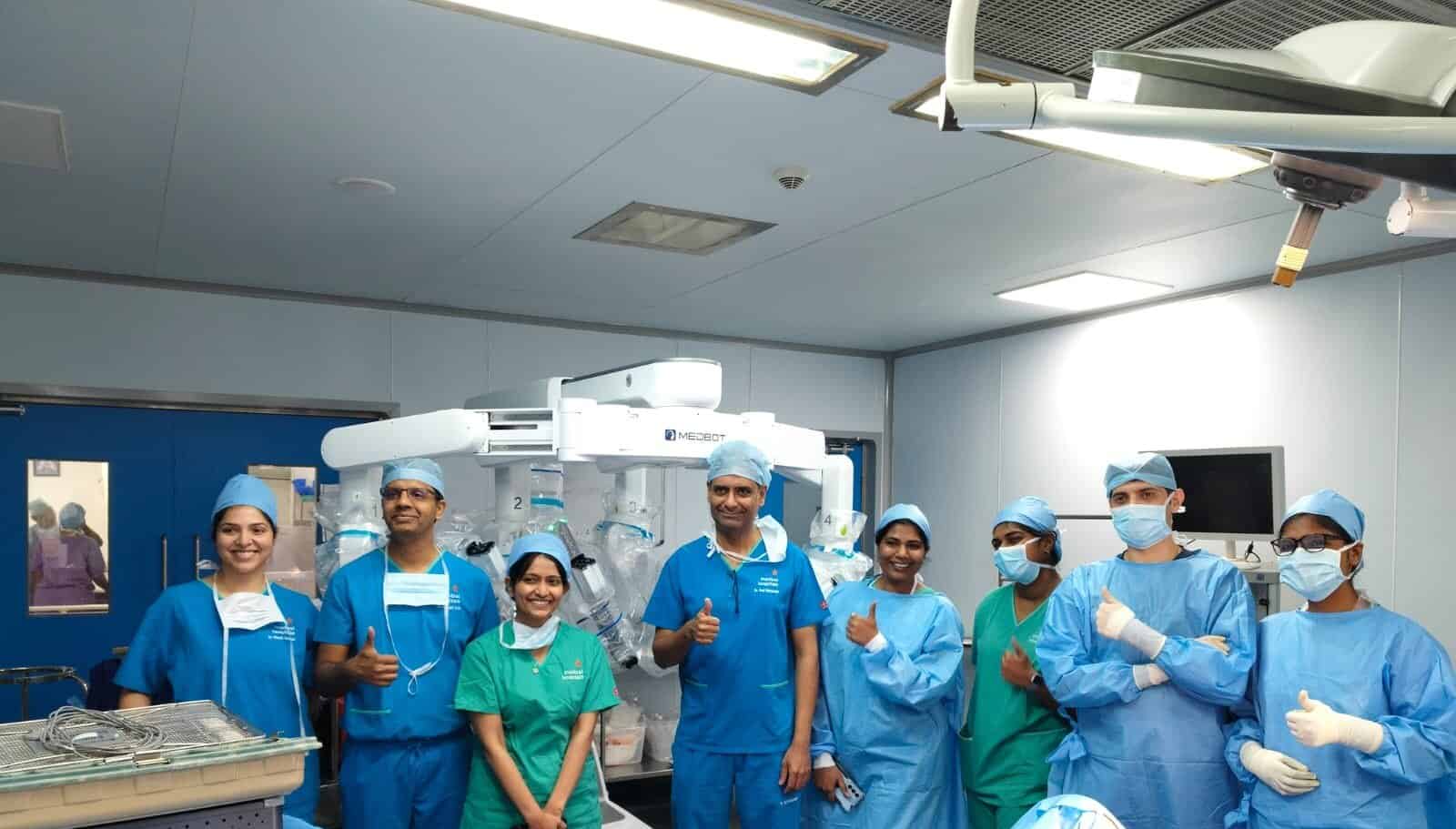
In simple terms, colon cancer surgery usually means removing the part of the colon that contains the tumor, along with the blood supply and nearby lymph nodes that may be at risk.
The exact surgery depends on the location of the tumor:
After removing the affected section, the bowel is often joined back together. This is called an anastomosis. In many patients, normal bowel continuity can be restored in the same operation.
In selected situations, a temporary or permanent stoma may be needed. A stoma is an opening on the abdomen through which bowel contents pass into a bag. This is not required for every patient.
Lymph node removal is also an important part of colon cancer surgery. This is not separate from the operation; it is part of proper cancer clearance and accurate staging.

Many patients ask whether robotic or laparoscopic surgery is possible for colon cancer. In selected cases, the answer is yes.
Robotic surgery may be suitable for some patients and can support precise minimally invasive surgery.
Laparoscopic surgery may also be possible in many cases through small cuts.
Open surgery remains important when the tumor is large, advanced, or causing complications.
The right surgical approach is not chosen for appearance. It is chosen for safe and complete cancer removal.
You can also explore related pages on Robotic Cancer Surgery, Laparoscopic Cancer Surgery, Minimally Invasive Cancer Surgery, and Open Cancer Surgery.

Before surgery, you may need blood tests, scans, anesthesia assessment, and general medical fitness review.
After surgery, the focus is on pain control, early walking, breathing exercises, and gradual return to food and normal bowel function.
The hospital stay depends on the type of surgery and your recovery progress. After discharge, follow-up remains important.
A final pathology report is reviewed after surgery. This helps confirm the stage more accurately and decide whether any further treatment is needed.
Patients can also explore the Recovery After Cancer Surgery page for more guidance.

It is not correct to give one fixed number for colon cancer surgery without understanding the case properly.
The cost may depend on:
This is why I prefer to discuss cost after reviewing your reports and understanding the likely treatment approach. That way, you and your family get a more realistic picture instead of a vague estimate.

I currently consult at:
This center provide access to comprehensive cancer care within a well-equipped hospital environment, supporting multidisciplinary treatment, investigations, and post-operative care when required.
Consultation timings and appointment details can be arranged through phone or WhatsApp for convenience.

This page has been written and medically reviewed under the guidance of Dr. Suraj Manjunath, Senior Surgical Oncologist at Apollo Hospitals, Bannerghatta Road, Bangalore.
The information has been reviewed for medical accuracy, patient clarity, and relevance to cancer surgery decision-making. Cancer treatment is always personalized and depends on factors such as the type of cancer, stage or spread of disease, overall health, co-morbidities, test results, and treatment goals.
The information is meant for patient education and should not replace an in-person consultation, diagnosis or personalized treatment plan.
Consultation Locations: Apollo Hospitals, Bannerghatta Road & Sarjapur Road, Bangalore.
Last reviewed: September 2026
