
Dr Suraj Manjunath is a leading soft tissue and bone tumor surgeon in Bangalore, specializing in musculoskeletal sarcomas at Apollo Hospitals. He delivers cutting-edge soft tissue and bone tumor treatment in Bangalore focused on advanced limb-salvage techniques and maximizing your physical mobility.


If you or your loved one has been diagnosed with a soft tissue tumor, bone tumor, or sarcoma, I understand how worrying this news can feel. These tumors are often uncommon, and many patients are unsure where to begin, which specialist to meet, or whether surgery is required.
I am Dr. Suraj Manjunath, a Surgical Oncologist in Bangalore, associated with Apollo Hospitals, Bannerghatta Road and Apollo Hospitals, Sarjapur Road.
My focus is on carefully evaluating each tumor, understanding its exact nature, and guiding patients toward the most appropriate treatment plan.
Soft tissue and bone tumors need specialist judgment because not every lump or swelling behaves the same way. Some are harmless. Some need close observation. Some require biopsy, surgery, radiation, chemotherapy, or a combination of treatments.
The right treatment depends on the type of tumor, its location, its size, whether it has spread, and whether it is affecting nearby organs, nerves, blood vessels, or bones.My goal is to help you understand your diagnosis clearly and choose the right next step with confidence.
This page is meant to help you understand everything you wanted to know about soft tissue and bone tumors treatment in Bangalore.

+

+

+

+

It can occur almost anywhere in the body, but is commonly seen in the limbs, abdomen, pelvis, or trunk.
Many soft tissue sarcomas first appear as a painless lump that slowly increases in size.
Treatment often involves surgery, and in some cases radiation therapy or chemotherapy may also be required. Proper planning before biopsy and surgery is very important.

Bone tumors need careful imaging, biopsy, staging, and multidisciplinary treatment planning.
Surgery may involve removal of the tumor while trying to preserve function whenever safely possible. In many cases, chemotherapy or radiation may also be part of the treatment plan.

Patients may notice abdominal fullness, discomfort, weight loss, or a mass detected on scans.
Surgery for retroperitoneal sarcoma can be complex because the tumor may be close to major blood vessels, kidneys, bowel, or other organs. Specialist surgical planning is essential.

Patients may notice a swelling, pain, discomfort while breathing, or a lump over the chest wall.
Treatment depends on the tumor type, size, depth, and whether it involves the ribs, muscles, or nearby structures.
In some cases, surgery may require removal of part of the chest wall followed by reconstruction to maintain support and breathing function.

Tumors in this region may include thymic tumors, lymph node masses, germ cell tumors, nerve-related tumors, or other rare soft tissue tumors.
Some patients may have cough, chest discomfort, breathing difficulty, swallowing difficulty, or the tumor may be found incidentally on a scan.
Treatment may involve surgery, biopsy, chemotherapy, radiation, or a combination depending on the diagnosis.

Patients may feel a lump, swelling, pain, or tightness in the abdominal region.
These tumors may be benign, locally aggressive, or malignant, so proper imaging and diagnosis are important before surgery.
Treatment depends on the size, depth, and involvement of abdominal wall muscles or surrounding tissues. In some cases, tumor removal may need abdominal wall reconstruction using mesh or plastic surgery techniques to restore strength and support.

They are not cancer in the usual sense because they do not spread to distant organs, but they can grow into nearby muscles, nerves, blood vessels, or organs and cause problems.
Desmoid tumors may occur in the abdominal wall, inside the abdomen, chest wall, limbs, or other soft tissue areas.
Treatment is highly individualized and may include observation, medicines, surgery, radiation, or other therapies. Surgery is not always the first treatment, especially if the tumor is stable or located in a difficult area.

These tumors usually do not spread like cancer, but they can recur locally and affect function depending on their location. They may appear as firm swellings in the abdominal wall, limbs, trunk, or deeper tissues.
Treatment may range from careful monitoring to medicines, surgery, or radiation depending on symptoms, growth pattern, and impact on nearby structures.

For soft tissue and bone tumors, treatment should not be decided based on one scan alone. A proper plan usually includes clinical examination, imaging, biopsy, pathology review, staging, and discussion with the oncology team.
The first step is to understand where the tumor is, how large it is, and whether it is close to important structures like nerves, blood vessels, joints, bones, or organs.
Imaging may include MRI, CT scan, PET-CT, bone scan, or other tests depending on the site and suspected tumor type. MRI is especially useful for many limb and soft tissue tumors because it shows the relationship of the tumor to muscles, nerves, vessels, and bones.
A biopsy may be needed to confirm the diagnosis. This must be planned carefully. The biopsy track should be placed in a way that does not interfere with future surgery. This is one of the reasons I advise patients to consult a surgical oncologist early when sarcoma is suspected.
Staging helps us understand whether the disease is localized or has spread. Based on this, treatment may include surgery, radiation therapy, chemotherapy, targeted therapy, or observation in selected cases.
The right plan is individualized. Not every patient needs the same sequence of treatment. Some patients need surgery first. Some need chemotherapy or radiation before surgery. Some need careful monitoring before any major intervention.
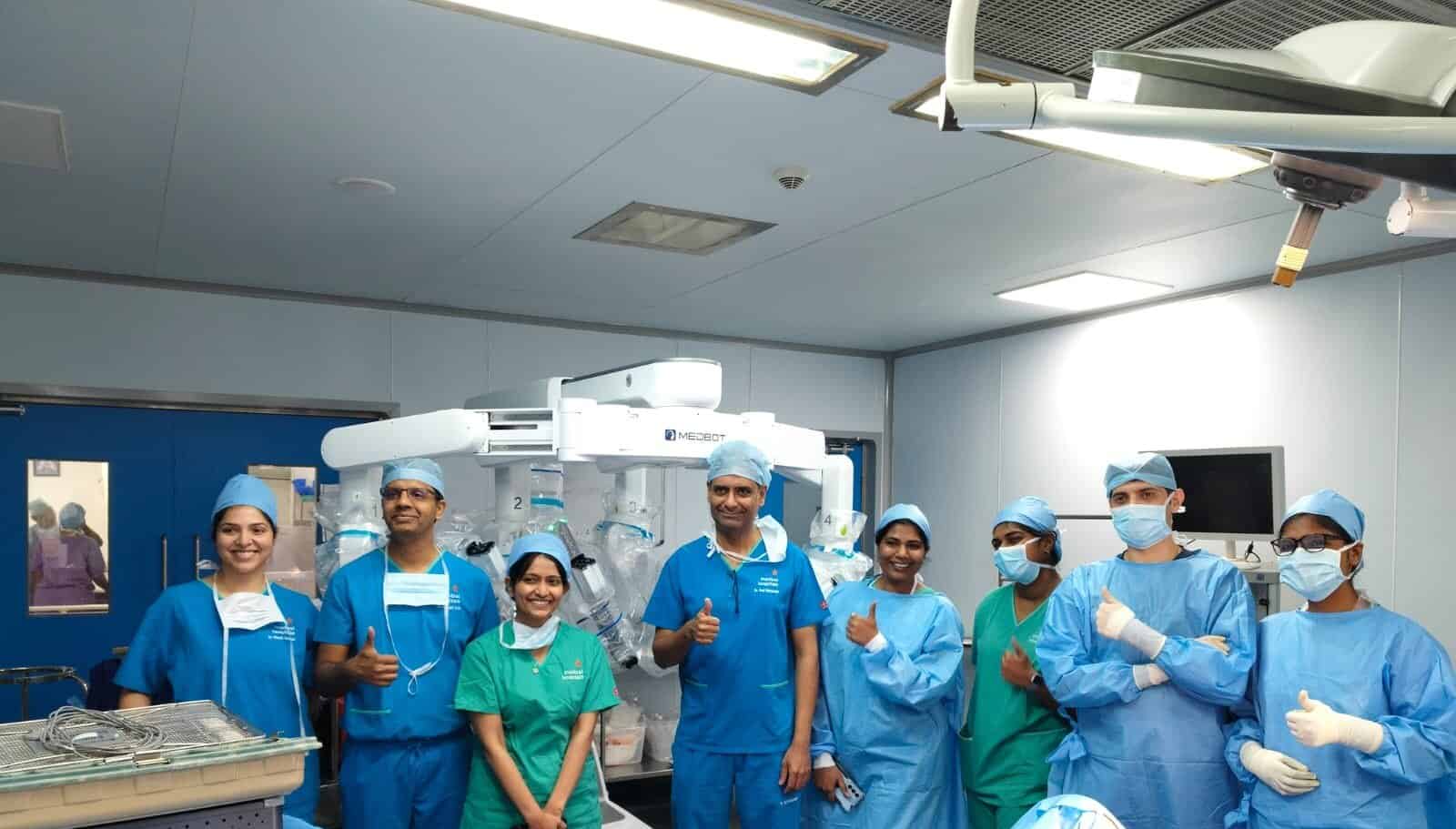
Open Surgery: Open surgery is commonly used for many soft tissue and bone tumors, especially when the tumor is large, deep, close to vital structures, or requires wide removal. It allows direct access and careful dissection around nerves, blood vessels, muscles, bones, and organs. For many sarcomas, open surgery remains the safest and most appropriate approach.
Limb-Sparing Surgery: For selected limb sarcomas and bone tumors, limb-sparing surgery may be possible. The aim is to remove the tumor completely while preserving the limb and useful function. This may sometimes require reconstruction, orthopedic oncology support, plastic surgery support, or rehabilitation after surgery.
Minimally Invasive Surgery: Some tumors inside the abdomen, pelvis, or selected locations may be suitable for minimally invasive approaches such as laparoscopic or robotic surgery. These techniques may reduce wound size and support faster recovery in appropriate patients. However, they are used only when they do not compromise cancer clearance.
Robotic and Laparoscopic Surgery: Robotic and laparoscopic surgery may be helpful for carefully selected deep abdominal or pelvic tumors, depending on size, location, and relation to nearby organs. These approaches require judgment. A smaller incision is valuable only when the tumor can be removed safely and completely.
Reconstruction After Tumor Removal: Some patients may need reconstruction after tumor surgery, especially when large areas of soft tissue, bone, or muscle are removed. Reconstruction helps cover the wound, restore form, protect important structures, and support function. This may involve collaboration with other surgical teams where required.
The goal is not to choose the newest technique. The goal is to choose the right technique for that patient.

I currently consult at:
These centers provide access to comprehensive cancer care within a well-equipped hospital environment, supporting multidisciplinary treatment, investigations, and post-operative care when required.
Consultation timings and appointment details can be arranged through phone or WhatsApp for convenience.

This page has been written and medically reviewed under the guidance of Dr. Suraj Manjunath, Senior Surgical Oncologist at Apollo Hospitals, Bannerghatta Road, Bangalore.
The information has been reviewed for medical accuracy, patient clarity, and relevance to cancer surgery decision-making. Cancer treatment is always personalized and depends on factors such as the type of cancer, stage or spread of disease, overall health, co-morbidities, test results, and treatment goals.
The information is meant for patient education and should not replace an in-person consultation, diagnosis or personalized treatment plan.
Consultation Locations: Apollo Hospitals, Bannerghatta Road & Sarjapur Road, Bangalore.
Last reviewed: September 2026
