
Dr Suraj Manjunath is a trusted thymic tumor surgeon in Bangalore, specializing in complex mediastinal conditions at Apollo Hospitals. Our practice offers advanced, comprehensive thymic tumor treatment in Bangalore to ensure precise tumor management and thorough, supportive post-operative care.


The thymus is a small gland located in the front part of the chest, behind the breastbone and in front of the heart. It plays a role in the immune system, especially during childhood, by helping certain white blood cells develop.
Tumors of the thymus are uncommon. The main types include:
Thymoma: This is the more common type of thymic tumor. It may grow slowly and is often found before it spreads widely.
Thymic carcinoma: This is usually more aggressive than thymoma. It may grow faster and has a higher chance of spreading.
Other rare thymic tumors: Some rare tumors may also arise in or near the thymus region.
Thymic tumors matter because the thymus lies close to important structures such as the lungs, heart, major blood vessels, and nerves. This is why specialist evaluation is important.

A diagnosis of thymic tumor can feel confusing and frightening, mainly because it is not a common cancer and many patients have not heard about the thymus before.
I am Dr. Suraj Manjunath, a Surgical Oncologist in Bangalore, associated with Apollo Hospitals, Bannerghatta Road and Apollo Hospitals, Sarjapur Road. I treat patients with different types of cancers, including complex chest and thoracic tumors such as thymic tumors.
Thymic tumor treatment in Bangalore should not be decided in a hurry. It needs a proper review of imaging, biopsy, stage, breathing status, heart and lung fitness, and whether the tumor is close to important structures inside the chest.
As a thymic tumor surgeon in Bangalore, my role is to help you understand your diagnosis clearly, evaluate whether surgery is needed, and guide you through the safest treatment plan for your specific condition.
Thymic tumor or cancer surgery may involve robotic surgery, minimally invasive surgery, thoracoscopic surgery, or open surgery depending on the size, location, spread, and safety of complete removal.
This page will help you understand thymic tumor treatment in Bangalore, when surgery is needed, the surgical options available, what recovery is usually like, and what factors influence the cost of thymus cancer surgery in Bangalore.

+

+

+

+

Thymic tumors do not always cause symptoms in the early stage. In many patients, they are detected during a chest X-ray, CT scan, or evaluation for another health issue.
When symptoms are present, they may include:
Some patients with thymoma may also have associated immune-related conditions such as myasthenia gravis. This can cause muscle weakness, drooping eyelids, double vision, difficulty swallowing, or weakness that worsens with activity.
Symptoms can vary from person to person. Some symptoms may be due to the tumor pressing on nearby structures. Others may be related to associated conditions.
Please remember that having these symptoms does not always mean cancer. But if a scan has already shown a thymic tumor or chest mass, it should be evaluated properly.

A good treatment plan begins with a correct diagnosis. In thymic tumors, we usually look at three things: what the tumor is, how far it has spread, and whether it can be removed safely.
Common tests may include:
CT scan of the chest: This is often the main scan used to study the thymus tumor. It shows the size, location, and relationship with the lungs, heart, and blood vessels.
PET-CT scan: This may be advised in selected cases to check whether the disease has spread to lymph nodes or other parts of the body.
MRI: Sometimes MRI is useful when the tumor is close to the heart, blood vessels, or other structures.
Biopsy: A biopsy means taking a small tissue sample for testing. In some cases, biopsy is needed before treatment. In some early and clearly removable thymic tumors, doctors may decide surgery first and confirm the diagnosis after removal. This decision depends on the case.
Pathology report: The pathology report helps identify whether the tumor is thymoma, thymic carcinoma, or another type of tumor.
Staging: Staging tells us how advanced the cancer is. It helps decide whether surgery alone is enough or whether chemotherapy or radiation may also be needed.
Fitness assessment: Before surgery, we assess heart function, lung function, blood tests, anesthesia fitness, and any other medical conditions.
In my consultation, I review all these details carefully before advising thymic tumor surgery in Bangalore.


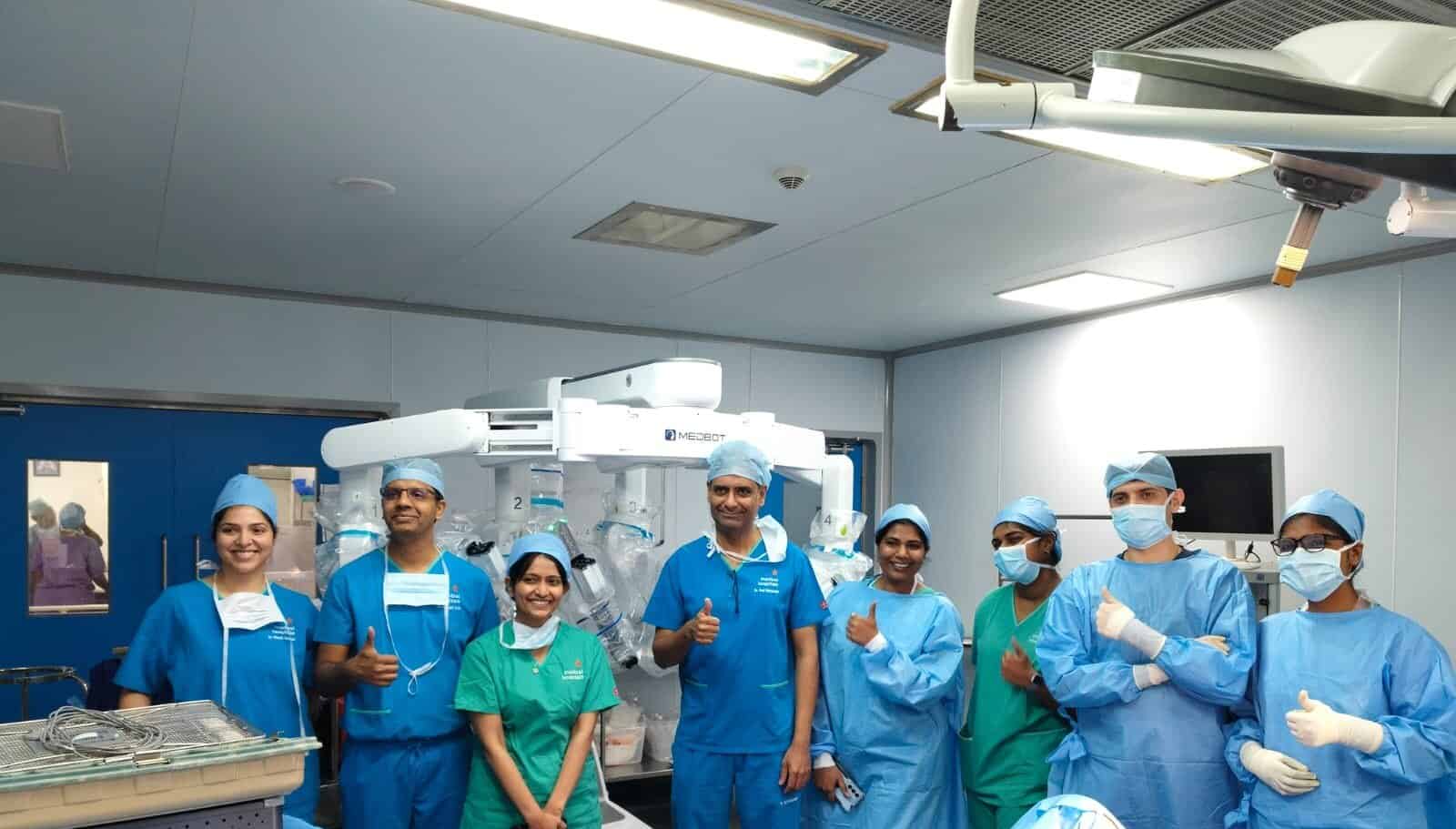
The most common surgery for thymus tumors is called a thymectomy. This means removal of the thymus gland along with the tumor.
Depending on the extent of disease, surgery may involve:
Thymectomy:
Removal of the thymus gland and tumor.
Extended thymectomy:
Removal of the thymus along with surrounding fatty tissue, especially when needed for complete clearance.
Removal of involved nearby tissue:
If the tumor is stuck to or growing into nearby structures, a small part of nearby tissue may need to be removed. This may include part of the lung covering, lung tissue, pericardium around the heart, or other involved tissue depending on the scan and surgical findings.
Lymph node evaluation:
In some cases, lymph nodes in the chest may be assessed or removed, especially when there is suspicion of spread.
Surgery after chemotherapy:
If the tumor is large or locally advanced, chemotherapy may be given first. Surgery may then be considered if the tumor becomes removable.
Organ preservation is always considered where safe. However, cancer safety comes first. The aim is not just to remove the visible tumour but to remove it properly with adequate margins where possible.

Patients often ask whether thymus tumor surgery can be done through robotic or minimally invasive techniques.
In selected patients, robotic cancer surgery or thoracoscopic minimally invasive surgery may be possible. These approaches use smaller cuts and specialized instruments to operate inside the chest.
Possible benefits in suitable cases may include smaller incisions, less pain, shorter hospital stay, and faster recovery. However, these benefits apply only when the cancer can be removed safely and completely through that approach.
Robotic thymic tumor surgery may be considered when:
The tumor is small or moderately sized
It is well-positioned for safe access
There is no major invasion into critical structures
Complete removal appears possible
The patient is fit for this approach
Thoracoscopic or laparoscopic-style minimally invasive surgery may be considered when:
The tumor is suitable for keyhole access
The anatomy is favorable
The surgeon feels cancer safety will not be compromised
Open surgery may be needed when:
The tumor is large
It is close to or involving major blood vessels
It is stuck to the lung, heart covering, or other structures
Complete removal requires wider access
Safety demands better exposure
Open surgery is not a lesser option. In complex cancers, open surgery may be the safest and most appropriate way to remove the tumor completely.
The method should never be chosen only because it sounds modern. The correct approach is the one that gives the best balance of cancer clearance and patient safety.
You may also read about Robotic Surgery, Thoracoscopic Surgery, Open Surgery, and Minimally Invasive Surgery to understand these approaches better.

Before surgery, we will review your reports, confirm the treatment plan, assess your fitness, and explain the procedure to you and your family.
Before surgery, you may need:
The hospital stay depends on the type of surgery and complexity of the case. Minimally invasive surgery may allow faster recovery in selected patients. Open surgery or complex surgery may need a longer stay.
After surgery, the removed tumor is sent for pathology testing. The final pathology report tells us:
Recovery is gradual. You may have some pain or discomfort, which is managed with medicines. Breathing exercises, walking, wound care, and follow-up visits are important.
Once the final report is ready, I discuss it with you and explain whether observation, radiation, chemotherapy, or further treatment is needed.
You may also read Recovery After Cancer Surgery to understand general recovery principles after major cancer operations.

Many patients and families want to understand the cost of thymic tumor surgery in Bangalore before making a decision. This is completely understandable.
However, it is not right to give one fixed cost without reviewing the case. Thymic tumor surgery can vary from a relatively straightforward thymectomy to a complex chest operation involving nearby structures.
The cost may depend on:
Robotic surgery may have a different cost structure compared to open surgery because of robotic system and consumable charges. Complex surgery may cost more if ICU care, longer admission, or additional procedures are needed.
During consultation, after reviewing your reports, we can give you a more realistic estimate based on your condition and the planned treatment.
My advice is not to choose treatment only based on cost. In cancer surgery, the priority should be safe and complete treatment by an experienced cancer surgeon and hospital team.

I currently consult at:
These centers provide access to comprehensive cancer care within a well-equipped hospital environment, supporting multidisciplinary treatment, investigations, and post-operative care when required.
Consultation timings and appointment details can be arranged through phone or WhatsApp for convenience.

This page has been written and medically reviewed under the guidance of Dr. Suraj Manjunath, Senior Surgical Oncologist at Apollo Hospitals, Bannerghatta Road, Bangalore.
The information has been reviewed for medical accuracy, patient clarity, and relevance to cancer surgery decision-making. Cancer treatment is always personalized and depends on factors such as the type of cancer, stage or spread of disease, overall health, co-morbidities, test results, and treatment goals.
The information is meant for patient education and should not replace an in-person consultation, diagnosis or personalized treatment plan.
Consultation Locations: Apollo Hospitals, Bannerghatta Road & Sarjapur Road, Bangalore.
Last reviewed: September 2026
