
Dr Suraj Manjunath is a senior Penile Surgeon in Bangalore who provides personalized Penile Cancer Treatment in Bangalore at Apollo Hospitals. Depending on the tumor’s location, size and stage, treatment may include organ-preserving surgery, glansectomy, partial or total penectomy, sentinel lymph-node biopsy, or groin lymph-node dissection.


Most penile cancers begin in the skin cells covering the penis. The most common type is squamous cell carcinoma. It frequently develops on the foreskin or the glans—the rounded head of the penis—but it can arise elsewhere.
Some cancers remain limited to the surface for a period of time. Others grow into the deeper tissues of the penis or spread through the lymphatic system.
The first lymph nodes to which penile cancer commonly spreads are the inguinal lymph nodes located in the groin. This is why a complete evaluation involves examining not only the penile lesion but also both sides of the groin.
Penile cancer can be associated with several risk factors, including persistent human papillomavirus or HPV infection, smoking, phimosis—a condition in which the foreskin cannot be pulled back—and chronic inflammation. However, some men develop penile cancer without an obvious risk factor.
Having a penile lesion does not automatically mean that you have cancer. Infections, inflammatory conditions and benign skin disorders can produce similar symptoms. A proper examination and biopsy are important because treatment should not be planned on appearance alone.
Why Early Evaluation Matters
When penile cancer is diagnosed at an early stage, smaller and more organ-preserving treatments may be possible. If evaluation is delayed, the tumor may grow deeper or reach the lymph nodes, requiring more extensive treatment.

I understand that discussing a penile lesion or a penile cancer diagnosis can feel deeply personal and uncomfortable. Many men delay seeking medical advice because they are embarrassed, hope that the problem will settle on its own or are afraid that treatment will automatically mean removal of the entire penis.
That is not always the case. When it is detected early, treatment can often remove the cancer while preserving as much of the penis and its function as safely possible.
I am Dr. Suraj Manjunath, a Surgical Oncologist in Bangalore, associated with Apollo Hospitals, Bannerghatta Road and Apollo Hospitals, Sarjapur Road.
My first priority is to review:
When you consult me as a Penile Cancer Surgeon in Bangalore, we will go through these factors one by one.
I will explain what can safely be preserved, what needs to be removed and how each option may affect urination, sexual function, appearance and recovery.
You should never feel rushed into a decision without understanding the reason for the proposed treatment.
This page will help you understand penile cancer treatment in Bangalore, when surgery is needed, the surgical options available, what recovery is usually like, and what factors influence the cost of penile cancer surgery in Bangalore.

+

+

+

+

Penile cancer does not always cause pain in its early stages. The absence of pain should therefore not be taken as reassurance that a lesion is harmless.
Possible symptoms include:
These symptoms may also be caused by infections or non-cancerous conditions. The only way to know the cause is to have the area examined.
When Should You Seek Medical Advice?
Please arrange an evaluation if a lesion, ulcer, rash or swelling persists, grows, bleeds or returns after treatment. You should also seek advice if you have already received treatment for an infection but the abnormal area has not resolved.
There is no reason to feel embarrassed. Penile symptoms are medical concerns, and they deserve the same prompt attention as a lump or persistent change anywhere else in the body.

The assessment normally begins with a private discussion about your symptoms, medical history and any previous treatment. I then examine the penis and both groins.
The following investigations may be required.
Clinical Examination
The examination helps determine the location, size and appearance of the lesion. I assess whether the tumor appears limited to the surface or may involve deeper tissues.
The groins are examined for enlarged lymph nodes. This is important because penile cancer commonly spreads first to the inguinal lymph nodes.
Biopsy
A biopsy removes a small piece of tissue for examination by a pathologist. It confirms whether the lesion is cancerous and provides information about its type and grade.
For a small lesion, the entire abnormal area may sometimes be removed as the biopsy. For a larger lesion, only a representative portion may be taken so that definitive surgery can be planned after the pathology is available.
MRI or Ultrasound of the Penis
An MRI may be recommended when there is uncertainty about deeper invasion or when organ-preserving surgery is being considered. Ultrasound may be used in selected situations when MRI is unavailable or additional local assessment is required.
CT or PET-CT Scans
CT or PET-CT may be advised when there are suspicious groin lymph nodes, more advanced local disease or concern that the cancer may have spread to the pelvis or other organs.
Not every patient requires every scan. Investigations are selected according to the clinical findings and biopsy results.
Assessment of Groin Lymph Nodes
Normal-looking groins do not always exclude microscopic lymph-node disease. The need for further lymph-node assessment depends on the stage and grade of the primary tumor.
Evaluation may include:
A sentinel lymph-node biopsy identifies and examines the first lymph node or nodes to which cancer is most likely to spread. It may allow early microscopic disease to be detected without removing all the groin nodes.
Staging
Staging describes how far the cancer has grown or spread. It considers:
The treatment plan should be based on the complete stage rather than only the visible penile lesion.
Fitness Assessment Before Surgery
Before a major operation, we assess your heart, lungs, kidney function, nutritional status, diabetes control and current medicines. This helps us plan anesthesia and recovery safely.

The procedure must address two separate questions:
1. How should the primary tumour in the penis be treated?
2. Do the groin or pelvic lymph nodes require staging or treatment?

These treatments are not suitable for an invasive tumor. A biopsy and appropriate follow-up are essential.


1. Before surgery for bulky or extensive groin or pelvic lymph-node disease
2. After surgery in selected high-risk cases
3. For cancer that cannot be completely removed
4. For recurrent or metastatic penile cancer
When chemotherapy is given before an operation, we reassess the cancer after treatment to determine whether surgery has become feasible.


Check-out our patient education article on Multidisciplinary Cancer Care Team.
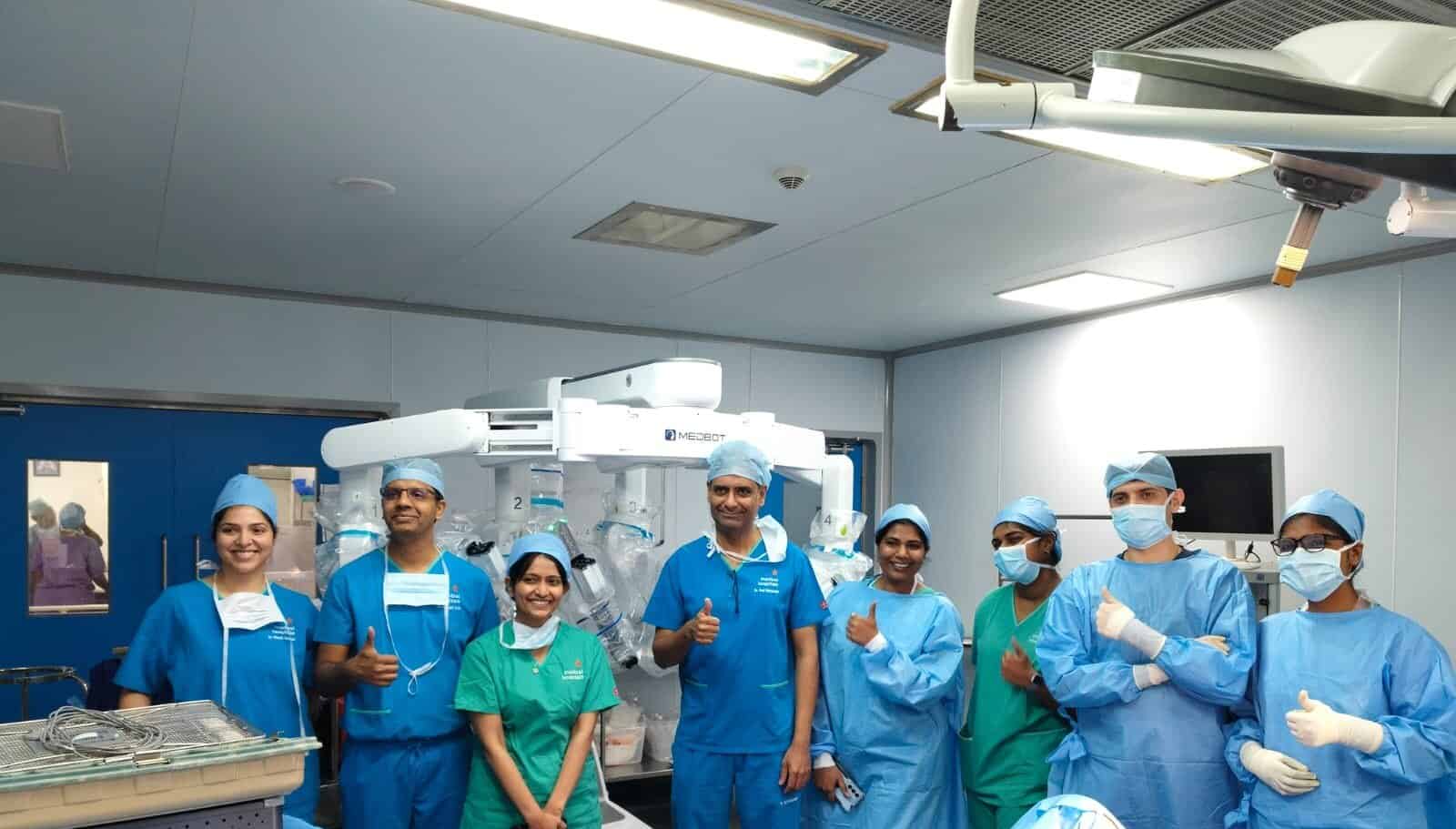
Many men who meet me are primarily worried that the entire penis will need to be removed. Modern treatment places strong emphasis on organ preservation when it can be achieved safely.
The following procedures may be considered.
Circumcision
When the disease is limited to the foreskin, circumcision may remove the entire abnormal area. It can also improve access for examination or further treatment of a lesion on the glans.
Wide Local Excision
A small, localized tumor may be removed along with a margin of normal tissue. The remaining defect may be closed directly or reconstructed with a skin graft.
Glans Resurfacing
For selected surface-level disease involving the glans, the abnormal surface tissue may be removed while preserving deeper structures. A skin graft may be used to cover the treated area.
This approach requires careful selection and regular follow-up because local recurrence remains possible.
Glansectomy
A glansectomy removes part or all of the glans while preserving the shaft of the penis. Reconstruction with a skin graft may be performed to create a new surface.
This may be considered when the tumor involves the glans but has not extended too deeply into the erectile bodies.
Partial Penectomy
A partial penectomy removes the portion of the penis containing the tumor while preserving as much length as safely possible.
The urethral opening is reconstructed at the new end of the penis. Depending on the remaining length, many patients can continue to pass urine while standing, although urinary direction and sexual function may change.
Total Penectomy
A total penectomy may be necessary when the tumor is large, deeply invasive, close to the base of the penis or cannot be removed with a safe margin through a lesser operation.
The urethra is usually brought to the skin in the perineum—the area between the scrotum and anus—so that urine is passed while sitting. This is known as a perineal urethrostomy.
I understand that this possibility can be emotionally distressing. If total penectomy is medically necessary, counselling, rehabilitation and sensitive discussions about body image, intimacy and urinary changes are an important part of care.
Dynamic Sentinel Lymph-Node Biopsy
This procedure identifies the first groin lymph nodes that drain the area of the cancer. The selected nodes are removed and examined for microscopic cancer.
It may be recommended for certain higher-risk tumors even when the lymph nodes do not feel enlarged.
Inguinal Lymph-Node Dissection
Inguinal lymph-node dissection removes lymphatic tissue from one or both groins. It may be required when cancer is confirmed or strongly suspected in the groin nodes.
Depending on the clinical situation, the procedure may be limited, modified or more extensive.
Possible side effects include fluid collection, wound problems, infection, leg swelling and lymphoedema. Careful surgical technique, drains, wound care, physiotherapy and long-term monitoring help reduce and manage these risks.
Pelvic Lymph-Node Dissection
Pelvic lymph-node surgery may be advised when several groin nodes are involved, cancer has extended beyond a lymph node or imaging suggests pelvic node involvement.
The pathology from groin surgery often helps determine whether pelvic lymph-node treatment is necessary.
How Is Organ Preservation Decided?
Organ-preserving surgery may be appropriate when:
Organ preservation can provide better urinary, sexual and psychological outcomes. However, it may carry a higher risk of cancer returning at the original site than more extensive surgery. I discuss this balance openly before recommending a procedure.

Robotic and laparoscopic surgery are valuable techniques, but they are not automatically the best approach for every penile cancer operation.
Surgery for the Primary Penile Tumor
Operations on the penis itself—such as wide local excision, glansectomy or partial penectomy—are generally performed through a direct surgical approach. Robotic or laparoscopic surgery does not usually provide an advantage for removing the primary penile tumor.
The main goals are complete tumor removal, accurate margins and preservation or reconstruction of function where possible.
Groin Lymph-Node Surgery
Groin lymph-node dissection has traditionally been performed through an open incision. Video-assisted or robotic techniques have been developed to reduce wound-related complications in selected patients.
Current evidence suggests that minimally invasive groin surgery may produce fewer wound complications in some settings. However, the evidence remains limited for patients with confirmed node-positive disease, and open surgery continues to be the standard approach in many such cases.
The technique should therefore be selected according to:
Bulky or fixed groin nodes generally require an open operation because surrounding skin or tissue may also need to be removed.
Pelvic Lymph-Node Surgery
Pelvic lymph-node dissection may sometimes be performed through an open, laparoscopic or robotic approach. A minimally invasive approach may offer smaller incisions and a smoother early recovery in a suitably selected patient.
However, the surgical method must never compromise the extent of lymph-node removal required for cancer treatment.
My Recommendation Is Based on Cancer Safety
I have experience with robotic, laparoscopic, minimally invasive and open cancer surgery. I recommend these approaches selectively.
The question is not, “Can this operation be done robotically?” The more important question is, “Which approach will remove the required cancer safely and provide the most appropriate recovery for this patient?”

Before finalizing the operation, I review the biopsy slides or pathology report, scan images, clinical findings and lymph-node status. Additional investigations may be recommended if any part of the staging is incomplete.
You may undergo:
Please tell the team about every medicine and supplement you use. Do not stop a prescribed medicine without medical advice.
During the Hospital Stay
The length of hospital stay depends on the procedure. A limited excision may require a short stay, while partial or total penectomy and lymph-node surgery may require longer observation.
You may temporarily have:
After Returning Home
The team will explain how to care for the wound, catheter or drain and when to return for review.
Please contact the treating team if you develop:
Recovery
Recovery varies according to the extent of surgery and your general health. Walking is usually encouraged early, but strenuous activity, cycling, heavy lifting and sexual activity should be avoided until your surgeon confirms that healing is adequate.
After groin lymph-node surgery, you may require guidance on:
Pathology Discussion
The final pathology report provides more detailed information than the preoperative biopsy. It tells us:
I meet the patient and family to explain the report in understandable language and plan the next step.
Urinary and Sexual Function
The effect on urination and sexual function depends on the procedure performed.
After organ-preserving surgery, erectile function may be maintained, although sensation or appearance can change. Partial penectomy can affect penile length, urine direction and sexual function. After total penectomy, urine is passed through a new opening in the perineum while sitting.
These concerns deserve honest discussion. Counselling, rehabilitation and support for the patient and partner should be offered where required.
Follow-Up
Regular follow-up is essential, particularly after organ-preserving treatment. Follow-up may include examination of the penis and groins, review of urinary and sexual function and scans when the stage requires them.
Please report any new lesion, groin swelling or persistent symptom between scheduled visits rather than waiting for the next appointment.

It is understandable to want a clear estimate before treatment. However, the Cost of Penile Cancer Surgery in Bangalore cannot be calculated responsibly until the diagnosis, stage and proposed procedure are known.
A small organ-preserving procedure and a major operation involving penile reconstruction and lymph-node surgery require very different resources.
Factors affecting the cost include:
Type of Penile Surgery
Circumcision, wide local excision, glansectomy, partial penectomy and total penectomy differ in complexity, operating time and hospital stay.
Reconstruction
A skin graft or reconstructive procedure may add to the complexity and cost of treatment.
Lymph-Node Surgery
Sentinel lymph-node biopsy, inguinal lymph-node dissection and pelvic lymph-node dissection have different requirements. Surgery on one side or both sides of the groin also affects the estimate.
Open, Laparoscopic or Robotic Approach
When minimally invasive pelvic surgery is appropriate, the technology and consumables used can affect cost. The method should be selected for medical reasons rather than price alone.
Investigations
Biopsy review, blood tests, MRI, CT, PET-CT, ultrasound and needle sampling may be required according to the stage.
Hospital and Anesthesia Requirements
The room category, operation duration, anesthesia, medicines, consumables, hospital stay and need for intensive care influence the total amount.
Combined Cancer Treatment
Chemotherapy or radiation is planned and billed separately when it forms part of the treatment.
General Health
Diabetes, heart or lung conditions, infection and other medical problems may require additional monitoring or specialist care.
How We Provide an Estimate
After reviewing your reports and examining you, the team can explain the proposed procedure and provide a case-specific hospital estimate. We will also clarify which expenses are included and whether further treatment could be required after the final pathology report.
Please bring your insurance details if you intend to seek cashless approval or reimbursement.

I currently consult at:
These centers provide access to comprehensive cancer care within a well-equipped hospital environment, supporting multidisciplinary treatment, investigations, and post-operative care when required.
Consultation timings and appointment details can be arranged through phone or WhatsApp for convenience.

This page has been written and medically reviewed under the guidance of Dr. Suraj Manjunath, Senior Surgical Oncologist at Apollo Hospitals, Bannerghatta Road, Bangalore.
The information has been reviewed for medical accuracy, patient clarity, and relevance to cancer surgery decision-making. Cancer treatment is always personalized and depends on factors such as the type of cancer, stage or spread of disease, overall health, co-morbidities, test results, and treatment goals.
The information is meant for patient education and should not replace an in-person consultation, diagnosis or personalized treatment plan.
Consultation Locations: Apollo Hospitals, Bannerghatta Road & Sarjapur Road, Bangalore.
Last reviewed: September 2026
