
Dr Suraj Manjunath is a leading chest wall tumors surgeon in Bangalore, specializing in complex thoracic growths at Apollo Hospitals. He offers personalized chest wall tumors treatment in Bangalore to completely manage localized tumors while fully preserving your respiratory comfort and physical mobility.


The chest wall is the protective structure around the chest. It includes the ribs, breastbone, muscles, cartilage, nerves, skin, soft tissues, and connective tissues. It protects important organs such as the lungs and heart and also helps with breathing movement.
A chest wall tumor is an abnormal growth in any of these structures. These tumors may be:
Benign tumors: These are non-cancerous growths. They may still need treatment if they grow, cause pain, press on nearby structures, or create deformity.
Primary cancerous tumors: These start in the chest wall itself. They may arise from bone, cartilage, muscle, soft tissue, or nerves.
Secondary tumors or spread: Sometimes cancer from nearby organs, such as lung or breast cancer, may involve the chest wall. Cancer from other parts of the body may also spread to the ribs or chest wall.
Chest wall tumors matter because they can affect breathing, cause pain, weaken the chest structure, or represent a serious cancer that needs timely treatment. The exact treatment depends on the tumor type and extent.
Early and specialist evaluation is important because surgery for chest wall tumors is different from routine surgery. It may require removal of part of the rib, muscle, soft tissue, or involved structures. In some cases, chest wall reconstruction may be needed to maintain support and breathing function.

A diagnosis of a chest wall tumor can naturally create fear and confusion. You may be wondering whether the tumor is cancerous, whether surgery is needed, how complex the operation will be, and what recovery may look like.
I am Dr. Suraj Manjunath, a Surgical Oncologist in Bangalore, associated with Apollo Hospitals, Bannerghatta Road and Apollo Hospitals, Sarjapur Road. I treat patients with complex tumors using open, minimally invasive, laparoscopic, and robotic surgical approaches where appropriate.
Chest wall tumors need careful evaluation because they may involve the ribs, muscles, soft tissues, cartilage, nerves, or nearby organs such as the lung. Some tumors are benign, while others may be cancerous or may have spread from another cancer.
My role as a Chest Wall Tumor Surgeon in Bangalore is to help you understand the diagnosis clearly, assess whether surgery is required, plan the safest treatment, and guide you and your family through every step.
This page is meant to help you understand chest wall tumors treatment in Bangalore, the role of surgery, what recovery may involve, and what questions you should ask during consultation.

+

+

+

+

The symptoms of chest wall tumors can vary from person to person. Some tumors grow slowly and cause mild discomfort. Others may cause pain, swelling, or breathing-related symptoms.
Common symptoms may include:
It is important to remember that chest pain does not always mean cancer. But if pain is persistent, if there is a growing lump, or if imaging has shown a tumor, it should be evaluated carefully.
Patients who already have a known cancer, such as breast cancer, lung cancer, sarcoma, kidney cancer, or thyroid cancer, should be especially careful about new chest wall swelling or rib pain. In such cases, the tumor may need further evaluation to see whether it is a new primary tumor, local extension, or spread.
If your doctor has already advised a biopsy or surgery, you can take a specialist opinion before making a decision. A well-planned approach can avoid incomplete treatment and reduce the chance of unnecessary repeat surgery.

Before deciding treatment, we need to understand exactly what type of tumor it is. Diagnosis is not based on symptoms alone. A structured evaluation helps us decide whether surgery is needed, how extensive it should be, and whether other treatments are required before or after surgery.
The usual diagnostic steps may include:
Clinical examination: I examine the swelling or painful area, assess its size, location, mobility, tenderness, and relationship to the chest wall.
Imaging scans: A CT scan of the chest is often important to understand the tumor’s size, depth, rib involvement, lung involvement, and relation to nearby structures. MRI may be useful when soft tissue, muscle, nerve, or spine involvement needs better assessment. PET-CT may be advised in selected cancer cases to check whether disease is present elsewhere in the body.
Biopsy: A biopsy means taking a small sample from the tumor to identify the exact diagnosis. This may be done using a needle biopsy or sometimes through a small surgical biopsy. The biopsy route should be planned carefully, especially in suspected sarcoma, because poorly planned biopsy can affect future surgery.
Pathology report: The pathology report tells us whether the tumor is benign or cancerous and what type of tumor it is. This is one of the most important reports for planning treatment.
Staging: Staging means checking the extent of disease. It helps us understand whether the tumor is localized to the chest wall or has spread.
Fitness assessment before surgery: Chest wall surgery can sometimes be major surgery. Before surgery, we assess heart function, lung function, blood tests, general health, diabetes, blood pressure, nutrition, and ability to tolerate anesthesia.
A proper diagnosis allows us to plan treatment with clarity. It also helps patients and families understand why surgery may be needed, whether reconstruction is required, and what recovery may involve.


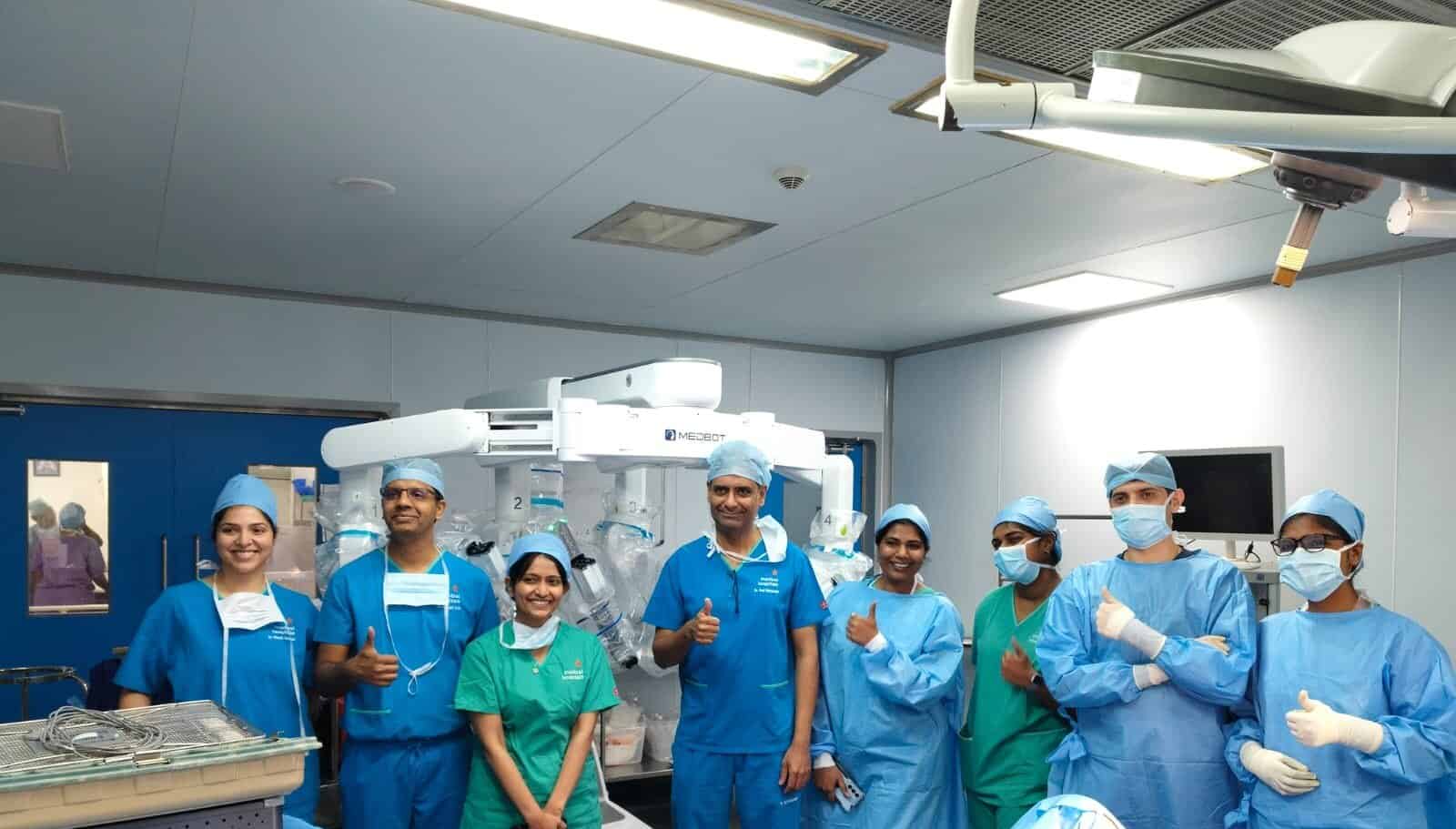
Chest wall tumor surgery can range from a limited removal of a small soft tissue tumor to a complex operation involving rib removal and reconstruction.
Common surgical options may include:
Wide local excision: This means removing the tumor with a safe margin of surrounding normal tissue. It may be suitable for selected soft tissue tumors.
Rib resection: If the tumor involves one or more ribs, the affected rib segment may need to be removed. This is done carefully to clear the tumor while protecting the lung and nearby structures.
Chest wall resection: In larger or deeper tumors, part of the chest wall may need to be removed. This may include ribs, cartilage, muscle, and soft tissue depending on tumor spread.
Chest wall reconstruction: After removing a significant part of the chest wall, reconstruction may be required. This may involve mesh, plates, muscle flaps, or other reconstructive techniques to provide support, protect the lung, and maintain breathing function.
Removal of recurrent tumors: Some patients come after previous surgery or treatment elsewhere. Recurrent chest wall tumors need careful review of previous reports, scans, margins, and treatment history before planning repeat surgery.
Surgery for tumors involving nearby organs: Sometimes chest wall tumors are close to or involve the lung, pleura, breast tissue, or upper abdominal structures. In such cases, surgery must be planned carefully to remove the disease safely.
Node-related surgery: Lymph node removal is not needed for every chest wall tumor. It depends on the tumor type. Some cancers spread through lymph nodes, while others spread differently. If lymph node evaluation is relevant, it will be discussed as part of your treatment plan.
The priority in every case is safe tumor removal, preservation of function where possible, and appropriate reconstruction when needed. Cosmetic appearance is also considered, but cancer safety comes first.

Many patients today ask whether robotic or laparoscopic surgery is possible for chest wall tumors. This is an important question, but the answer depends on the specific case.
For chest wall tumors, open surgery is still commonly required, especially when the tumor involves ribs, large soft tissue areas, or when reconstruction is needed. Open surgery allows direct access, safe removal with margins, and proper reconstruction.
However, minimally invasive methods may be useful in selected situations. For example, thoracoscopic or minimally invasive assistance may help assess or manage tumors close to the inside of the chest cavity. Robotic surgery may be considered in carefully selected cases where access, visualization, and safety are appropriate.
The method should never be chosen only because it sounds advanced. In cancer surgery, the safest and most effective approach is the one that gives the best chance of complete tumor removal with good functional recovery.
Robotic surgery may be considered when:
The tumor location is suitable
The disease is limited and accessible
The approach does not compromise cancer clearance
The surgeon can safely manage nearby structures
Laparoscopic or thoracoscopic assistance may be useful when:
The inner chest cavity needs evaluation
The tumor is close to the pleura or lung
Minimally invasive access can support safe planning
Open surgery may be necessary when:
The tumor is large
Multiple ribs are involved
Chest wall reconstruction is needed
The tumor is close to major vessels or organs
Wide margins are required for cancer safety
As a surgeon experienced in robotic, laparoscopic, minimally invasive, and open cancer surgery, I choose the technique based on the tumor and the patient, not on a fixed preference.
You can learn more through the pages on Robotic Cancer Surgery, Laparoscopic Cancer Surgery, Minimally Invasive Cancer Surgery, and Open Cancer Surgery.

Before surgery, we spend time understanding your condition and preparing you safely. This preparation is especially important if the surgery may involve ribs, lung lining, reconstruction, or longer anesthesia.
Before surgery, you may need:
Before the operation, I explain the surgical plan to you and your family. This includes what may be removed, whether reconstruction may be needed, expected hospital stay, pain control, possible ICU care, and recovery milestones.
During surgery: The tumor is removed according to the planned margins. If ribs or part of the chest wall are removed, reconstruction may be performed when needed. The exact procedure depends on the tumor’s location and extent.
After surgery: You will be monitored in the recovery area or ICU depending on the extent of surgery. Pain control is an important part of recovery. You may have drains to remove fluid or air from the operated area. Breathing exercises and early mobilization are often encouraged.
Hospital stay: Hospital stay depends on the complexity of surgery. Smaller procedures may need a shorter stay. Larger chest wall resections with reconstruction may require longer monitoring.
Recovery at home: Recovery varies. Some patients return to normal activities gradually over a few weeks. If the surgery is extensive, recovery may take longer. You will be guided about wound care, movement, breathing exercises, medicines, and warning signs.
Pathology discussion: After surgery, the removed tumor is examined in detail. The final pathology report tells us the exact tumor type, margins, grade, and other important features. Based on this, we decide whether further treatment such as radiation or chemotherapy is needed.
For more general guidance, you may also read Recovery After Cancer Surgery.

Many families ask about the Cost of Chest Wall Tumor Surgery in Bangalore. This is an important and practical question, and I believe it should be discussed clearly.
However, it is not right to give a fixed cost without reviewing the case. Chest wall tumor surgery can vary widely. A small soft tissue tumor removal is very different from a major chest wall resection involving ribs, reconstruction, ICU care, and multidisciplinary treatment.
The cost may depend on:
Type of surgery: Simple excision, rib resection, wide chest wall resection, and reconstruction all have different levels of complexity.
Extent of tumor involvement: Larger tumors, deeper tumors, or tumors involving ribs, muscles, lung lining, or nearby organs may need more complex surgery.
Surgical approach: Open, minimally invasive, laparoscopic-assisted, thoracoscopic-assisted, or robotic approaches may have different cost structures.
Reconstruction requirement: If mesh, plates, flaps, or other reconstructive materials are needed, the cost may increase.
Hospital stay: Longer hospital stay increases overall cost.
ICU need: Some patients may need ICU monitoring after major surgery, especially if breathing support or close observation is required.
Investigations: CT scan, MRI, PET-CT, biopsy, pathology tests, blood tests, and fitness evaluation can affect total treatment cost.
Associated treatments: Chemotherapy, radiation therapy, targeted therapy, or immunotherapy, if required, are separate parts of the treatment plan.
General health condition: Patients with heart disease, lung disease, diabetes, kidney problems, or poor nutrition may need additional preparation and monitoring.
During consultation, after reviewing your reports, we can give a more realistic estimate based on your actual treatment plan. My advice is not to choose treatment only by comparing cost. In cancer surgery, complete planning, safety, margins, reconstruction quality, and post-operative care are equally important.

I currently consult at:
These centers provide access to comprehensive cancer care within a well-equipped hospital environment, supporting multidisciplinary treatment, investigations, and post-operative care when required.
Consultation timings and appointment details can be arranged through phone or WhatsApp for convenience.

This page has been written and medically reviewed under the guidance of Dr. Suraj Manjunath, Senior Surgical Oncologist at Apollo Hospitals, Bannerghatta Road, Bangalore.
The information has been reviewed for medical accuracy, patient clarity, and relevance to cancer surgery decision-making. Cancer treatment is always personalized and depends on factors such as the type of cancer, stage or spread of disease, overall health, co-morbidities, test results, and treatment goals.
The information is meant for patient education and should not replace an in-person consultation, diagnosis or personalized treatment plan.
Consultation Locations: Apollo Hospitals, Bannerghatta Road & Sarjapur Road, Bangalore.
Last reviewed: September 2026
