
Dr Suraj Manjunath is a trusted breast cancer surgeon in Bangalore, offering individualized treatment pathways at Apollo Hospitals. He provides cutting-edge, compassionate breast cancer treatment in Bangalore focusing on advanced tumor removal while deeply prioritizing your long-term health and emotional well-being.


If you or a loved one has been diagnosed with breast cancer, I understand how overwhelming this phase can feel. You may be trying to process the diagnosis, understand whether surgery is needed, compare treatment options, and make the right decision without delay.
I am Dr. Suraj Manjunath, a Surgical Oncologist in Bangalore, associated with Apollo Hospitals, Bannerghatta Road and Apollo Hospitals, Sarjapur Road.
My approach is simple. First, I listen carefully. Then I review your reports, examine you, understand the stage and biology of the cancer, and explain your options in plain language.
As a Breast Cancer Surgeon in Bangalore, My role is to help you understand what is necessary, what can wait, what choices you may have, and what outcome we are aiming for. We will walk through this together, one step at a time.
This page will help you understand breast cancer, when surgery is needed, what treatment may involve, what recovery is usually like, and what factors affect the cost of breast cancer surgery in Bangalore.

+

+

+

+

Breast cancer may present in different ways. Some patients notice a lump. Others are diagnosed after a mammogram or ultrasound done during a routine check or after a subtle symptom appears.
Common warning signs may include:
It is important to remember that symptoms can vary. Most breast cancers are painless. Some are found early only on imaging. A lump is not always cancer, but it should always be evaluated properly.

Diagnosis usually includes:
Clinical examination
I begin by understanding your symptoms and examining the breast and the lymph node areas, especially the armpit.
Imaging tests
These may include mammography, ultrasound, and in selected cases MRI. These scans help define the size and extent of the lesion and identify additional suspicious areas if present.
Biopsy
A biopsy is essential. A small tissue sample is taken and examined under a microscope. This confirms whether the lesion is cancer and tells us the type of breast cancer.
Pathology and tumor markers
The biopsy report may also include important details such as hormone receptor status and HER2 status. These help us understand tumor behavior and guide treatment.
Staging tests
Depending on the case, further scans may be needed to check if the disease is limited to the breast or has spread elsewhere.
This careful work-up helps us choose the safest and most effective treatment plan rather than rushing into a decision.

Staging means assessing how large the tumour is, whether it has spread to nearby lymph nodes, and whether it has spread to other parts of the body.
In simple terms, staging helps answer three key questions:
Breast cancer is commonly described from Stage 0 to Stage 4.
Stage 0 usually refers to very early disease that is limited to the ducts and has not invaded surrounding breast tissue.
Stage 1 generally means a small cancer that is confined to the breast or has only minimal spread to nearby lymph nodes.
Stage 2 may mean a larger tumour or limited spread to nearby lymph nodes.
Stage 3 usually refers to more advanced disease in the breast or lymph nodes, but still potentially treatable with a combination of therapies.
Stage 4 means the cancer has spread to other parts of the body, such as the bones, liver, lungs, or elsewhere.
My role is to explain your stage clearly, help you understand what it means in your case, and guide you toward the treatment plan that is most appropriate for you.


There is no one single operation for every breast cancer patient. The surgery I recommend depends on tumour size, location, breast size, whether there are multiple lesions, prior treatments, lymph node status, and patient preference.
The main surgical options include:
Breast-conserving surgery
Also called lumpectomy or wide local excision, this involves removing the cancer with a margin of normal tissue around it while preserving the rest of the breast. This is possible in many patients when the tumour size and position are suitable. Radiation therapy is usually needed afterward.
Mastectomy
A mastectomy involves removal of the whole breast. This may be recommended when the tumor is large compared to breast size, when there are multiple tumors in different parts of the breast, when breast conservation is not suitable, or when the patient prefers this option.
Node-related procedures
Breast cancer can spread to lymph nodes in the armpit. To check and manage this, surgery may involve:
Oncoplastic principles where appropriate
In selected patients, surgery can be planned in a way that removes the cancer safely while aiming for better breast shape and balance. This depends on the case and overall treatment goals.
The decision is always made after careful review. My goal is not to push one type of surgery for everyone, but to recommend what is oncologically safe and practically best for you.

Patients often ask whether robotic or minimally invasive surgery is possible for breast cancer. This is understandable, especially as advanced surgical techniques are used in many other cancers.
For breast cancer, however, the standard approach in most cases remains open surgery through carefully planned incisions. This allows safe tumor removal and proper lymph node management.
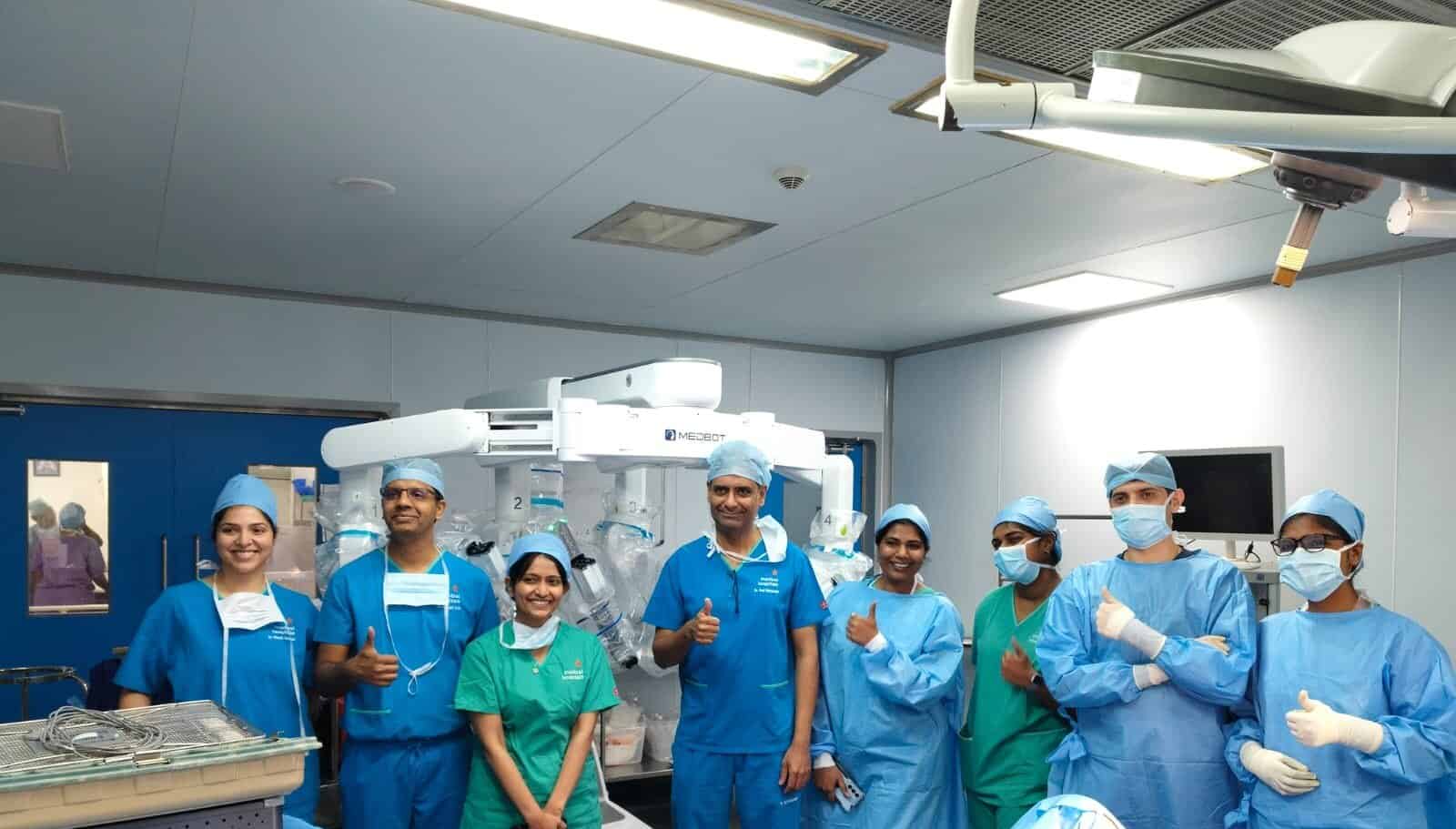
Robotic surgery in breast cancer is a newer, evolving technique that uses advanced robotic arms controlled by a surgeon to perform very precise operations through small incisions. Although robotic surgery in breast cancer is promising, especially for improving cosmetic results, it is currently used very selectively and not as a routine replacement for conventional surgery.
What matters most is not choosing the newest-sounding technique, but choosing the operation that is safest and oncologically sound for your specific cancer.

Before surgery, I will review your reports, explain the procedure, discuss possible risks, and answer your questions clearly. We will also discuss hospital stay, wound care, recovery, and what follow-up may involve.
After surgery, most patients experience minimal pain, tightness, or discomfort around the incision area. If lymph node surgery is done, there may also be temporary stiffness or reduced shoulder movement early on.
One of the most important steps after surgery is the final pathology report. This tells us the exact tumor size, margin status, lymph node findings, and whether additional treatment is needed.
Patients and families are guided through each stage, including recovery, follow-up visits, and next-step planning. You may also find the page on Recovery After Cancer Surgery useful.

Many patients understandably want to know the cost of breast cancer surgery in Bangalore early in the process. This is an important and practical concern, and I believe it should be discussed openly.
At the same time, it is not responsible to give one fixed number without understanding the case. The cost can vary significantly depending on several factors, such as:
So when patients ask me about the Cost of Breast Cancer Surgery in Bangalore, I usually explain that an estimate should be based on the actual operation being planned, not on a random online number. Once I review your reports and decide the likely treatment path, my team can help you with a more realistic estimate.

I currently consult at:
These centers provide access to comprehensive cancer care within a well-equipped hospital environment, supporting multidisciplinary treatment, investigations, and post-operative care when required.
Consultation timings and appointment details can be arranged through phone or WhatsApp for convenience.

This page has been written and medically reviewed under the guidance of Dr. Suraj Manjunath, Senior Surgical Oncologist at Apollo Hospitals, Bannerghatta Road, Bangalore.
The information has been reviewed for medical accuracy, patient clarity, and relevance to cancer surgery decision-making. Cancer treatment is always personalized and depends on factors such as the type of cancer, stage or spread of disease, overall health, co-morbidities, test results, and treatment goals.
The information is meant for patient education and should not replace an in-person consultation, diagnosis or personalized treatment plan.
Consultation Locations: Apollo Hospitals, Bannerghatta Road & Sarjapur Road, Bangalore.
Last reviewed: September 2026
