
Navigating a new diagnosis requires rapid, expert intervention from a trusted testicular cancer surgeon in Bangalore. Dr Suraj Manjunath provides definitive, supportive testicular cancer treatment in Bangalore at Apollo Hospitals designed to achieve excellent outcomes while safeguarding long-term wellness.


The testicles are two small organs present inside the scrotum. They produce sperm and the male hormone testosterone.
Testicular cancer happens when abnormal cells in the testicle start growing in an uncontrolled way. Most testicular cancers begin from germ cells, which are the cells involved in sperm production. These cancers are broadly grouped into two major types: seminoma and non-seminoma. The exact type is important because it influences treatment decisions.
Testicular cancer may present as a painless lump, swelling, heaviness, or discomfort in the testicle. Sometimes the patient notices a change during bathing or self-examination. In some cases, the diagnosis is made when a scan is done for testicular swelling or pain.
Early specialist evaluation matters because testicular cancer is one of the cancers where correct treatment planning can make a major difference. The surgery has to be done properly. The pathology report must be understood correctly. Tumor marker blood tests and scans must be interpreted carefully. Based on these details, the next step is planned.
It is important not to delay evaluation if you notice a lump or swelling in the testicle. Not every swelling is cancer, but every persistent testicular lump should be examined by a specialist.

When a patient hears the word “cancer,” the first reaction is usually fear. In testicular cancer, that fear may be even stronger because the diagnosis often affects younger men, their confidence, fertility concerns, marriage plans, family life, and future health.
I am Dr. Suraj Manjunath, a Surgical Oncologist in Bangalore, associated with Apollo Hospitals, Bannerghatta Road and Apollo Hospitals, Sarjapur Road. I help patients and families understand testicular cancer clearly, decide when surgery is needed, and plan treatment safely along with the oncology team.
The first aim is to confirm the diagnosis properly. The second aim is to understand the stage of the disease. The third aim is to decide whether surgery alone is enough, or whether surgery needs to be combined with chemotherapy, radiation therapy, or other treatments.
As a Testicular Cancer Surgeon in Bangalore, my approach is not just to operate. My role is to help you and your family understand the complete picture, including the type of cancer, the stage, the safest treatment sequence, recovery, fertility-related concerns, and long-term follow-up.
If you are looking for a Testicular Cancer Surgery in Bangalore, or if you need clarity about testicular cancer treatment in Bangalore, this page will help you understand the condition, surgery options, recovery, and the factors that influence treatment cost.

+

+

+

+

Many patients with testicular cancer first notice a change in the size, shape, or feel of one testicle. Some patients feel a lump. Others feel heaviness or dragging discomfort in the scrotum.
Common symptoms may include:
Some men have very little pain, and that is why they may delay seeing a doctor. Please remember that the absence of pain does not mean the problem is harmless.
At the same time, not every testicular swelling is cancer. Infections, hydrocele, varicocele, injury, and other conditions can also cause swelling or discomfort. But the only safe way to know the difference is proper examination and testing.
If a scan has already suggested a testicular tumor, it is important to meet a specialist without delay. Early diagnosis and timely treatment can help avoid unnecessary progression and anxiety.

Before planning testicular cancer surgery in Bangalore, we first need to understand the diagnosis clearly.
The evaluation usually begins with a clinical examination and a detailed discussion about symptoms, duration, pain, swelling, fertility concerns, past medical history, and family history.
The most common first investigation is an ultrasound of the scrotum. This helps us see whether the lump is inside the testicle, outside the testicle, fluid-filled, solid, or suspicious for cancer.
Blood tests called tumor markers are also important. These may include AFP, beta-hCG, and LDH. These markers help in diagnosis, staging, treatment planning, and follow-up. Not all testicular cancers raise tumor markers, so normal markers do not always rule out cancer.
A CT scan of the abdomen, pelvis, or chest may be advised to check whether the cancer has spread to lymph nodes or other organs. In some cases, additional imaging may be needed.
One important point patients often ask about is biopsy. In many cancers, biopsy is done before surgery. But in suspected testicular cancer, a routine needle biopsy of the testicle is usually avoided because it can disturb the natural drainage pathways and may increase the risk of spread. In most cases, the diagnosis is confirmed after the testicle is removed through a surgery called radical inguinal orchiectomy.
The removed testicle is then studied by the pathologist. The pathology report tells us the cancer type, size, extent, and other features. This report is extremely important because it guides the next step after surgery.
Before surgery, we also assess fitness for anesthesia and surgery. This may include blood tests, ECG, chest evaluation, and other tests depending on the patient’s age and health condition.


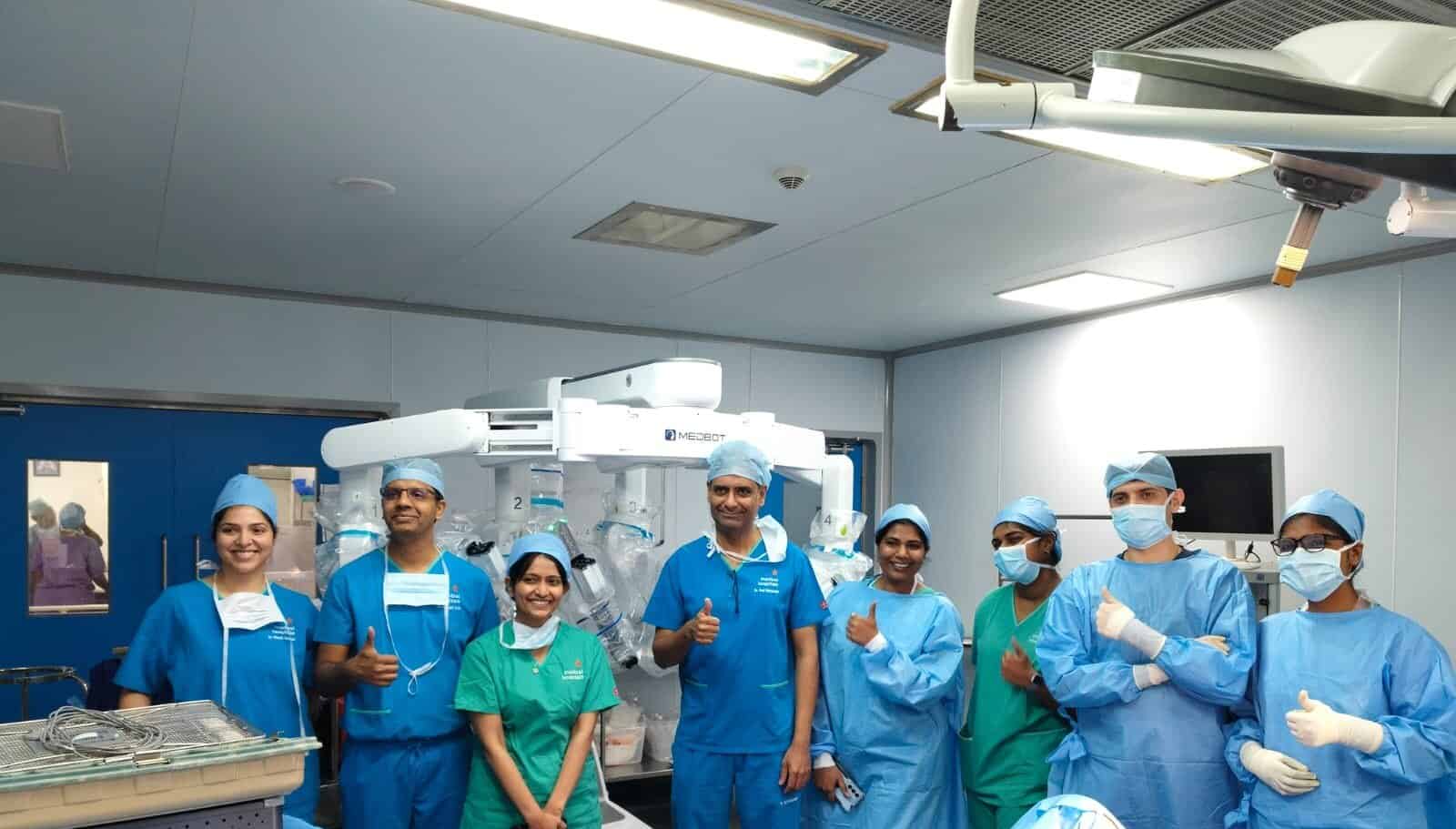
The most common surgery for testicular cancer is radical inguinal orchiectomy.
In this procedure, the affected testicle and spermatic cord are removed through an incision in the groin. The surgery is usually safe and well tolerated. Many patients worry about masculinity, sexual function, fertility, and appearance. These concerns are valid, and I discuss them openly during consultation.
When one testicle is removed and the other testicle is healthy, many men can still have normal testosterone production and sexual function. Fertility may also be preserved in many patients, but because chemotherapy or other treatments can affect fertility, sperm banking may be discussed before treatment, especially in young men who wish to have children in the future.
In very rare and carefully selected situations, testis-sparing surgery may be considered. This means removing only the tumor and preserving some healthy testicular tissue. However, this is not suitable for most testicular cancers. Cancer safety is the first priority. Organ preservation is considered only when it is medically appropriate and oncologically safe.
Another surgery that may be required in selected cases is retroperitoneal lymph node dissection, or RPLND. This is an operation to remove lymph nodes from the back of the abdomen. These lymph nodes are important because testicular cancer can spread to them. RPLND may be considered in selected non-seminoma cases, residual masses after chemotherapy, or specific recurrence patterns.
Sometimes surgery may also be needed to remove residual disease after chemotherapy, especially if scans show a remaining mass. The decision depends on cancer type, marker levels, scan findings, and overall treatment response.

Patients often ask me whether robotic cancer surgery, laparoscopic cancer surgery, or open cancer surgery is better for testicular cancer.
The answer depends on the specific operation.
For radical inguinal orchiectomy, the operation is usually done through a groin incision. It is not typically a robotic or laparoscopic procedure because the testicle is removed through the inguinal route.
For lymph node surgery such as RPLND, the surgical approach can vary. In selected patients, minimally invasive cancer surgery, including laparoscopic or robotic approaches, may be considered. These approaches may help with smaller incisions and recovery in carefully chosen cases.
However, minimally invasive surgery is not suitable for every patient. If the disease is bulky, close to major blood vessels, complex after chemotherapy, or technically unsafe for a minimally invasive approach, open surgery may be the better and safer option.
My decision is always based on cancer safety first. The goal is not to choose the most modern-looking method. The goal is to choose the method that gives the patient the safest and most complete cancer operation.
Robotic or laparoscopic surgery may be useful in selected cases, but open surgery remains very important in complex cancer surgery. A good cancer surgeon should be comfortable choosing the right approach rather than forcing one technique for every patient.

Before surgery, we review all reports carefully. This usually includes ultrasound, tumor markers, CT scans, blood tests, and general fitness assessment. If fertility preservation is relevant, sperm banking may be discussed before treatment begins.
The surgery most commonly performed is radical inguinal orchiectomy. The procedure is usually done under anesthesia. The incision is made in the groin, and the affected testicle is removed safely along with the spermatic cord.
Hospital stay may be short for many patients undergoing orchiectomy, depending on hospital protocol and the patient’s condition. Pain is usually manageable with medicines. Walking is usually encouraged early, but heavy activity, exercise, and lifting may need to be avoided for some time.
After surgery, the removed tissue is sent for pathology. This report is very important. It tells us the exact type of cancer and whether there are any high-risk features. Once the pathology report is available, we discuss the next step.
Follow-up may include tumor marker blood tests, CT scans, physical examination, and consultations with the oncology team. Some patients need only surveillance. Others may need chemotherapy, radiation therapy, or further surgery depending on the stage and risk.
Recovery after cancer surgery is not just physical. Patients may worry about body image, fertility, sexual health, and recurrence. These are important concerns and should be discussed openly. I guide patients and families through the medical and emotional aspects of recovery as clearly as possible.
You may also find it useful to read more about Recovery After Cancer Surgery to understand the general principles of healing and follow-up.

Many patients and families understandably ask about the cost of testicular cancer surgery in Bangalore. It is an important question, and I believe it should be discussed transparently.
However, it is not appropriate to give one fixed cost without evaluating the patient. Testicular cancer surgery cost can vary depending on several factors.
The cost may depend on the type of surgery needed. A radical inguinal orchiectomy is different from a complex lymph node dissection. If RPLND is required, the cost may be higher because it is a more complex operation.
The surgical approach also matters. Open, laparoscopic, and robotic procedures have different cost structures. Robotic surgery may involve additional equipment and system-related charges.
The complexity of the case is another factor. Surgery after chemotherapy, surgery near major blood vessels, bulky lymph nodes, or recurrent disease may require more planning, longer operating time, and more hospital resources.
Hospital stay, room category, anesthesia charges, investigations, medicines, pathology tests, ICU requirement if any, and additional consultations can also influence the final cost.
In some patients, surgery is only one part of the overall treatment. If chemotherapy, radiation therapy, fertility preservation, additional scans, or long-term surveillance are needed, those costs should also be considered separately.
During consultation, once I review your reports and understand the required treatment plan, the hospital team can provide a more accurate estimate.

I currently consult at:
These centers provide access to comprehensive cancer care within a well-equipped hospital environment, supporting multidisciplinary treatment, investigations, and post-operative care when required.
Consultation timings and appointment details can be arranged through phone or WhatsApp for convenience.

This page has been written and medically reviewed under the guidance of Dr. Suraj Manjunath, Senior Surgical Oncologist at Apollo Hospitals, Bannerghatta Road, Bangalore.
The information has been reviewed for medical accuracy, patient clarity, and relevance to cancer surgery decision-making. Cancer treatment is always personalized and depends on factors such as the type of cancer, stage or spread of disease, overall health, co-morbidities, test results, and treatment goals.
The information is meant for patient education and should not replace an in-person consultation, diagnosis or personalized treatment plan.
Consultation Locations: Apollo Hospitals, Bannerghatta Road & Sarjapur Road, Bangalore.
Last reviewed: September 2026
