
When looking for a dedicated cervical cancer surgeon in Bangalore, Dr Suraj Manjunath provides expert operative care at Apollo Hospitals. He delivers personalized cervical cancer treatment in Bangalore to ensure complete tumor management, optimal pelvic healing, and your long-term health.


If you or someone in your family has been diagnosed with cervical cancer, I understand how difficult this news can feel. Many patients come to me with fear, confusion, and many urgent questions — “Do I need surgery?”, “Can this be cured?”, “What is the right treatment?”, “How much will surgery cost?”
I am Dr. Suraj Manjunath, a Surgical Oncologist in Bangalore, associated with Apollo Hospitals, Bannerghatta Road and Apollo Hospitals, Sarjapur Road.
As a Cervical Cancer Surgeon in Bangalore, I focus on understanding the exact stage of the cancer before advising surgery. This is important because cervical cancer treatment must be planned carefully.
The right treatment depends on the size of the tumor, whether it has spread to nearby tissues, whether lymph nodes are involved, your age, general health, and your treatment goals.
Surgery is commonly considered in early-stage cervical cancer, while more advanced stages often require combined treatment with radiation and chemotherapy.
My role is to help you understand your diagnosis clearly, evaluate whether surgery is needed, and guide you toward the safest and most appropriate treatment plan.
This website is designed to help you take the next step with clarity and confidence.

+

+

+

+

Cervical cancer may not always cause obvious symptoms in the earliest stage. Some women are diagnosed through screening tests before they feel anything unusual. Others may notice symptoms that gradually become more concerning.
Common warning signs may include:
These symptoms do not always mean cancer. They can occur due to infections, hormonal changes, or other gynecological conditions. But if cervical cancer has already been suspected or diagnosed, these symptoms should be evaluated properly.

Before planning Cervical Cancer Surgery in Bangalore, we need to understand the cancer clearly. Treatment should not be based only on suspicion or symptoms. It should be based on proper examination, biopsy, imaging, and staging.
The diagnostic process may include a pelvic examination by a gynecologist or oncologist. A Pap smear or HPV test may raise suspicion, but a biopsy is usually needed to confirm cancer. The biopsy report tells us the type of cervical cancer and gives important information about the tumor.
Scans such as MRI pelvis, CT scan, or PET-CT may be advised depending on the case. These scans help us understand the size of the tumor, whether nearby tissues are involved, and whether lymph nodes or distant organs show disease.
Staging is the process of finding out how far the cancer has spread. This is one of the most important steps in cervical cancer treatment. A patient with early-stage disease may be suitable for surgery, while a patient with locally advanced disease may benefit more from chemoradiation rather than upfront surgery.
Before surgery, we also assess general fitness. This may include blood tests, heart and lung evaluation, anesthesia assessment, and review of existing medical conditions such as diabetes, hypertension, or heart disease.


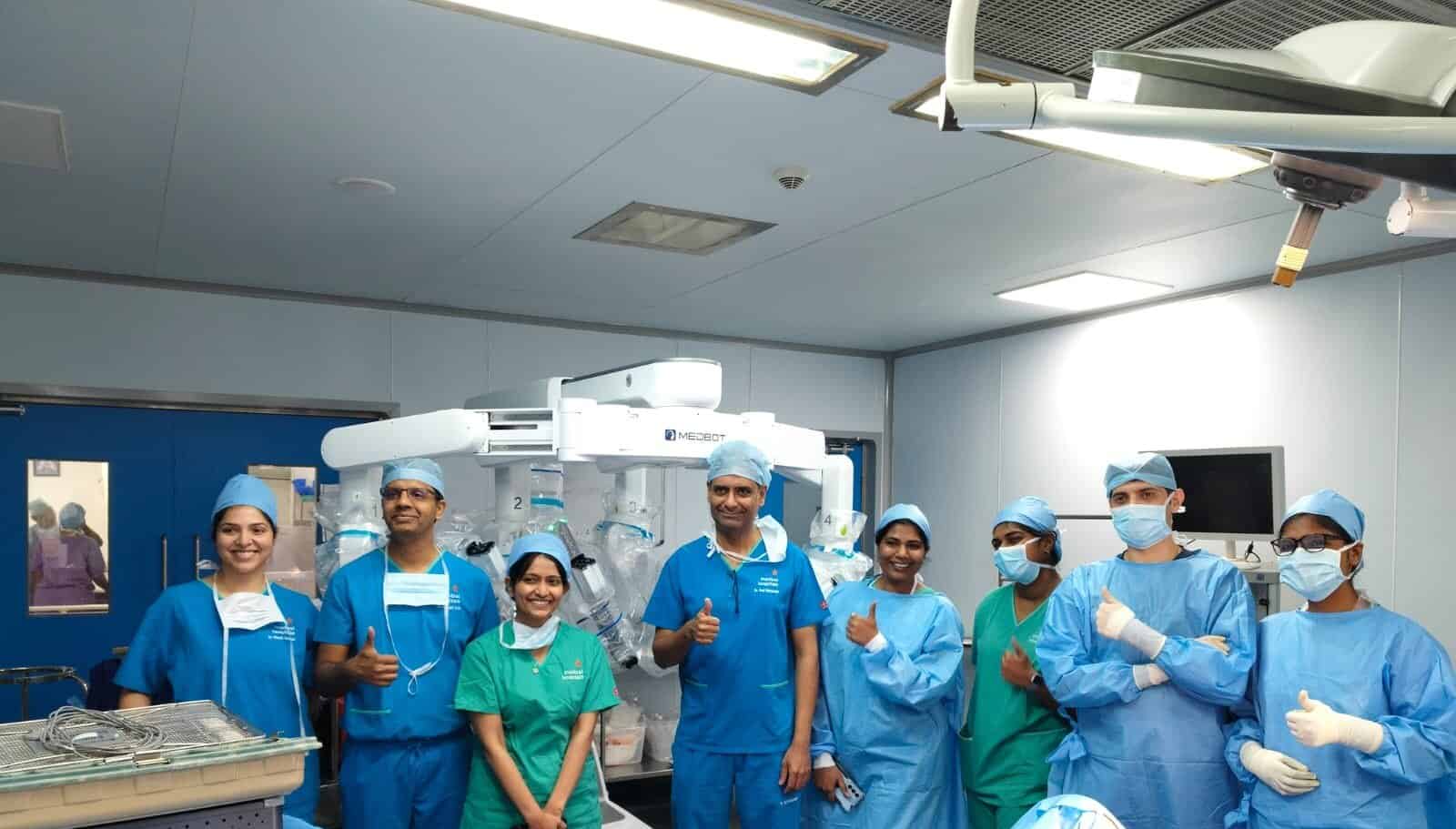
There are different surgical options for cervical cancer. Not every patient needs the same operation. The surgery is chosen only after understanding the stage and spread of disease.
Cone Biopsy or Conization
In very early disease or pre-cancerous changes, a cone-shaped portion of the cervix may be removed. This may sometimes be both diagnostic and therapeutic in carefully selected cases. It is generally considered when the disease is extremely early and limited.
Simple Hysterectomy
A simple hysterectomy involves removal of the uterus and cervix. This may be considered in selected very early cases, depending on tumor features and medical judgment. It is not suitable for all cervical cancers.
Radical Hysterectomy
Radical hysterectomy is one of the important operations for early-stage cervical cancer. It involves removal of the uterus, cervix, surrounding tissues, and part of the upper vagina. Lymph nodes in the pelvis are usually assessed or removed during the same surgery. The American Cancer Society notes that lymph node assessment may be part of radical hysterectomy planning in cervical cancer surgery.
Lymph Node Surgery
Cancer cells can sometimes travel to lymph nodes. During surgery, pelvic lymph nodes may be removed or assessed. In selected cases, sentinel lymph node mapping may be considered, where the first draining lymph nodes are identified and evaluated.
Fertility-Sparing Surgery
In very selected early-stage cases, especially in younger women who wish to preserve fertility, procedures such as radical trachelectomy may be discussed. This involves removal of the cervix while trying to preserve the uterus. This is not suitable for every patient and requires very careful selection.
The aim of cervical cancer surgery is not just to remove an organ. The aim is to remove the cancer safely, reduce the risk of recurrence, and preserve function wherever medically appropriate.

Many patients ask whether cervical cancer surgery can be done through robotic or laparoscopic methods. The answer depends on the individual case.
Robotic Surgery
Robotic surgery may allow precise movement, better visualization, and smaller incisions in selected cancer surgeries. However, in cervical cancer, the choice of robotic surgery must be made carefully based on current evidence, tumor size, stage, and oncological safety. The priority is always cancer clearance and patient safety.
Laparoscopic Surgery
Laparoscopic surgery is a minimally invasive approach performed through small cuts using a camera and instruments. It may be suitable for selected gynecological oncology procedures, but in cervical cancer, suitability depends strongly on the case details.
Open Surgery
Open surgery may still be the safest and most appropriate option in many cervical cancer cases. It may be preferred when the tumor is larger, when exposure is important, when previous surgery or adhesions are present, or when the surgical oncologist feels that open access gives better cancer control.
The decision is not made based on technology alone. It is made based on the cancer, the patient’s anatomy, safety, and the ability to achieve the best oncological result.
You can read more about the different surgical approaches in Robotic Cancer Surgery, Laparoscopic Cancer Surgery, Open Cancer Surgery, and Minimally Invasive Cancer Surgery.

Before surgery, we will review your biopsy, scans, blood tests, and overall health. You may need an anesthesia fitness assessment, cardiac evaluation, or other tests depending on age and medical history. If you have diabetes, high blood pressure, heart disease, or other health issues, these will be optimized before surgery.
You and your family will be counselled about the type of surgery, expected hospital stay, possible risks, recovery, and whether additional treatment may be needed after surgery.
The hospital stay depends on the type of operation and recovery speed. Some patients recover faster after minimally invasive procedures, while others may need a longer stay after open or complex surgery. Pain control, walking, diet, urine catheter care, and wound care are managed step by step.
After surgery, the removed tissue is sent for pathology examination. This final pathology report is very important. It tells us the exact extent of cancer, margin status, lymph node status, and other risk factors. Based on this report, we decide whether follow-up alone is enough or whether radiation or chemotherapy is needed.
Recovery after cancer surgery is not only physical. Patients also need emotional reassurance, family support, nutrition guidance, and follow-up planning. You can also explore Recovery After Cancer Surgery for more general guidance.

Many families ask about the Cost of Cervical Cancer Surgery in Bangalore before making treatment decisions. This is completely understandable. Cancer treatment can create emotional and financial pressure, and it is important to plan properly.
However, it would not be right to give a fixed cost without reviewing the patient’s reports. The cost can vary depending on several factors.
The type of surgery matters. A cone biopsy, simple hysterectomy, radical hysterectomy, lymph node surgery, or more extensive procedure will have different cost structures.
The surgical approach also affects cost. Robotic surgery, laparoscopic surgery, and open surgery may have different equipment, operating room, and hospital-related expenses.
The complexity of the case is important. Previous surgeries, obesity, medical conditions, large tumors, lymph node involvement, or need for additional procedures can influence cost.
Hospital stay also matters. Some patients may need a shorter stay, while others may need longer monitoring. ICU care is not required for every patient, but if needed, it can affect the total expense.
Other factors include investigations, anesthesia, medicines, blood products if required, pathology testing, and post-operative care.
During consultation, once we review your reports and understand the likely treatment plan, the hospital team can give you a more realistic estimate. My advice is not to choose treatment only based on cost. The priority should be safe, appropriate, and stage-based cancer care.

I currently consult at:
These centers provide access to comprehensive cancer care within a well-equipped hospital environment, supporting multidisciplinary treatment, investigations, and post-operative care when required.
Consultation timings and appointment details can be arranged through phone or WhatsApp for convenience.

This page has been written and medically reviewed under the guidance of Dr. Suraj Manjunath, Senior Surgical Oncologist at Apollo Hospitals, Bannerghatta Road, Bangalore.
The information has been reviewed for medical accuracy, patient clarity, and relevance to cancer surgery decision-making. Cancer treatment is always personalized and depends on factors such as the type of cancer, stage or spread of disease, overall health, co-morbidities, test results, and treatment goals.
The information is meant for patient education and should not replace an in-person consultation, diagnosis or personalized treatment plan.
Consultation Locations: Apollo Hospitals, Bannerghatta Road & Sarjapur Road, Bangalore.
Last reviewed: September 2026
