
For patients seeking a dedicated pancreatic cancer surgeon in Bangalore, Dr Suraj Manjunath offers trusted expertise at Apollo Hospitals. He provides definitive, highly integrated pancreatic cancer treatment in Bangalore tailored to navigate complex conditions with clear explanations and the highest standards of safety.


A pancreatic cancer diagnosis often brings fear, confusion, and many urgent questions. Patients and families usually want to know: Is it curable? Is surgery possible? Do I need chemotherapy first? How serious is this? These are natural questions, and they deserve calm, honest answers.
When I meet patients, my goal is to understand the full picture carefully and explain it in plain language. That includes reviewing your scans, biopsy, stage of disease, overall health, and whether surgery is likely to help at this point.
I am Dr. Suraj Manjunath, a Surgical Oncologist in Bangalore, associated with Apollo Hospitals, Bannerghatta Road and Apollo Hospitals, Sarjapur Road.
As a Pancreatic Cancer Surgeon in Bangalore, I believe treatment planning should be individualized. Not every patient needs the same sequence of treatment. In some people, surgery is the first step. In others, chemotherapy may be needed before surgery. And in some advanced cases, surgery may not be the best first option.
We will walk through this together. I will help you understand where you stand, what your realistic options are, and what the next step should be.

+

+

+

+

Common symptoms may include:
Not every patient will have all these symptoms. In some cases, there may be very few symptoms at all. Also, these symptoms do not always mean cancer.

Before deciding on treatment, I usually need a complete picture of the disease. Pancreatic cancer diagnosis is not based on one test alone. It usually involves a combination of imaging, tissue diagnosis, and overall health assessment. This may include:
CT scan or MRI: These scans help us see the tumor, understand its size and location, and check whether nearby blood vessels, lymph nodes, or other organs are involved.
Endoscopic ultrasound (EUS): In some patients, a special internal ultrasound is used to look closely at the pancreas and guide a biopsy.
Biopsy: A small tissue sample may be taken to confirm whether the growth is cancer and what type of cancer it is.
Pathology review: The biopsy sample is examined under the microscope by a pathologist. This helps confirm the diagnosis.
Staging work-up: Staging means understanding how limited or advanced the cancer is. This is one of the most important steps because it influences whether surgery is possible.
Blood tests and fitness assessment: We also assess liver function, nutrition, blood counts, and overall medical fitness before surgery or chemotherapy. Since pancreatic surgery can be major surgery, the body needs to be prepared properly.
In many cases, pancreatic cancer treatment should be discussed in a multidisciplinary setting. This gives patients a more balanced and safer treatment pathway.


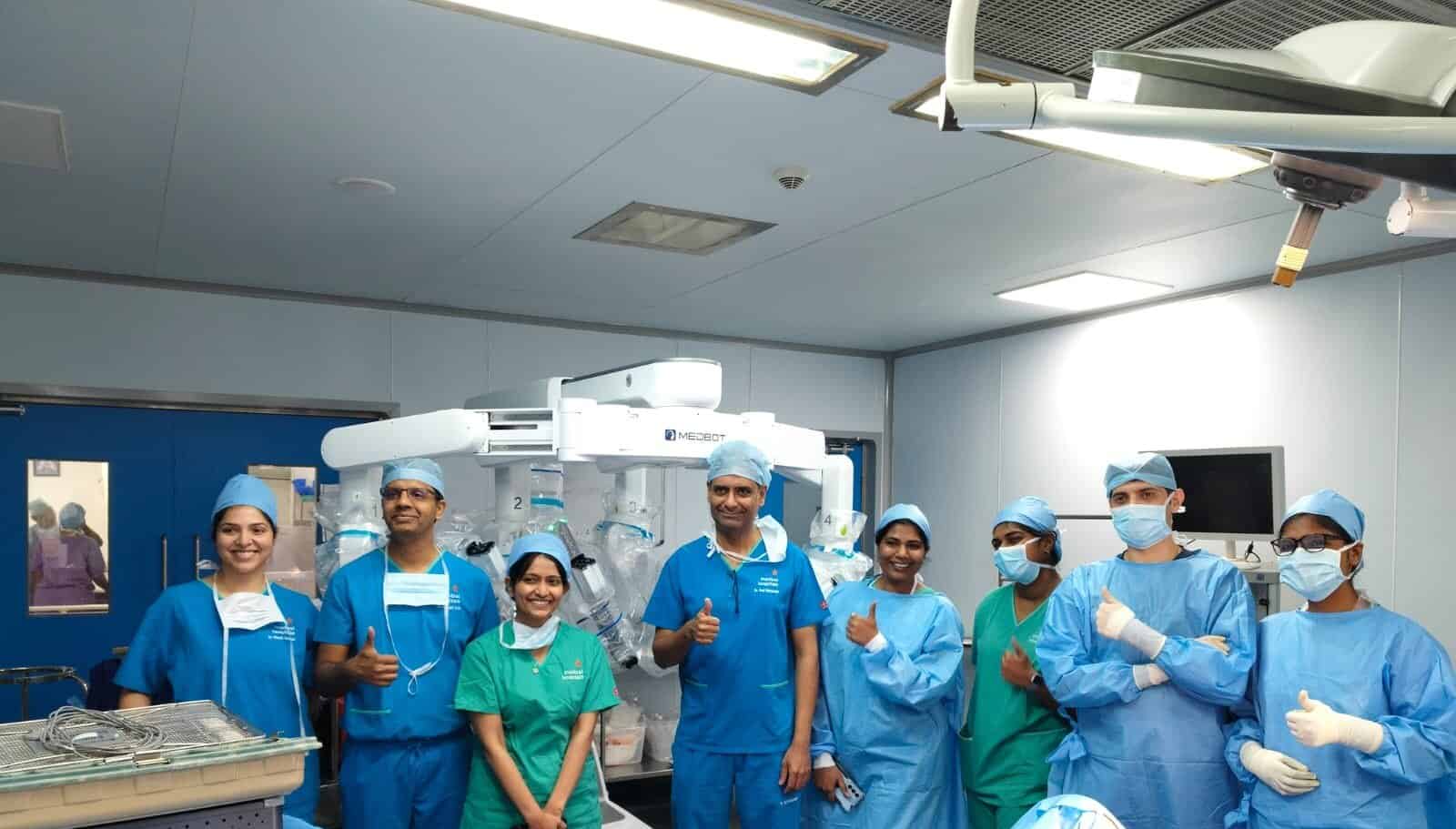
The main surgical options include:
Whipple Procedure
This is commonly done for cancers in the head of the pancreas. It involves removal of the affected part of the pancreas along with nearby structures, followed by reconstruction.
Distal Pancreatectomy
This is done for tumors in the body or tail of the pancreas. In some patients, the spleen may also need to be removed.
Total Pancreatectomy
In selected cases, removal of the entire pancreas may be necessary.
Lymph Node Removal
Nearby lymph nodes are usually removed and examined as part of proper cancer surgery.
The exact operation depends on the tumor site, extent, and relationship to nearby structures.

In selected patients, pancreatic surgery may be possible using robotic cancer surgery or laparoscopic cancer surgery. This may be considered when the tumor location and complexity make a minimally invasive approach safe and appropriate.
However, many pancreatic cancers still require open cancer surgery, especially when the tumor is more complex or close to major blood vessels.
The goal is always the same: safe removal of the cancer with sound surgical judgment. The best operation is not simply the one with the smallest incision. It is the one that is safest and most appropriate for your disease.
You may also explore related pages on Robotic Cancer Surgery, Laparoscopic Cancer Surgery, Open Cancer Surgery, and Minimally Invasive Cancer Surgery.

Before surgery, you may need blood tests, anesthesia review, heart and lung fitness checks, and sometimes nutritional preparation. If jaundice is present, a procedure may be needed first to relieve bile duct blockage.
After surgery, the hospital stay depends on the type of operation and how recovery progresses. Some patients may need short ICU monitoring. Pain control, breathing exercises, walking, and gradual return to diet are all part of recovery.
The final pathology report after surgery is very important. It helps determine the exact stage, margin status, lymph node involvement, and whether additional treatment such as chemotherapy is needed.
You may also read the Recovery After Cancer Surgery page for broader guidance.

The cost of pancreatic cancer surgery in Bangalore depends on several factors, including:
For example, the cost of a Whipple procedure may differ from the cost of a distal pancreatectomy because the complexity and recovery needs are different.
The best way to get a realistic estimate is after clinical evaluation, once the likely treatment plan is clear.

I currently consult at:
These centers provide access to comprehensive cancer care within a well-equipped hospital environment, supporting multidisciplinary treatment, investigations, and post-operative care when required.
Consultation timings and appointment details can be arranged through phone or WhatsApp for convenience.

This page has been written and medically reviewed under the guidance of Dr. Suraj Manjunath, Senior Surgical Oncologist at Apollo Hospitals, Bannerghatta Road, Bangalore.
The information has been reviewed for medical accuracy, patient clarity, and relevance to cancer surgery decision-making. Cancer treatment is always personalized and depends on factors such as the type of cancer, stage or spread of disease, overall health, co-morbidities, test results, and treatment goals.
The information is meant for patient education and should not replace an in-person consultation, diagnosis or personalized treatment plan.
Consultation Locations: Apollo Hospitals, Bannerghatta Road & Sarjapur Road, Bangalore.
Last reviewed: September 2026
