
Dr Suraj Manjunath is a highly skilled liver cancer surgeon in Bangalore providing specialized oncological care at Apollo Hospitals. He delivers advanced, patient-centric liver cancer treatment in Bangalore designed to target liver tumors effectively while carefully safeguarding your long-term liver function and general health.


If you or a loved one has been diagnosed with liver cancer, I understand how worrying and overwhelming this time can feel. You may be trying to make sense of scan reports, treatment advice, and surgical options while also dealing with fear and uncertainty.
I am Dr. Suraj Manjunath, a Surgical Oncologist in Bangalore, associated with Apollo Hospitals, Bannerghatta Road and Apollo Hospitals, Sarjapur Road.
My role is to listen carefully, review the reports properly, explain the disease in simple language, and help you understand what the next best step is. Not every liver tumor behaves the same way, and not every patient needs the same treatment.
As a Liver Cancer Surgeon in Bangalore, I believe that treatment should be individualized. The right plan depends on the size and location of the tumor, the condition of the liver, whether there is cirrhosis or chronic liver disease, and the patient’s overall fitness.
In some cases, surgery is the best treatment. In others, treatment may need to begin with medicines, liver-directed therapy, or a combined plan made by a multidisciplinary team.
This page will help you understand the condition, the treatment options, and how I approach liver cancer surgery in Bangalore in a careful, patient-focused way.

+

+

+

+

Liver cancer may not always cause symptoms in the early stage. When symptoms do appear, they may include:
These symptoms do not always mean cancer, but they should not be ignored. If a scan has already shown a liver mass, specialist consultation is important even if you feel well otherwise.

The evaluation usually starts with imaging tests such as:
Blood tests are also important. These may include routine liver function tests, clotting profile, viral hepatitis markers, and sometimes tumor markers such as AFP, depending on the situation.
A biopsy may be needed in selected cases, especially when the diagnosis is not fully clear on scans. The pathology report helps confirm the type of cancer.
We also do staging, which means checking how advanced the cancer is. This includes finding out whether the disease is limited to the liver or has spread elsewhere.
Before planning surgery, I also check whether the liver can safely tolerate the operation and whether the patient is fit for treatment.
This careful evaluation helps us choose the safest and most effective form of liver cancer treatment in Bangalore.


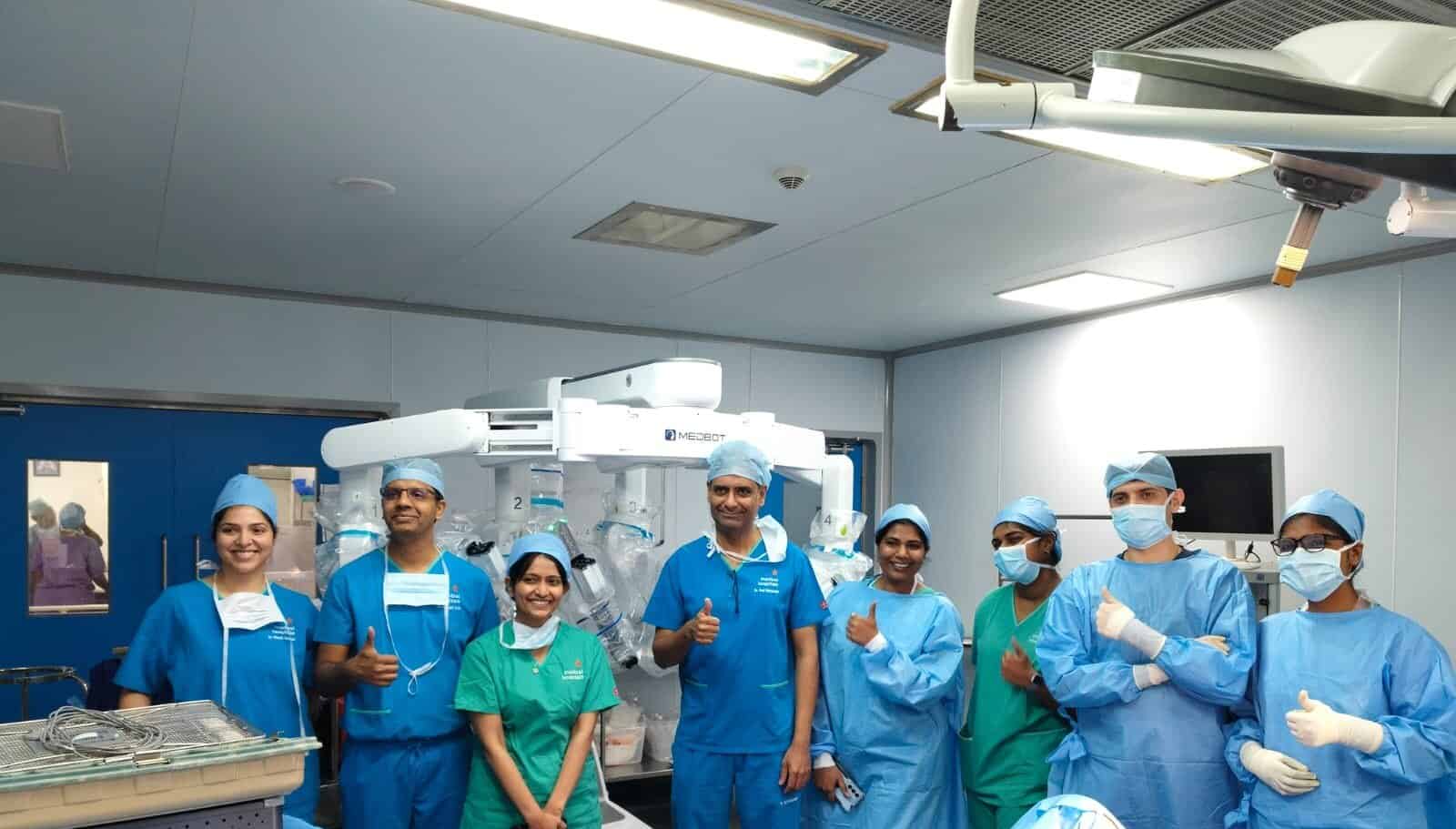
The most common surgery for liver cancer is liver resection, which means removing the part of the liver that contains the tumor.
The liver is divided into segments, and depending on the location and size of the cancer, surgery may involve removal of a small segment, a section, or a larger portion of the liver.
Because the liver can regenerate to some extent, it is often possible to remove the diseased portion safely in selected patients, provided enough healthy liver remains.
If lymph nodes or nearby tissues appear involved, these may also be assessed or removed when appropriate, depending on the type of liver cancer and surgical plan.
A major principle in liver cancer surgery is balancing cancer clearance with liver preservation. My aim is to remove the disease completely whenever possible, while also ensuring that the remaining liver can support recovery.

Some liver cancers can be treated using robotic surgery or laparoscopic surgery in carefully selected patients. These minimally invasive approaches may help with faster recovery in the right situation.
However, open surgery remains very important, especially for large tumors, complex resections, or tumors close to major blood vessels.
My approach is always based on what is safest and most appropriate for your cancer.
The method of surgery should never be chosen for style or trend. It should be chosen for the patient.

Before surgery, we review scans, blood tests, liver function, fitness for anesthesia, and the surgical plan in detail.
After surgery, recovery depends on the type of operation and the condition of the liver. Some patients recover faster, while others may need closer monitoring and a longer hospital stay.
Once the final pathology report is available, I discuss the findings with you and your family, explain what was removed, and guide you on whether any further treatment is needed.
Patients often find our Recovery After Cancer Surgery guidance helpful, because the recovery journey is not only physical. It also involves emotional reassurance, follow-up planning, nutrition, and returning gradually to daily life.

It is difficult to give one fixed cost for liver cancer surgery in Bangalore because treatment varies from one patient to another.
The overall cost may depend on:
The best way to understand the likely cost is after your reports have been reviewed and the treatment plan is clearly defined.

I currently consult at:
These centers provide access to comprehensive cancer care within a well-equipped hospital environment, supporting multidisciplinary treatment, investigations, and post-operative care when required.
Consultation timings and appointment details can be arranged through phone or WhatsApp for convenience.

This page has been written and medically reviewed under the guidance of Dr. Suraj Manjunath, Senior Surgical Oncologist at Apollo Hospitals, Bannerghatta Road, Bangalore.
The information has been reviewed for medical accuracy, patient clarity, and relevance to cancer surgery decision-making. Cancer treatment is always personalized and depends on factors such as the type of cancer, stage or spread of disease, overall health, co-morbidities, test results, and treatment goals.
The information is meant for patient education and should not replace an in-person consultation, diagnosis or personalized treatment plan.
Consultation Locations: Apollo Hospitals, Bannerghatta Road & Sarjapur Road, Bangalore.
Last reviewed: September 2026
