Dr Suraj Manjunath Website Logo

Trusted Thyroid Cancer Surgeon in Bangalore

If you are looking for an expert thyroid cancer surgeon in Bangalore, Dr Suraj Manjunath provides comprehensive care for nodules and malignancies at Apollo Hospitals. He specializes in highly precise thyroid cancer treatment in Bangalore designed to safeguard surrounding nerves and vocal functions.

Dr Suraj Manjunath

What Is Thyroid Cancer?

A simple explanation of where it starts and why specialist care matters.
What is Thyroid Cancer
The thyroid is a small butterfly-shaped gland located in the front of the neck. It plays an important role in controlling metabolism, energy levels, body temperature, and several hormone-related functions.

Thyroid cancer develops when abnormal cells in the thyroid begin to grow in an uncontrolled way.

There are different types of thyroid cancer. Some are slow-growing and highly treatable. Others may behave more aggressively and need more extensive treatment.

That is why it is important not to assume all thyroid cancers are the same. Early and expert evaluation matters.
Understand Your Diagnosis with a Specialist Consultation.

Meet Your Trusted Thyroid Cancer Surgeon in Bangalore

Dr Suraj Manjunath

Dr Suraj Manjunath

Senior Consultant - Surgical Oncologist

MBBS, MS (Gen Surgery), MCh (surgical oncology), Detroit Fellowship in Surgical Oncology and Minimally Invasive Surgery, SSO (Society of Surgical Oncology, USA) - Visiting Fellowship
Personal Note from Dr Suraj Manjunath

If you or a loved one has been diagnosed with thyroid cancer, I understand how worrying and overwhelming this can feel. You may be trying to understand whether surgery is needed, what treatment options are available, how complex the operation is, and what recovery will look like.

I am Dr. Suraj Manjunath, a Surgical Oncologist in Bangalore, associated with Apollo Hospitals, Bannerghatta Road and Apollo Hospitals, Sarjapur Road.

My goal is to guide you through this process clearly. I believe patients and families deserve a simple explanation of what is happening, why a treatment is being advised, and what to expect next. During consultation, I review your reports, scans, biopsy findings, and symptoms carefully before recommending a plan.

As a Thyroid Cancer Surgeon in Bangalore, I usually tell patients that the first step is not panic. The first step is proper evaluation. Many thyroid cancers are very treatable, especially when diagnosed and managed by the right specialist team. Even in more complex cases, a structured treatment plan can make a meaningful difference.

This page will help you understand thyroid cancer treatment in Bangalore, when surgery is needed, the surgical options available, what recovery is usually like, and what factors influence the cost of thyroid cancer surgery in Bangalore.

Dr Suraj Manjunath

+

Happy Patients

+

Cancer Surgeries

+

Yrs Experience

+

5* Google Reviews

Common Symptoms of Thyroid Cancer

Some patients notice symptoms, while others are diagnosed during routine evaluation.
Symptoms of Thyroid Cancer

Thyroid cancer does not always cause obvious symptoms in the beginning. In fact, many patients feel completely well and only discover a thyroid nodule during a health check-up, ultrasound, or scan done for another reason.

When symptoms do occur, they may include:

  • A swelling or lump in the front of the neck
  • A slowly growing thyroid nodule
  • Enlarged lymph nodes in the neck
  • Hoarseness or change in voice
  • Difficulty swallowing
  • A sensation of pressure in the throat
  • Breathing discomfort in larger tumors
  • Neck discomfort or pain in some cases

These symptoms do not always mean cancer. Many thyroid nodules are benign, which means non-cancerous. But if a thyroid swelling is persistent, enlarging, firm, associated with lymph nodes, or already flagged on scan or biopsy, it should be assessed properly.

If you have symptoms or a lump, schedule a consultation for proper Thyroid Cancer evaluation.

Diagnosis & Staging of Thyroid Cancer

Treatment planning begins with accurate diagnosis, staging, and surgical assessment.
Diagnosis & Staging of Thyroid Cancer

Before deciding on treatment, I first try to understand the exact nature and extent of the disease. Thyroid cancer diagnosis usually involves a combination of clinical evaluation, imaging, biopsy, and pathology review.

This process may include:

Clinical examination: I assess the thyroid swelling, neck lymph nodes, voice quality, swallowing symptoms, and general fitness.

Ultrasound of the neck: This is often one of the most useful tests. It helps assess the thyroid gland, the size and nature of the nodule, and whether lymph nodes in the neck look suspicious.

FNAC or biopsy: A fine needle aspiration cytology test, often called FNAC, is commonly used to examine cells from the thyroid nodule. In some cases, additional pathology review may be required for clarity.

CT scan or other imaging: If the tumor is large, close to nearby structures, or if there is concern about spread to surrounding areas or lymph nodes, cross-sectional imaging may be needed.

Blood tests: These help assess thyroid function and general pre-treatment fitness.

Vocal cord assessment when needed: Because the nerves to the voice box run close to the thyroid, voice assessment may be important before surgery in selected patients.

Staging: Staging means understanding how far the cancer has spread. This helps determine whether surgery is the first step and how extensive the operation should be.

Fitness assessment before surgery: If surgery is advised, we also evaluate heart, lung, and overall medical fitness to ensure safe planning.

I often tell patients that diagnosis is not only about naming the disease. It is about creating a roadmap. Good surgery begins with good planning.

Schedule a Comprehensive Thyroid Cancer Consultation with Dr Suraj.

Need a Second Opinion for Thyroid Cancer Surgery?

Get clarity on your diagnosis, treatment plan, and whether surgery is the right next step.

Thyroid Cancer Treatment in Bangalore

Treatment is tailored to the type of thyroid cancer, its stage, and your overall condition.
Although this page is focused on surgery, good thyroid cancer care goes beyond the operation itself. Different patients need different combinations of treatment.
Surgery icon

Surgery

For many thyroid cancers, surgery is the main treatment. It helps remove the disease, establish accurate pathology, and guide further care.
radioactive iodine icon

Radioactive iodine treatment:

In selected thyroid cancers, radioactive iodine may be advised after surgery to treat remaining thyroid tissue or microscopic disease.
chemotherapy

Chemotherapy

Chemotherapy is not commonly used for many routine thyroid cancers, but it may have a role in certain advanced or aggressive subtypes.
radiation therapy

Radiation Therapy

External radiation is not required for every patient, but it may be considered in selected advanced, recurrent, or high-risk cases.
targeted therapy

Targeted Therapy

Some advanced thyroid cancers may respond to targeted drugs, especially when standard treatment options are limited or when the cancer has specific molecular features.
Noun immunotherapy 7248233 1F509A

Immunotherapy

Immunotherapy is not used for every thyroid cancer, but in selected advanced situations, it may be considered as part of a specialized treatment plan.
medical team icon

Multidisciplinary Care

This is extremely important. Thyroid cancer management may involve surgical oncology, endocrinology, nuclear medicine, pathology, radiology, radiation oncology, and medical oncology. A team-based approach helps ensure treatment is not decided in isolation.
I encourage patients to think of surgery as one part of the overall strategy. The real goal is not just to perform an operation, but to create the right treatment sequence for long-term control and recovery.
Discuss the full range of Thyroid cancer treatment options with Dr. Suraj and his multidisciplinary approach.

What Does Thyroid Cancer Surgery Involve?

The operation is planned based on the size, location, type, and spread of the cancer.

The exact surgery for thyroid cancer depends on how much of the thyroid is involved and whether the cancer has spread to lymph nodes or nearby structures.

Common surgical options include:

Hemithyroidectomy or lobectomy: This means removing one side of the thyroid. It may be considered in selected smaller or localized cancers, depending on the pathology and overall risk profile.

Total thyroidectomy: This means removing the entire thyroid gland. It is often advised when cancer is present in a way that makes complete gland removal more appropriate, such as larger tumors, bilateral disease, or certain higher-risk situations.

Central neck node dissection: If lymph nodes in the central part of the neck are involved or strongly suspected to be involved, these may need to be removed along with the thyroid surgery.

Lateral neck dissection: If the disease has spread to lymph nodes on the side of the neck, a more extensive node clearance may be needed.

Completion thyroidectomy: Sometimes a patient may have undergone partial thyroid surgery elsewhere and later needs the remaining thyroid tissue removed after final pathology review.

During surgery, one of the most important priorities is protecting key structures around the thyroid. This is why thyroid cancer surgery in Bangalore should not be approached as a routine lump removal. It requires oncologic planning, anatomical precision, and careful decision-making.

Discuss the Right Surgical Option for Your Thyroid Cancer with Dr. Suraj Manjunath.

Which Surgical Approach Is Best for Thyroid Cancer?

The safest approach depends on the cancer, your anatomy, and the goals of surgery.

Patients often ask whether robotic or minimally invasive surgery is possible for thyroid cancer. The answer is that the surgical approach depends on the individual case, not on a one-size-fits-all preference.

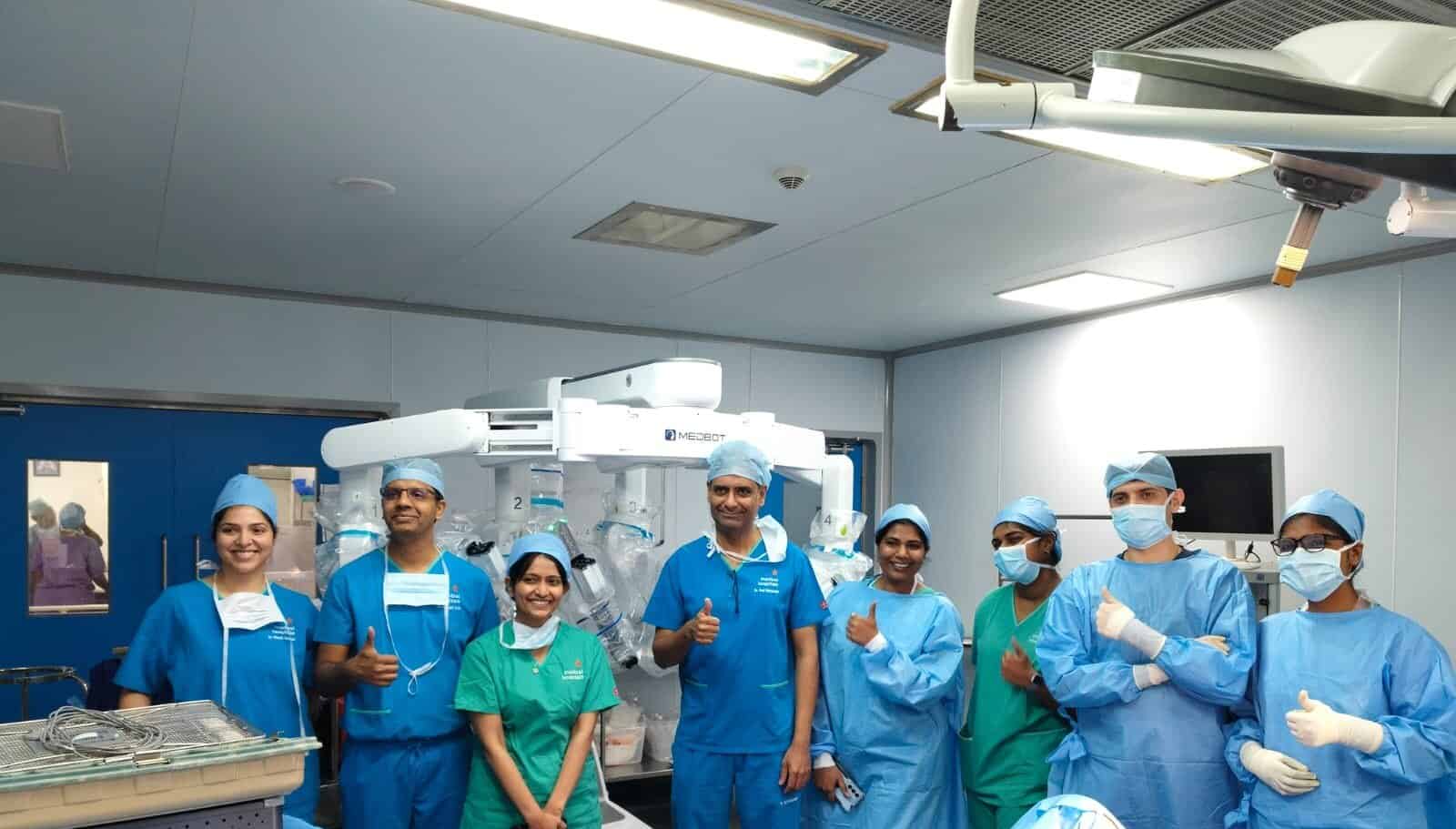
Robotic surgery: In selected situations, robotic techniques may be considered for carefully chosen thyroid cases. The decision depends on tumor size, location, lymph node involvement, prior surgery, and oncologic safety.

Minimally invasive approaches: Some thyroid operations may be planned through smaller incisions in selected patients, but this is not suitable for all cancers. The priority must always be complete and safe cancer removal.

Open surgery: For many thyroid cancers, especially larger tumors, node-positive disease, recurrent cases, or cancers close to important neck structures, open surgery remains the most reliable and appropriate method.

I believe the approach should serve the patient, not the other way around. Good cancer surgery is not about chasing a smaller cut. It is about achieving the right oncologic result while protecting function as much as possible.

Meet Dr. Suraj to understand whether robotic, laparoscopic, or open surgery is best for you.

What to Expect Before and After Surgery

Knowing the process in advance can make the journey less stressful.

Many patients feel less anxious once they understand how the surgery journey usually unfolds.

Before surgery: We review your reports, scans, blood tests, medical history, and anesthesia fitness. I explain the recommended operation, what structures are near the thyroid, what risks we watch for, and what recovery usually looks like. This is also the time to clarify questions about voice, calcium levels, scar, hospital stay, and future thyroid hormone tablets if the full gland is removed.

Hospital stay: The length of stay depends on the extent of surgery and your recovery. Some patients recover smoothly with a relatively short stay, while more extensive procedures may require closer observation.

Immediately after surgery: There may be some neck discomfort, mild swallowing discomfort, and temporary tiredness. Voice changes can happen in some cases and are monitored carefully. Calcium levels may also need observation, especially after total thyroidectomy.

Pathology review: One of the most important steps after surgery is the final pathology report. This tells us the exact type of cancer, its size, margin status, lymph node involvement if any, and whether additional treatment is needed.

Follow-up planning: After surgery, I discuss the pathology results with you and help plan the next steps. Some patients may need only follow-up and thyroid hormone management. Others may need radioactive iodine or further treatment depending on risk factors.

Family guidance: I make it a point to explain things clearly to both patients and families. Cancer treatment decisions are often emotional, and people cope better when they know what to expect.

You may also find our Recovery After Cancer Surgery page useful for understanding general recovery principles after oncologic procedures.

Speak with Dr. Suraj to understand the likely recovery path in your specific case.

Cost of Thyroid Cancer Surgery in Bangalore

The cost depends on the complexity of the surgery and the overall treatment setting.
Senior Indian Lady

Many patients understandably want to know the cost of thyroid cancer surgery in Bangalore early in the process. This is an important and practical question. However, the cost can vary significantly from one patient to another, so it is not appropriate to give a standard number without understanding the exact case.

The overall cost may depend on:

  • whether the surgery involves one side of the thyroid or the entire gland
  • whether lymph node dissection is required
  • whether the case is primary, recurrent, or more complex
  • whether a robotic, minimally invasive, or open approach is being considered
  • the hospital category and room type
  • duration of hospital stay
  • ICU or high-dependency care if required
  • pre-operative investigations
  • pathology and post-operative monitoring
  • need for additional treatment after surgery

In simpler cases, the cost structure may be more straightforward. In advanced or node-positive disease, treatment may become more extensive and therefore more expensive. This is why I prefer to discuss cost after reviewing the reports and understanding the likely surgical plan.

Meet Us for a Clear Treatment and Cost Discussion.

Book A Consultation With Dr Suraj in Bangalore

Convenient access to specialist cancer surgery care at established hospital centres.
Dr Suraj Manjunath Website Consulting in his cabin

I currently consult at:

  • Apollo Hospitals, Bannerghatta Road, Bangalore
    (Monday to Friday: 9 am to 1 pm)
    Address: Apollo Hospitals, Opposite IIM, 154/11, Bannerghatta Rd, Krishnaraju Layout, Amalodbhavi Nagar, Panduranga Nagar, Bengaluru, Karnataka 560076

  • Apollo Hospitals, Sarjapur Road, Bangalore 
    (Every Tuesday & Friday (To be available from Sept 2026))
    Address: Apollo Hospitals, Sarjapur - Marathahalli Rd, Opp. Decathlon, Carmelaram, Ambedkar Nagar, Chikkabellandur, Mullur, Karnataka 560035)

This center provide access to comprehensive cancer care within a well-equipped hospital environment, supporting multidisciplinary treatment, investigations, and post-operative care when required.

Consultation timings and appointment details can be arranged through phone or WhatsApp for convenience.

You can click the below buttons to call or WhatsApp the appointment desk to book your visit.
Click the below button to Call.
Click the below button to Whatsapp

Written & Reviewed by Dr. Suraj Manjunath

This page is reviewed for medical accuracy and patient education.
Dr Suraj Manjunath Surgical Oncologist in Bangalore

Dr. Suraj Manjunath

This page has been written and medically reviewed under the guidance of Dr. Suraj Manjunath, Senior Surgical Oncologist at Apollo Hospitals, Bannerghatta Road, Bangalore.

The information has been reviewed for medical accuracy, patient clarity, and relevance to cancer surgery decision-making. Cancer treatment is always personalized and depends on factors such as the type of cancer, stage or spread of disease, overall health, co-morbidities, test results, and treatment goals.

The information is meant for patient education and should not replace an in-person consultation, diagnosis or personalized treatment plan.

Consultation Locations: Apollo Hospitals, Bannerghatta Road & Sarjapur Road, Bangalore.
Last reviewed: May 2026

FAQs About Thyroid Cancer Treatment and Surgery

Common questions patients ask about Thyroid cancer treatment in Bangalore.

Surgery is often the main treatment when thyroid cancer is confirmed or strongly suspected. The exact timing depends on the type of cancer, its size, lymph node involvement, and your overall fitness.

No. Many thyroid nodules are benign. That is why ultrasound, biopsy, and specialist review are important before deciding on treatment.

In selected cases, robotic surgery may be considered. But it is not suitable for everyone. The choice depends on the size and extent of the cancer and whether the approach is oncologically safe.

Not always. Some patients may need removal of only one lobe, while others require total thyroidectomy. The decision depends on the tumor and pathology findings.

Recovery varies depending on the extent of surgery and your overall health. Many patients begin recovering steadily within days, but full recovery and follow-up planning may take a few weeks.

The cost depends on the type of surgery, need for lymph node removal, surgical approach, hospital stay, ICU need if any, investigations, and post-operative care.

Yes, absolutely. A second opinion is often helpful in cancer care, especially if you want clarity on the diagnosis, extent of surgery, or treatment sequence.

Please bring your ultrasound reports, FNAC or biopsy report, CT or scan reports if available, blood tests, discharge summaries, and any previous treatment records.

You Do Not Have to Make This Decision Alone

Clear guidance, thoughtful surgery, and honest answers for thyroid cancer patients and families in Bangalore.
If you have been diagnosed with thyroid cancer, advised surgery, or are unsure about the next step, I would be glad to help you understand your options clearly.

My approach is simple. First, I review the facts carefully. Then I explain the treatment plan in a way that makes sense to you and your family. If surgery is needed, I help you understand why, what the operation involves, and what recovery may look like. If another treatment should come first, I will tell you that too.

Cancer treatment should not feel confusing or rushed. My role is to guide you with judgment, honesty, and care.

Whether you are seeking the right Thyroid Cancer Surgeon in Bangalore, trying to understand thyroid cancer treatment in Bangalore, or looking for clarity on the cost of thyroid cancer surgery in Bangalore, you are welcome to consult me.
Book an appointment with Dr. Suraj Manjunath for Thyroid cancer evaluation or a second opinion in Bangalore.
Disclaimer Statement : The information published on this website is generic in nature and the results vary from case to case basis. The contents of the website is not meant to replace an in-person consultation. Please follow the advise of your doctor via in-person consultation. This website will not assume any legal responsibility for the patient’s medical condition.
© 2026 Dr Suraj Manjunath. All Right Reserved.
Privacy Policy Terms Of Use

Book an Appointment with Dr. Suraj Manjunath

Dr. Suraj Manjunath provides consultations at Apollo Hospitals, Bannerghatta Road, Bangalore.
You can click the below buttons to call or WhatsApp the appointment desk to book your visit.
Click the below button to Call.
Click the below button to Whatsapp
Apollo Hospital
Bannerghatta Road
Address: IIM, 154/11, Bannerghatta Rd, opposite Krishnaraju Layout, Krishnaraju Layout, Amalodbhavi Naga, Panduranga Nagar, Bengaluru, Karnataka 560076
Call or WhatsApp the appointment desk. The team will help you choose the most suitable time based on availability and convenience.
Call Now Button