
If you are searching for an expert in endocrine tumor surgery in Bangalore, Dr Suraj Manjunath offers highly precise care at Apollo Hospitals. He provides comprehensive endocrine tumor treatment tailored to manage complex thyroid, parathyroid, and adrenal conditions safely. Please select your specific condition from the directory below to view targeted guidelines.


A diagnosis of an endocrine tumor or endocrine cancer can feel confusing because these conditions are often linked to hormones, glands, scans, blood tests and multiple specialist opinions.
I understand how difficult this can be for you and your family.
I am Dr. Suraj Manjunath, a Surgical Oncologist in Bangalore, associated with Apollo Hospitals, Bannerghatta Road and Apollo Hospitals, Sarjapur Road. I help patients with endocrine cancers understand their diagnosis, evaluate whether surgery is needed, and choose the safest treatment approach.
Endocrine cancer surgery in Bangalore may involve the thyroid gland, adrenal gland, parathyroid gland, pancreas, or neuroendocrine tumors arising in the digestive tract or other organs. Not every patient needs the same treatment. My goal is to study your condition carefully and guide you towards the right next step.
In many cases, surgery plays an important role. In some patients, surgery may be the main treatment. In others, surgery is combined with medicines, hormone control, nuclear medicine treatment, targeted therapy, or long-term follow-up.
This page will help you understand what endocrine cancers include, when surgery is considered, what treatment planning involves, and when you should consult an endocrine cancer surgeon in Bangalore.

+

+

+

+

Many thyroid cancers are treatable when diagnosed properly and managed at the right time.
Surgery may involve removal of part or all of the thyroid gland, sometimes along with lymph node surgery. The exact plan depends on the type of thyroid cancer, size, spread and risk category.
Patients can explore the detailed page on Thyroid Cancer Surgery in Bangalore for more information.

Rarely, parathyroid cancer may be suspected when calcium levels are very high or the tumor appears aggressive.
Surgery requires careful identification and removal of the affected gland while protecting nearby structures. A proper endocrine and surgical evaluation is important before deciding treatment.

Some adrenal tumors can affect blood pressure, potassium levels, weight, sugar control or stress hormones.
A key part of treatment planning is to understand whether the tumor is functional, non-functional, benign or suspicious for cancer.
Surgery may be performed using laparoscopic, robotic or open techniques depending on the size and cancer risk.

Many patients are diagnosed after routine blood tests, while others may have kidney stones, bone pain, fatigue, abdominal discomfort, constipation, mood changes or reduced bone strength.
Most cases are due to a benign parathyroid adenoma, but careful evaluation is needed to identify the affected gland and plan treatment.
Surgery may be advised when calcium levels are high, symptoms are present, kidneys or bones are affected, or the patient meets specific treatment criteria.
A focused parathyroid surgery can often correct the hormone imbalance when the abnormal gland is accurately identified.

Some tumors produce hormones and cause symptoms such as repeated low sugar episodes, severe acidity, diarrhea, skin rashes, weakness, weight changes or unexplained abdominal symptoms.
Others may not produce hormones and are detected during CT, MRI, endoscopy or PET scans. Treatment depends on the tumor size, location within the pancreas, hormone activity, grade, spread and the patient’s overall health.
Surgery may involve removing only the tumor, part of the pancreas, or nearby lymph nodes, depending on the case.
These tumors need careful planning because they are very different from the more common type of pancreatic cancer.

Endocrine cancer treatment in Bangalore should begin with a clear understanding of the exact diagnosis.
The first step is usually to review your scans, blood tests, biopsy or FNAC report, hormone tests and previous treatment records. In thyroid cancer, ultrasound, FNAC and lymph node assessment are important. In adrenal tumors, hormone evaluation is often required before surgery. In pancreatic or gastrointestinal neuroendocrine tumors, CT scan, MRI, endoscopy, biopsy, tumor grade and special scans may be needed.
The next step is staging. Staging means understanding whether the tumor is limited to one organ, has reached lymph nodes, or has spread to other parts of the body.
Treatment may involve surgery, medicines, hormone control, nuclear medicine therapy, chemotherapy, targeted therapy, radiation therapy or careful observation. The sequence matters. In some patients, surgery comes first. In others, hormone control or additional work-up is needed before surgery.
My role as a surgical oncologist is to assess whether surgery can safely remove the cancer, whether it will improve long-term outcome, and what approach will give the best balance between cancer control and recovery.
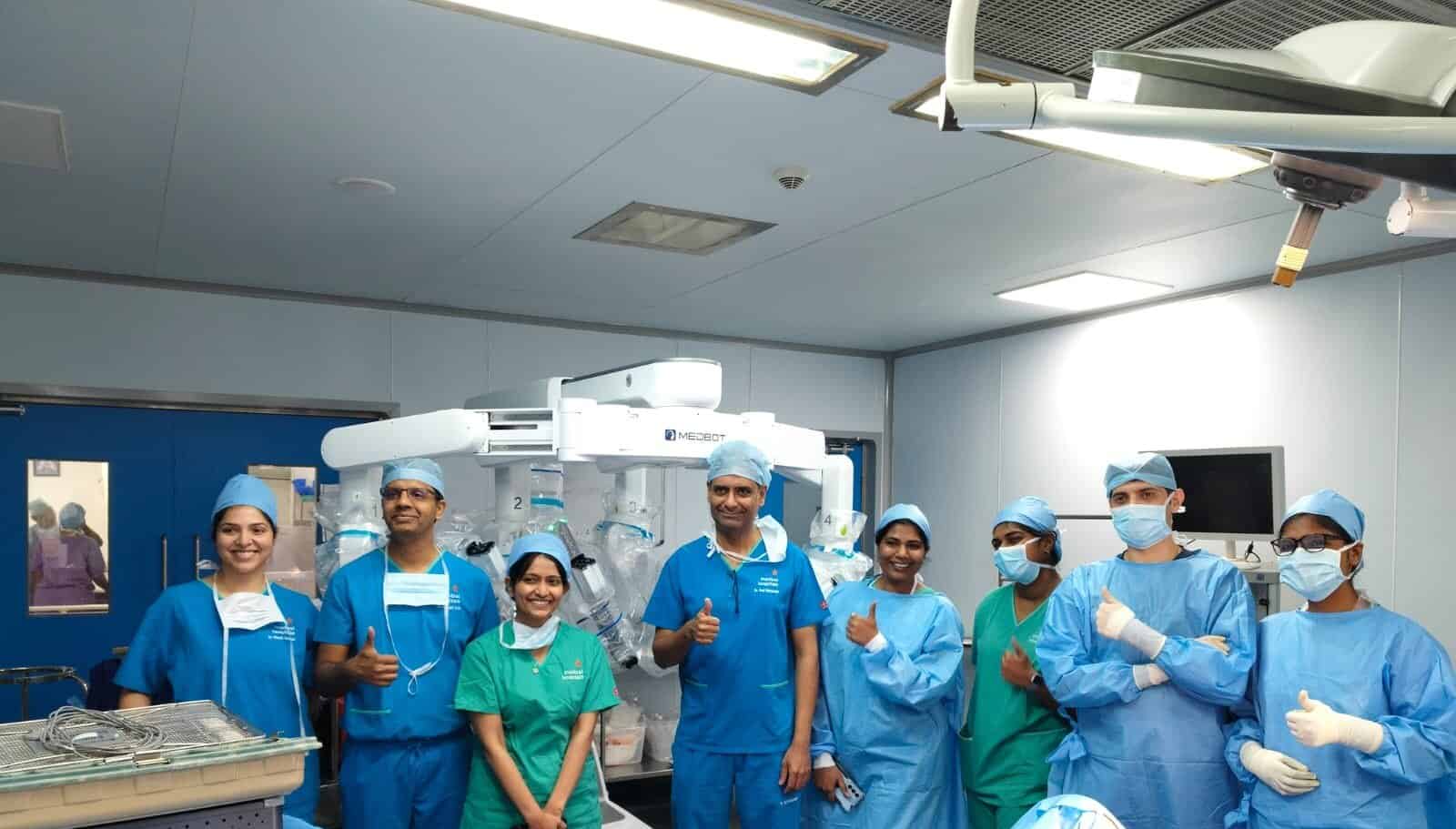
There is no single surgical approach that is right for every endocrine cancer patient.
For selected adrenal tumors, minimally invasive surgery such as laparoscopic or robotic adrenalectomy may be suitable. These approaches can help reduce pain, hospital stay and recovery time in properly selected cases.
For some pancreatic neuroendocrine tumors, surgery may be performed using open, laparoscopic or robotic techniques depending on the tumor’s location, relation to major blood vessels and complexity.
For thyroid and parathyroid tumors, surgery is usually performed through a neck incision with careful attention to the voice nerve, parathyroid preservation and lymph node clearance when needed. Robotic thyroid surgery is also feasible for select patients with thyroid nodules and thyroid cancers.
For gastrointestinal neuroendocrine tumors, the approach depends on whether the tumor is in the stomach, appendix, small bowel, colon or rectum. Some small tumors may be treated endoscopically, while others need formal cancer surgery with lymph node removal.
Open surgery remains important when the tumor is large, close to major vessels, locally advanced, or when cancer clearance is the priority.
My principle is simple: the technique should serve the patient, not the other way around. Minimally invasive surgery is valuable when it is safe and oncologically sound. Cancer control and patient safety always come first.

I currently consult at:
These centers provide access to comprehensive cancer care within a well-equipped hospital environment, supporting multidisciplinary treatment, investigations, and post-operative care when required.
Consultation timings and appointment details can be arranged through phone or WhatsApp for convenience.

This page has been written and medically reviewed under the guidance of Dr. Suraj Manjunath, Senior Surgical Oncologist at Apollo Hospitals, Bannerghatta Road, Bangalore.
The information has been reviewed for medical accuracy, patient clarity, and relevance to cancer surgery decision-making. Cancer treatment is always personalized and depends on factors such as the type of cancer, stage or spread of disease, overall health, co-morbidities, test results, and treatment goals.
The information is meant for patient education and should not replace an in-person consultation, diagnosis or personalized treatment plan.
Consultation Locations: Apollo Hospitals, Bannerghatta Road & Sarjapur Road, Bangalore.
Last reviewed: September 2026
