
Dr Suraj Manjunath is a Prostate Cancer Surgeon in Bangalore associated with Apollo Hospitals, offering specialist evaluation and surgery-focused guidance for prostate cancer. For patients seeking Prostate Cancer Treatment in Bangalore, he helps assess reports, cancer stage, surgical suitability, robotic/open surgery options, recovery expectations, and second opinion decisions with clear, patient-friendly advice.


The prostate is a small gland found only in men. It is located below the urinary bladder and surrounds the tube through which urine passes. The prostate helps produce part of the fluid in semen.
Prostate cancer happens when some cells in the prostate start growing abnormally and uncontrollably.
In many men, prostate cancer grows slowly. In some men, it can be more aggressive and may spread outside the prostate. This is why proper evaluation is very important. Two patients may both have “prostate cancer,” but their treatment plans may be completely different.
The seriousness of prostate cancer depends on several factors:
The PSA level
The biopsy grade or Gleason score
MRI or PET scan findings
Whether the cancer is limited to the prostate
Whether lymph nodes, bones or other organs are involved
The patient’s age and general health
Urinary symptoms and quality of life priorities
Early and specialist evaluation helps decide whether prostate cancer surgery in Bangalore is appropriate, or whether another treatment approach is better.
A well-planned treatment decision can improve cancer control and reduce unnecessary treatment-related harm.

A diagnosis of prostate cancer can bring many questions for you and your family.
Is surgery needed? Is robotic surgery possible? Will the cancer spread? How long will recovery take? What will the cost of prostate cancer surgery in Bangalore be?
I understand how difficult this stage can feel. My role is to help you understand your diagnosis clearly, explain your treatment options honestly, and guide you towards a safe, well-planned treatment decision.
I am Dr. Suraj Manjunath, a Surgical Oncologist in Bangalore, associated with Apollo Hospitals, Bannerghatta Road and Apollo Hospitals, Sarjapur Road.
For prostate cancer, treatment must be planned after understanding the stage of the disease, PSA level, biopsy report, scans, general health, urinary function, and long-term quality of life goals. Surgery may be an important option for selected patients, especially when the cancer is still confined to the prostate or nearby tissues.
My goal is to help you understand where you stand and what option is safest for you.
This page will help you understand prostate cancer, symptoms, diagnosis, treatment options, surgery types, robotic and open approaches, recovery, and the factors that affect the cost of prostate cancer surgery in Bangalore.

+

+

+

+

Prostate cancer may not cause obvious symptoms in the early stage. Many patients are diagnosed after a PSA blood test or evaluation for urinary problems.
Some possible symptoms include:
It is important to understand that these symptoms do not always mean cancer. Many men have similar symptoms because of benign prostate enlargement, infection, or age-related urinary changes.
At the same time, if prostate cancer has already been suspected or diagnosed, symptoms should not be ignored. A specialist evaluation helps separate simple urinary problems from cancer-related concerns.
If you already have a biopsy-confirmed diagnosis, the next step is not panic. The next step is structured staging and treatment planning.

Before deciding on prostate cancer treatment in Bangalore, we need to understand the disease properly.
The evaluation usually includes:
PSA blood test: PSA is a blood test that can rise in prostate cancer, but it may also rise due to non-cancer causes. It helps in risk assessment and follow-up.
Digital rectal examination: This is a clinical examination where the doctor assesses the prostate through the rectum. It can sometimes detect hard or irregular areas.
MRI prostate: MRI helps us see the prostate gland in detail. It can show whether the cancer appears limited to the prostate or is close to the capsule, seminal vesicles, or nearby structures.
Prostate biopsy: A biopsy confirms the diagnosis. Small tissue samples are taken from the prostate and examined under a microscope.
Pathology report: The pathology report tells us the cancer grade. This includes the Gleason score or Grade Group. Higher grades usually suggest more aggressive disease.
Staging scans: Depending on PSA, grade, and risk category, scans such as PSMA PET-CT, bone scan, CT scan, or MRI may be advised to check whether the cancer has spread.
Fitness assessment before surgery: If surgery is being considered, we also assess heart health, lung function, diabetes, blood pressure, kidney function, medications, and anesthesia fitness.
This complete evaluation helps decide whether surgery, radiation, hormone therapy, active surveillance, or combined treatment is best.


The most common surgery for prostate cancer is radical prostatectomy.
In radical prostatectomy, the prostate gland is removed along with the seminal vesicles. The bladder is then reconnected to the urinary passage. A urinary catheter is kept for a period after surgery to allow healing.
The operation may involve:
Pelvic lymph node dissection
In some intermediate-risk or high-risk cases, nearby lymph nodes may be removed. This helps understand whether cancer has spread to the nodes and may guide further treatment.
Nerve-sparing surgery
In selected patients, the surgeon may try to preserve the nerves responsible for erection. This depends on cancer location, stage, MRI findings, and safety. Cancer clearance is always the first priority. Nerve preservation is considered only when it does not compromise cancer control.
Organ preservation
Unlike some other cancers, prostate cancer surgery usually involves removing the whole prostate gland. However, the surgical plan tries to preserve important surrounding structures whenever safe, especially those related to urinary control and sexual function.
After surgery, the final pathology report gives more accurate information than biopsy alone. It tells us the exact extent of cancer, margin status, lymph node status if nodes were removed, and whether further treatment is needed.

Many patients ask whether robotic prostate cancer surgery is possible.
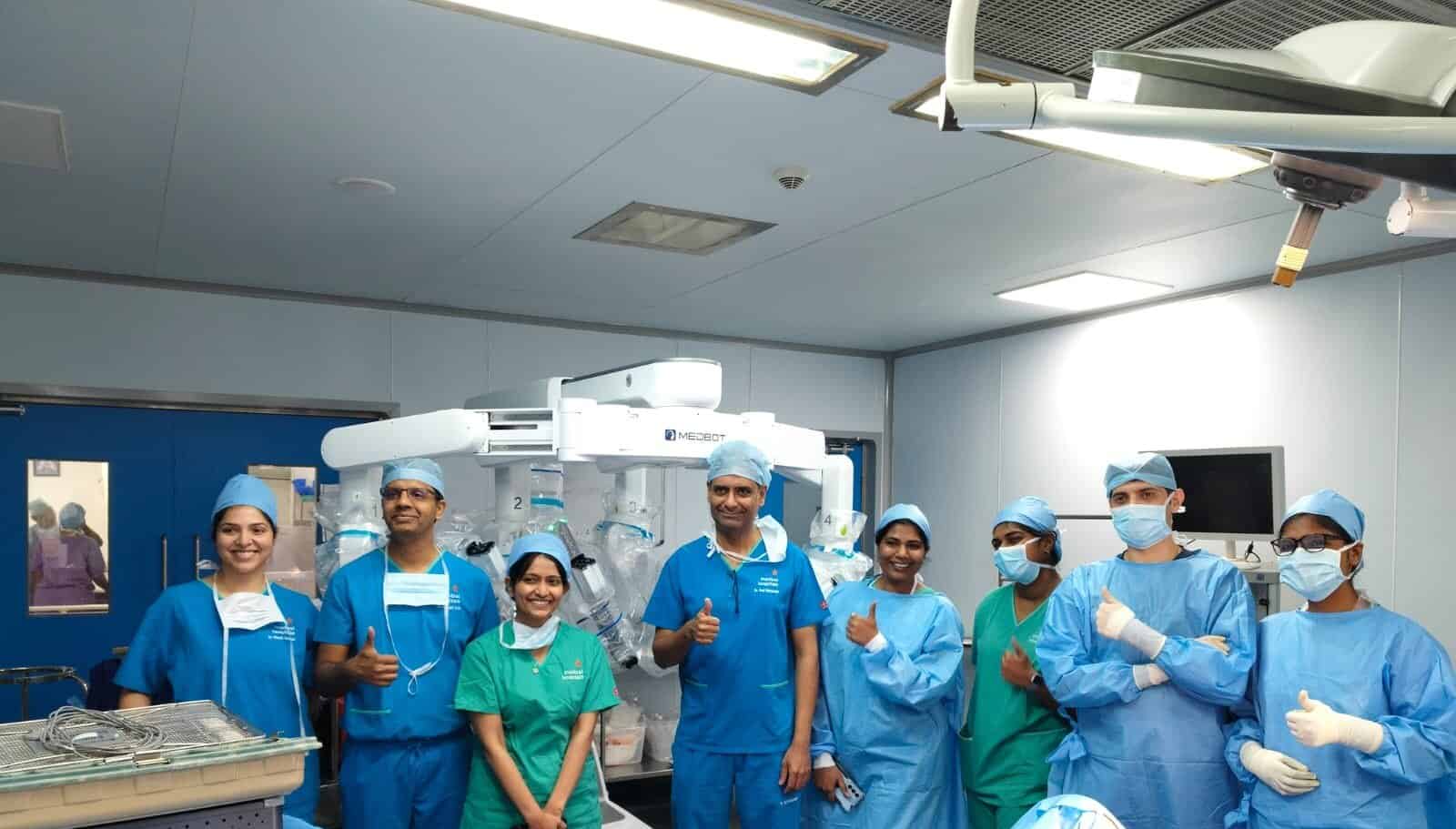
In many suitable cases, robotic surgery can be considered for prostate cancer. Robotic surgery allows the surgeon to operate through small cuts using magnified 3D vision and fine instrument control. This can help with precision in a deep and narrow area like the pelvis.
Laparoscopic surgery is another minimally invasive approach where surgery is done through small cuts using long instruments and a camera.
Open surgery may still be needed in selected cases. It may be considered when the cancer is complex, anatomy is difficult, previous surgery has caused adhesions, or when open access is safer.
The choice between robotic, laparoscopic, minimally invasive, and open surgery should not be based only on technology. It should be based on safety and cancer clearance.
Robotic surgery may offer advantages such as smaller cuts, less blood loss, and faster early recovery in suitable patients. But the most important factor is not just the machine. It is surgical planning, experience, judgment, and choosing the right approach for the right patient.
For some patients, minimally invasive cancer surgery may be suitable. For others, open cancer surgery may be safer. I explain this clearly during consultation so the patient and family understand why a particular approach is recommended.

Before surgery, we first complete a detailed evaluation.
This may include blood tests, urine tests, ECG, chest evaluation, anesthesia fitness, review of medications, and assessment of diabetes, blood pressure, heart disease, or other medical conditions.
You may be advised to stop certain blood thinners before surgery, only after medical approval. You will receive instructions about fasting, hospital admission, consent, and preparation.
During surgery, the prostate gland is removed along with the planned surrounding tissues. If lymph node removal is needed, it is done during the same operation. A catheter is placed to drain urine while the internal connection heals.
After surgery, you will be monitored in the hospital. Pain control, walking, breathing exercises, diet, urine output, and wound care are managed by the care team.
Hospital stay depends on the type of surgery, recovery speed, age, fitness, and any medical issues. Some patients recover faster after minimally invasive or robotic approaches, but recovery varies from person to person.
After discharge, you will receive instructions about:
The final pathology report is very important. It tells us the exact stage of cancer after surgery. Based on this report, we discuss whether observation is enough or whether radiation, hormone therapy, or further treatment is needed.
Recovery also includes emotional adjustment. Urinary control may take time to improve. Sexual function may also be affected depending on age, baseline function, cancer stage, and whether nerve-sparing surgery was possible.
My goal is to prepare you honestly, guide you after surgery, and ensure that follow-up is not neglected.
Check out our patient education article: Enhanced Recovery After Surgery (ERAS) for a detailed before, during & after surgery care.

Families often ask me, “Doctor, what is the cost of prostate cancer surgery in Bangalore?”
It is a very practical and important question.
However, it would not be correct to give a fixed cost without reviewing the case. Prostate cancer surgery cost can vary depending on several medical and hospital-related factors.
The cost may depend on:
Robotic surgery may have a different cost structure compared to open or laparoscopic surgery because of technology and equipment-related factors. However, the decision should not be made only on cost. The safest and most appropriate approach should be chosen first, and then the financial estimate can be discussed clearly.
During consultation, once your reports are reviewed and the likely treatment plan is clear, the hospital team can provide a more realistic cost estimate.
My advice to families is simple: do not compare only package numbers. Compare what is included, what is excluded, which approach is planned, whether lymph node removal is included, expected hospital stay, and what follow-up support will be needed.

I currently consult at:
These centers provide access to comprehensive cancer care within a well-equipped hospital environment, supporting multidisciplinary treatment, investigations, and post-operative care when required.
Consultation timings and appointment details can be arranged through phone or WhatsApp for convenience.

This page has been written and medically reviewed under the guidance of Dr. Suraj Manjunath, Senior Surgical Oncologist at Apollo Hospitals, Bannerghatta Road, Bangalore.
The information has been reviewed for medical accuracy, patient clarity, and relevance to cancer surgery decision-making. Cancer treatment is always personalized and depends on factors such as the type of cancer, stage or spread of disease, overall health, co-morbidities, test results, and treatment goals.
The information is meant for patient education and should not replace an in-person consultation, diagnosis or personalized treatment plan.
Consultation Locations: Apollo Hospitals, Bannerghatta Road & Sarjapur Road, Bangalore.
Last reviewed: September 2026
