One of the most common questions my patients ask after receiving a cancer diagnosis is:
“Doctor, how quickly should I undergo surgery?”
The fear behind this question is understandable. Once a person hears the word “cancer,” every passing day may feel dangerous. Families often believe that the tumour must be removed immediately—sometimes within a day or two—before it has a chance to spread.
However, cancer surgery is not simply about removing a visible lump as quickly as possible. It is about performing the right operation, for the right patient, at the right stage of treatment.
In my clinical experience, rushing into surgery without completing the necessary evaluation can sometimes lead to an incomplete operation, avoidable complications or a missed opportunity to use chemotherapy or radiation before surgery.
At the same time, unnecessary delays should also be avoided. The goal is not to postpone treatment. The goal is to use the available time wisely and begin treatment within a medically appropriate period.
In most patients, cancer surgery is urgent but not an immediate emergency.
An urgent operation should be organised within the timeframe recommended for that particular cancer. An emergency operation is one that must be performed within hours because the patient’s life or organ function is at immediate risk.
Cancer surgery may become an emergency when a tumour causes:
In such situations, emergency treatment may be necessary. However, the immediate procedure may sometimes focus on controlling the complication rather than performing the complete cancer operation.
For example, a patient with an obstructing colon tumour may first require a procedure to relieve the blockage. Definitive cancer surgery can then be undertaken after stabilisation and proper staging.
For most newly diagnosed patients who are clinically stable, there is usually enough time to gather accurate information and create a well-considered treatment plan.
There is no universal waiting period that applies to every cancer.
The appropriate timing may range from a few days to several weeks depending on:
A small, early-stage tumor that is clearly removable may proceed directly to surgery after routine staging and fitness assessment.
In contrast, cancers of the rectum, esophagus, stomach, breast, pancreas or lung may require a combination of chemotherapy, immunotherapy or radiation before surgery in selected patients.
Therefore, the more useful question is not merely, “How soon can surgery be done?” It is:
“What sequence of treatment gives me the best chance of long-term control while preserving safety and quality of life?”
Cancer surgery differs from many routine operations because the surgeon must plan beyond the visible tumour.
The operation may need to remove:
At the same time, we try to preserve as much healthy tissue and organ function as safely possible.
This balance requires detailed imaging, accurate pathology, a clear understanding of the cancer’s behavior and careful preparation of the patient.
Before major cancer surgery, the diagnosis should generally be confirmed through a biopsy or another appropriate pathological test.
The pathology report helps determine:
Occasionally, patients reach me with incomplete biopsy information or with slides that require review by a specialist pathologist. Clarifying the diagnosis before surgery can significantly change the treatment plan.
Staging tells us how far the cancer has spread.
Depending on the cancer, this may involve:
A tumor that appears operable on one scan may require a different strategy if more detailed imaging reveals involvement of major blood vessels, distant organs or important lymph nodes.
Operating without proper staging risks performing a major procedure that may not benefit the patient.
A multidisciplinary team brings together specialists from surgical oncology, medical oncology, radiation oncology, radiology, pathology and other relevant disciplines.
The National Cancer Institute defines multidisciplinary cancer planning as an approach involving experts from several specialties, particularly surgery, systemic therapy and radiation therapy.
Complex or newly diagnosed cases may also be discussed at a tumor board. A tumor board is a structured meeting where cancer specialists review the diagnosis, imaging, pathology and treatment options before agreeing on the most appropriate plan.
In my Bengaluru practice, I work closely with medical oncologists, radiation oncologists, radiologists, pathologists, anesthetists and critical-care teams. This collaboration helps answer important questions:
Multidisciplinary planning is not an unnecessary delay. It is an important part of responsible cancer care.
Many patients assume surgery must always be the first treatment. This is not true.
Treatment given before surgery is called neoadjuvant treatment. It may include chemotherapy, radiation, targeted therapy or immunotherapy.
Preoperative treatment may:
For example, preoperative chemoradiation in rectal cancer may help shrink or downstage the tumor, improve local control and increase the possibility of preserving the anal sphincter in suitable patients.
Similarly, some esophageal, breast, lung, stomach and pancreatic cancers are best treated with chemotherapy or chemoradiation before an operation.
In these situations, going directly to surgery may not be the most effective strategy.
Cancer surgery can place considerable stress on the body. Before operating, we evaluate whether the patient can safely tolerate the procedure.
This may include assessment of:
Occasionally, correcting a medical issue before surgery is safer than operating immediately.
A few days or weeks spent improving haemoglobin, controlling blood sugar, treating an infection or strengthening breathing capacity can reduce postoperative complications.
I often see patients who have already lost a significant amount of weight before consulting a surgeon.
Poor appetite, swallowing difficulty, vomiting, bowel obstruction, pain or the metabolic effects of cancer can lead to malnutrition. A malnourished patient may have a higher risk of:
Where possible, we may recommend nutritional supplements, higher protein intake, correction of deficiencies or feeding support before a major operation.
This does not mean treatment is being delayed without reason. It means we are preparing the body to withstand treatment more safely.
The safe waiting period varies considerably between patients.
Some aggressive cancers should be treated promptly after completing essential investigations. Other cancers grow more slowly and allow more time for evaluation, a second opinion or optimisation of medical conditions.
Your surgeon should consider:
A waiting period is acceptable only when it is purposeful and medically supervised.
An unexplained delay caused by repeatedly postponing appointments, avoiding treatment or seeking many conflicting opinions is different from a planned interval used for staging and preparation.
| Planned and medically useful time | Potentially harmful delay |
|---|---|
| Completing staging scans | Ignoring worsening symptoms |
| Reviewing biopsy or pathology | Postponing consultation because of fear |
| Discussing the case at a tumour board | Repeatedly changing hospitals without transferring records |
| Receiving necessary preoperative treatment | Delaying recommended treatment without medical advice |
| Improving nutrition and physical fitness | Trying unproven remedies in place of cancer care |
| Controlling diabetes, anaemia or heart problems | Missing follow-up appointments |
| Planning a complex multidisciplinary operation | Waiting despite obstruction, bleeding or severe pain |
The difference lies in whether the time is being used to improve the treatment plan or whether the cancer is being left unattended.
Cancer can grow or spread over time, but the speed varies greatly between cancer types and even between patients with the same diagnosis.
A short, medically planned interval used to complete staging or prepare for surgery is not the same as an uncontrolled delay lasting months.
No responsible surgeon should delay a time-sensitive operation unnecessarily. However, operating a few days earlier without essential information does not automatically improve the outcome.
Treatment-delay research is difficult to apply as a single rule because cancers differ in their biology, stage and recommended treatment sequence. The appropriate timing must therefore be individualised rather than based on a fixed number of days.
What I typically advise my patients is:
Move promptly, but do not panic. Complete the essential evaluation efficiently, understand the treatment sequence and proceed according to a clearly documented plan.
If the complete extent of the disease is unknown, the surgeon may encounter unexpected findings during the operation.
Some cancers respond better when chemotherapy or radiation is given first. Immediate surgery may remove that option or make later treatment more difficult.
Complex cancers may require reconstruction, vascular surgery, plastic surgery, thoracic support, urology or intensive-care preparation.
Uncontrolled diabetes, heart disease, infection, anaemia or severe malnutrition may increase complications.
Careful planning may make it possible to preserve the breast, sphincter, kidney, limb, voice box or another important organ in selected patients.
A patient should know what will be removed, the expected recovery, possible complications, alternatives and whether additional treatment may be required.
Informed consent should not be treated as a signature obtained immediately before surgery. It should be a meaningful conversation.
Fact: Some cancers require urgent surgery, but many require staging, multidisciplinary review or preoperative treatment first.
Fact: Accurate diagnosis and staging help prevent inappropriate or incomplete surgery.
Fact: Preoperative chemotherapy may be used specifically to improve surgical outcomes, shrink the tumour or treat microscopic disease early.
Fact: The goal is complete and safe cancer removal—not unnecessarily extensive surgery. Organ-preserving procedures may be appropriate in selected patients.
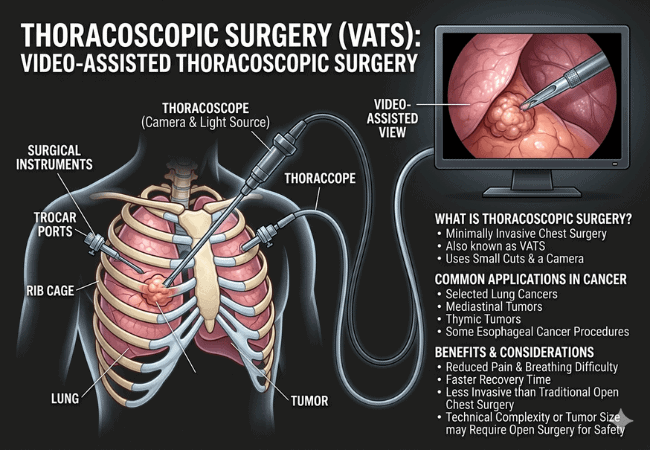
Fact: Robotic, laparoscopic, thoracoscopic and open surgery are approaches, not competing guarantees. The best approach depends on tumor location, size, stage, previous treatment and the surgeon’s judgement.
The surgical approach should be chosen only after assessing whether it can achieve the same oncological objective safely.
Minimally invasive surgery may offer selected patients:
However, an open operation may be safer or more effective for very large tumors, extensive involvement of nearby structures or certain complex reconstructions.
The priority is not the size of the incision. The priority is the quality and completeness of cancer surgery.
After more than 25 years in surgical oncology, my advice to patients is simple:
Do not rush blindly, but do not remain inactive.
Once cancer is suspected or confirmed:
A good cancer treatment plan should provide clarity. You should understand not only what treatment is recommended, but also why it is recommended in that sequence.
A patient with known or suspected cancer should seek urgent medical attention for:
These symptoms may indicate a complication requiring immediate stabilisation, investigation or intervention.
Cancer treatment should move forward efficiently. But efficiency is not the same as haste.
The best time for cancer surgery is the earliest medically appropriate time after the diagnosis, stage, treatment sequence and patient fitness have been properly assessed.
In some patients, that may mean surgery within a short period. In others, it may mean chemotherapy, radiation, nutritional rehabilitation or medical optimisation first.
Cancer surgery is one part of a larger treatment strategy. When the entire plan is considered—not just the operation—we can aim for better cancer control, safer recovery and preservation of function wherever possible.
For patients and families, the period after diagnosis can feel overwhelming. Ask questions, understand the sequence and ensure that every day before treatment is being used purposefully.
That is not unnecessary waiting.
That is careful cancer care.
Cancer surgery may be performed within days or several weeks, depending on the cancer type, stage, symptoms, medical fitness and whether chemotherapy or radiation is needed first. Your treating team should provide an individual timeline after completing essential staging.
No. Most cancer operations are urgent but not immediate emergencies. Emergency surgery may be required when a tumor causes severe bleeding, intestinal obstruction, perforation, infection, breathing difficulty or another life-threatening complication.
There is no single safe waiting period for every cancer. Some aggressive cancers require prompt treatment, while slower-growing cancers may allow more time. The acceptable interval should be decided by a cancer specialist based on the tumor’s biology, stage and symptoms.
Cancer can progress over time, but the rate differs between tumor types. A short, supervised interval used for staging, multidisciplinary review or preparation is different from an unnecessary, prolonged delay without medical monitoring.
Chemotherapy before surgery may shrink the tumor, treat microscopic disease, improve the chance of complete removal or support organ preservation. Receiving chemotherapy first does not necessarily mean the cancer cannot be operated on.
A second opinion can be valuable for complex surgery, rare cancers, unclear staging or when more than one treatment approach is possible. It should be obtained promptly so that it improves decision-making without causing unnecessary delay.
Tests may include biopsy review, blood tests, CT, MRI, PET-CT, ultrasound, endoscopy and heart or lung assessment. The exact tests depend on the cancer and the planned operation.
Yes. Robotic surgery requires assessment of tumor size, location, stage, previous operations and the likelihood of achieving complete cancer removal. It should be selected because it is oncologically appropriate—not simply because the technology is available.
Ask about the cancer stage, purpose of surgery, structures being removed, possibility of organ preservation, surgical approach, risks, recovery, hospital stay, expected pathology results and whether chemotherapy or radiation may be needed later.
Nutritional preparation should be balanced against the urgency of treatment. In malnourished patients, a short period of nutritional support may reduce surgical risks. The decision should be made by the treating cancer team rather than by delaying treatment independently.

Written by: Dr. Suraj Manjunath
Senior Consultant Surgical Oncologist, Bangalore
MBBS, MS, MCh – Surgical Oncology
25+ years of experience in surgical oncology
12,000+ cancer surgeries performed
20,000+ patients treated
Former Professor and HOD, Surgical Oncology
This article has been written and medically reviewed under the guidance of Dr. Suraj Manjunath, Senior Surgical Oncologist in Bangalore. Dr. Suraj Manjunath has over 25 years of experience in the surgical treatment of cancers involving the gastrointestinal tract, breast, gynecological organs, head and neck region, thoracic organs, urologic system, endocrine glands, soft tissue, and bone.
He has extensive experience in open cancer surgery, robotic cancer surgery, laparoscopic cancer surgery, thoracoscopic cancer surgery, cytoreductive surgery, and HIPEC. His clinical focus is on safe cancer clearance, individualized surgical planning, complication prevention, and structured recovery after major cancer operations.
The content is intended for patient education and should not replace a personalized consultation with a qualified surgical oncologist.
Medically reviewed by: Dr. Suraj Manjunath
Senior Consultant Surgical Oncologist, Bangalore
Date Published:
Date Reviewed: